







Why does light roast espresso taste like sour coffee?
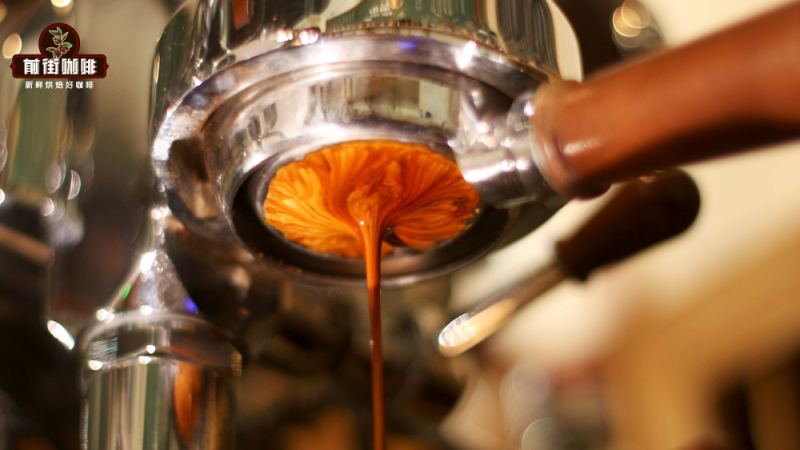
Light-roast beans can be used for espresso, but they often taste sharply sour. Pressure forces out flavor compounds quickly, and light roasts carry a higher share of acidic components, so the sourness is concentrated into a small cup. The fix is not to abandon light roasts but to adjust grind size, dose, and extraction pressure, then judge the result by taste.
Darker-roasted espresso coffee beans stay the more balanced default, with moderate crema and less bite. If a rich crema matters, blends that include a small amount of Robusta, such as a Brazil, Mandheling, and Robusta medium-dark blend, deliver butter, toasted bread, and caramel notes. For lighter beans, grinding finer and raising the dose helps balance the cup.
Can light-roast coffee beans hold their own in espresso? This is a question many coffee enthusiasts are curious about. Building on Front Street Coffee's previous tests, this article further sorts out the practical key points and flavor tendencies of making espresso with light-roast beans. Starting from common misconceptions, the article analyzes why light-roast espresso tends to be sharply sour, and breaks down one by one how the three key variables—grind size, dose, and extraction pressure—should be adjusted. At the same time, for different taste preferences, it recommends suitable beans such as Front Street Classic Blend, Commercial Blend, PWN Golden Mandheling SOE, and Strawberry Candy Espresso. Finally, it objectively describes the drinking experience of light-roast espresso to help readers judge whether it is worth trying.
Front Street Coffee previously published an article centered on the theme of "what effect light-roast coffee beans produce when used to make espresso." At that time, Front Street Coffee selected several light-roast beans for espresso production and verified its feasibility. This article supplements the original basis while sharing some of the differences light-roast beans show in the espresso-making process.
Does light roast make espresso sharply sour?
When popularizing espresso-related knowledge, Front Street Coffee also mentioned that beans used for extracting espresso are usually roasted on the darker side, because light-roast beans tend to produce a strong sourness in espresso. Espresso relies on pressure to force flavor substances out, and light-roast coffee has a relatively high proportion of acidic components. When these substances are concentrated into a small cup of coffee, the sourness is significantly amplified, becoming so sour that it is hard to accept.
For this reason, medium-dark roasted espresso beans are generally recommended, as their flavor presentation is more balanced and the crema is moderate—neither sharply sour nor burnt-bitter.
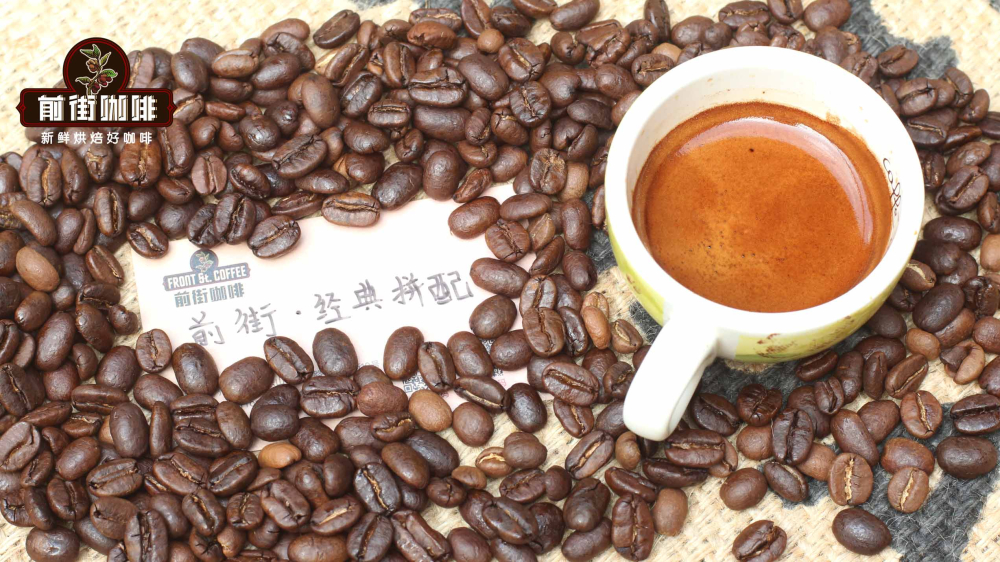
If you are after a rich crema, you can choose Front Street Classic Blend and Front Street Commercial Blend; both espresso beans contain a small amount of Robusta. Front Street Classic Blend combines Brazil, Mandheling, and Robusta, using a medium-dark roast. During extraction it gives off obvious aromas of butter, toasted bread, and caramel cookies, with a strong flavor, a solid mouthfeel, and delicate crema. It has high extraction stability and is an essential home coffee for beginners.
If you prefer a rich coffee taste, Front Street.PWN Golden Mandheling SOE coffee beans are the first choice. As one of Asia's most famous specialty coffees, Front Street.Golden Mandheling SOE undergoes three hand-sortings plus one machine-sorting during production. The beans are uniform and translucent, and after medium-dark roasting the particles are large, with intense aromas of spices, caramel, cedar, and dark chocolate. The coffee liquid extracted with a moka pot has a mellow mouthfeel and good crema, making it very suitable for friends who dislike sour coffee.
To make an espresso with fruity notes, medium-roast coffee beans should be the main choice. Front Street Strawberry Candy Espresso coffee beans are recommended and can be ordered directly from the Taobao or Tmall store. This bean is known for its honey process, using two major origins: Front Street Costa Rica Tarrazu and Ethiopia, the birthplace of coffee, combined with Colombian coffee beans. The resulting espresso is not only not harsh, but under coffee machine extraction also has good crema and a velvety texture, while presenting a sweet-and-sour taste like strawberry gummy candy.
Another influencing factor is extraction difficulty. When sharing espresso extraction knowledge, Front Street Coffee often mentions issues such as channeling and under-extraction. Even with dark-roast espresso beans, sharp sourness can still appear when extraction is insufficient. Light-roast coffee has a higher probability of channeling and under-extraction when extracted as espresso. Therefore, the sharp sourness of espresso made with light-roast beans is mainly caused by both the coffee beans' own flavor profile and improper extraction operation.
Common problems when extracting espresso with light-roast coffee beans
-Using the same grind size
Some friends want to try making espresso with light-roast beans, so they directly replace their original espresso beans with light-roast beans. After completing the step of cleaning the grinder, they start making coffee using the original dose parameters.
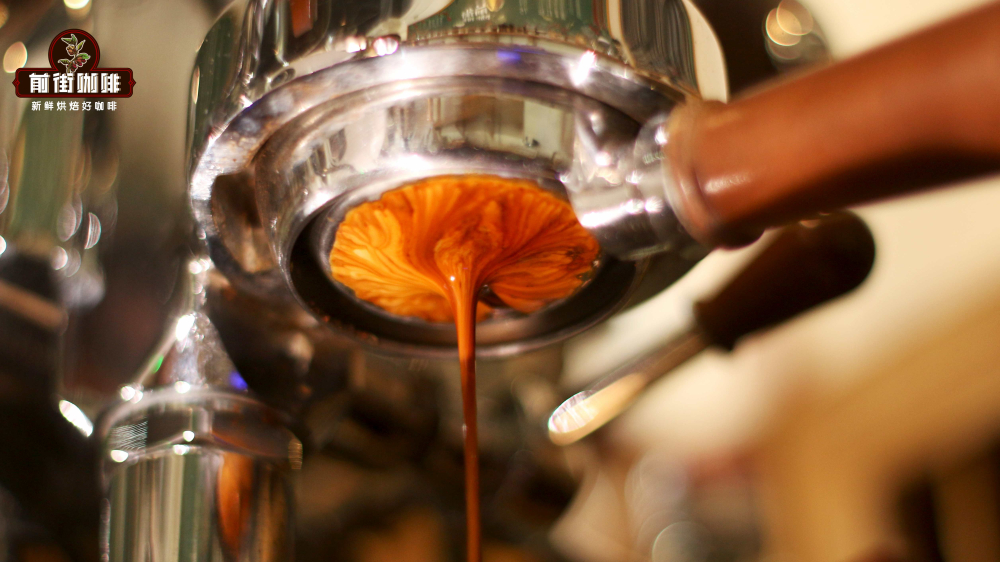
After receiving the same weight of coffee powder, they find that when tamping, it presses all the way down at once, and the volume feels smaller than that of dark roast. After locking in the coffee machine and pressing the extraction button, before long the coffee liquid gushes out like a fountain, and within less than 10 seconds it extracts to the target ratio of 1:2.
This is because light-roast coffee beans do not expand as much as dark-roast beans, so at the same weight, light-roast coffee powder appears smaller in volume. The fast flow rate of the coffee liquid is because light-roast coffee powder does not expand much after absorbing water, making it very easy for water to pass through.
Therefore, the first step in extracting light-roast coffee beans with an espresso machine is to adjust the grind size. If you usually use medium-dark roasted coffee beans to extract espresso, when switching to light-roast coffee beans you need to make the grind finer. For example, when Front Street Coffee extracted a light-roast washed Yirgacheffe, it adjusted the espresso burr finer by 0.3 marks. (Note: Front Street Coffee's daily grind adjustment range is ±0.05.)
-Using the same dose
Without adjusting the grind size, the light-roast coffee puck is already smaller in volume than before. After making the grind finer, the puck volume becomes even smaller. This means the puck is farther from the shower screen, and during extraction the water forms a greater impact force on the puck surface, and in severe cases perforation occurs. Moreover, when the puck is thinner, the time for water to pass through is shortened, resulting in insufficient extraction time, and the coffee appears thin and sharply sour.
The simplest way to solve this problem is to increase the dose. How much to increase depends on the extraction time and the reasonable capacity range of the basket (after tamping, the puck fits at the ring line of the basket). For example, when Front Street Coffee uses Sunflower Warm Sun Blend coffee beans, the dose is 20g, while using light-roast Yirgacheffe requires 21.3g to reach that line at the edge of the basket.
-Using the same pressure
The reason espresso can extract in about 30 seconds the coffee substances that pour-over takes 2 minutes to extract lies in pressure. Generally, espresso extraction pressure reaches 9 bar; the greater the pressure, the higher the efficiency of extracting substances.
When you have adjusted parameters such as dose and grind size, and the ratio and time are also within a reasonable range, the extracted espresso, besides showing the acidity of light-roast coffee, also has a bitter taste resembling wood shavings and herbs.
Therefore, using slightly lower pressure in coffee extraction can solve this type of problem well. When Front Street Coffee uses light-roast coffee beans to make espresso, the extraction pressure is controlled at 6-7 bar.
Below, Front Street Coffee summarizes what changes there are when making espresso with light-roast coffee, for everyone's reference.
1. The general principles for extracting espresso also apply to light-roast coffee, namely a coffee-to-liquid ratio of 1:2 and a time controlled at 25-30 seconds.
2. Compared with the dark-roast espresso beans we are used to, light-roast coffee beans need a finer grind, an appropriately increased dose, and lower pressure. (Grind size and increasing the dose are also related: the finer the grind, the smaller the volume after tamping, and the more coffee powder needs to be added; but these two are also constrained by time—the finer the powder and the more powder added, the longer the time required. So setting an extraction time of 25-30 seconds can also effectively verify whether your grind size and dose are correct.)
3. Hitting the extraction template does not necessarily mean the coffee will taste good. If you decide the flavor still needs improvement, you can make fine adjustments to grind size, coffee extraction yield, and pressure.
Finally, what will espresso made with light-roast coffee beans taste like?
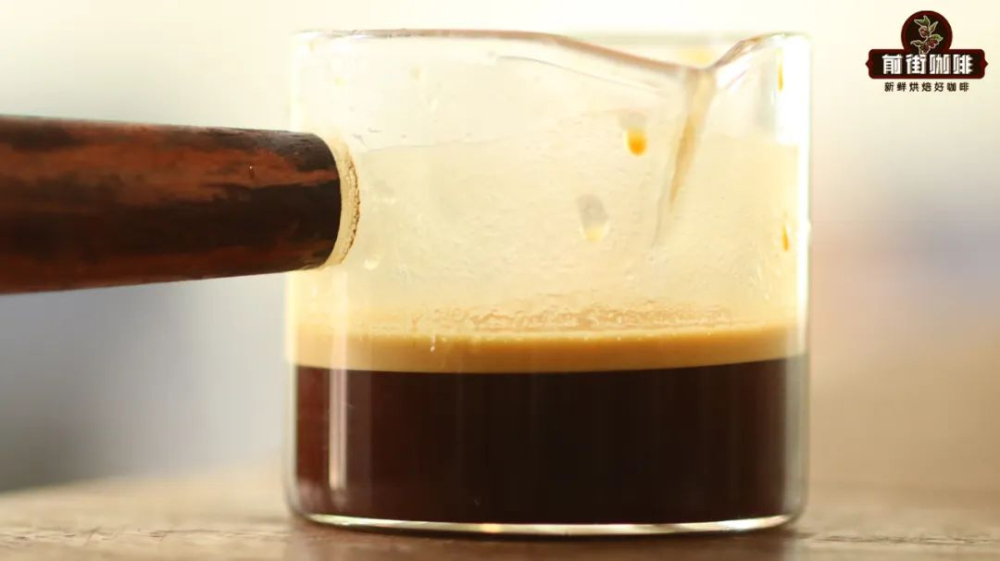
First, if you do not usually drink espresso, then the espresso made with light-roast beans will feel extremely strong and extremely sour, making you shiver. If you are in the habit of drinking espresso, then the espresso made with light-roast beans will have a very intense acidity, accompanied by a faint salty taste like brine. The body is naturally not as high as traditional espresso beans, but it still has a cheesecake-cream mouthfeel when drunk.
Second, the espresso made with light-roast beans performs well after adding water to make an Americano. The acidity is bright and full, while the middle and finish have good sweetness and a bittersweet coffee taste, with an obvious sweet aftertaste. (This is the flavor performance of Americano made with Yirgacheffe; not all light-roast beans necessarily taste like this—it depends on the coffee beans' flavor description.)
Finally, the espresso made with light-roast beans is actually not suitable for making milk coffee, because the profile of light-roast coffee is mainly fresh flavors such as acidity and floral notes. These flavors are extremely easily covered by the taste of milk, and what you finally drink is milk with a hint of coffee flavor. (Friends who like an obvious milk taste and dislike coffee bitterness should like it.)
The above content is compiled by CoffeeHunters, a coffee news website.


