







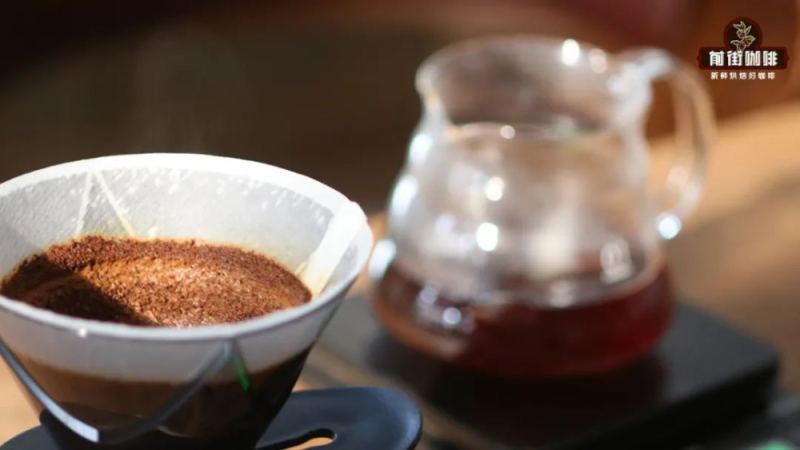
What parameters make one-pour iced pour-over coffee work?
One-pour iced pour-over skips the blooming stage and pours all the water at once. The starting recipe is 20 grams of coffee, 150 milliliters of water at 93 degrees Celsius, and 80 grams of ice in the server, with ice added to the glass counted separately. Pour in a small circular motion for about 10 seconds, then stir 10 times in one direction.
Grind finer than usual for iced pour-over: roughly a 7 setting on an EK-43s, against a daily range of 9 to 9.5. Choose coffee beans for hand brew suited to a slow-drip dripper such as the Mugen cross-star, and note the gear is basic, including the Hario Smart G grinder, so beginners can copy the setup without a barrier.
Want to easily make a refreshing, crystal-clear iced pour-over coffee at home? This article centers on Mr. Tetsu Kasuya's one-pour brewing method, breaking down the complete process from equipment selection and parameter settings to pouring and stirring. Front Street will combine hands-on testing experience to explain the logic behind the combination of 20 grams of coffee grounds, 150 milliliters of water, and 80 grams of ice, and will analyze in depth the effects of a slow-drip dripper, fine grinding, and the coffee-to-water ratio on extraction. Whether you're a beginner just getting started or a coffee enthusiast looking to refine your technique, you'll be able to grasp the core essentials and key points of the one-pour iced pour-over.
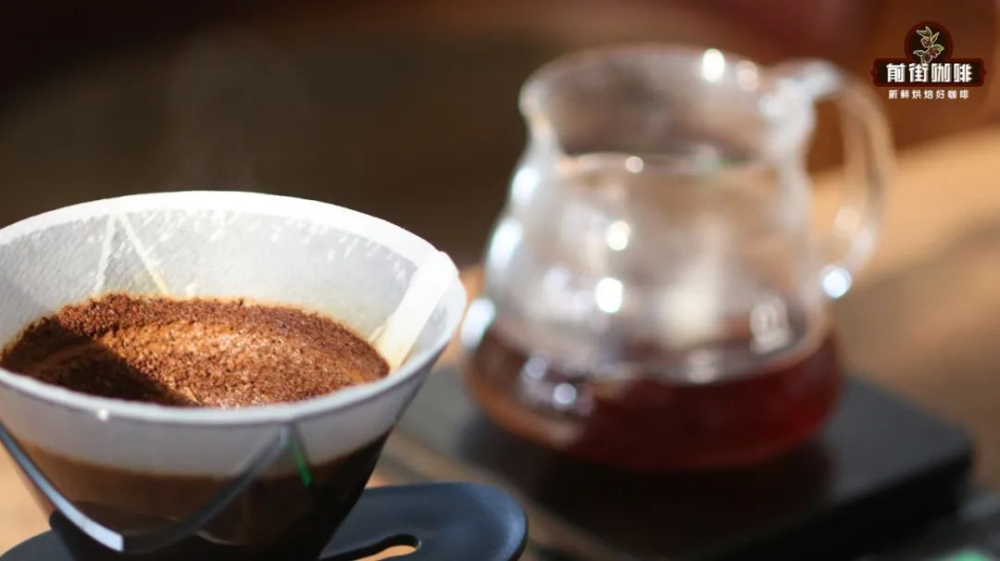
If any friends are still unfamiliar with the concept of "one-pour," you may want to review Front Street's earlier detailed introduction to this brewing method. In short, the defining feature of the one-pour method is that it skips the blooming stage and directly pours in all the required water at once. You can first watch the video of Mr. Tetsu Kasuya demonstrating the one-pour iced pour-over.
In Front Street's view, this method is especially well suited to home settings. The reason is that the equipment featured in Mr. Kasuya's video consists of the Hario Smart G hand grinder, a PCT resin gooseneck pour-over kettle, and the Mugen infinite cross-star dripper—there's no case of high-end equipment overpowering ordinary gear, so beginners can imitate it without much of a barrier.
Let me briefly recap Mr. Kasuya's brewing process here. For the initial parameters: 20 grams of coffee beans, a relatively fine grind (based on Front Street's actual comparison, roughly equivalent to a 7 setting on the EK-43s, while Front Street's everyday iced pour-over usually falls between 9 and 9.5), water temperature set at 93 degrees Celsius, a total pour of 150 milliliters, and 80 grams of ice (it should be noted that these 80 grams of ice go into the server, and the ice later added to the glass is counted separately).
The technique is quite straightforward: after adding the coffee grounds, pour 150 milliliters of water in a small circular motion with a relatively strong stream, with the pouring lasting about 10 seconds. Immediately after, take a spoon and stir 10 times in the same direction. Once the coffee liquid has fully drained into the lower vessel, remove the dripper and shake the server to speed up cooling. Basically, once the 80 grams of ice has completely melted, the coffee temperature has dropped to the right point, and it's ready to enjoy.
Front Street has tested this brewing method with several light-roast coffee beans, and the flavor performance was satisfying every time—bright, clean, and pleasant acidity.
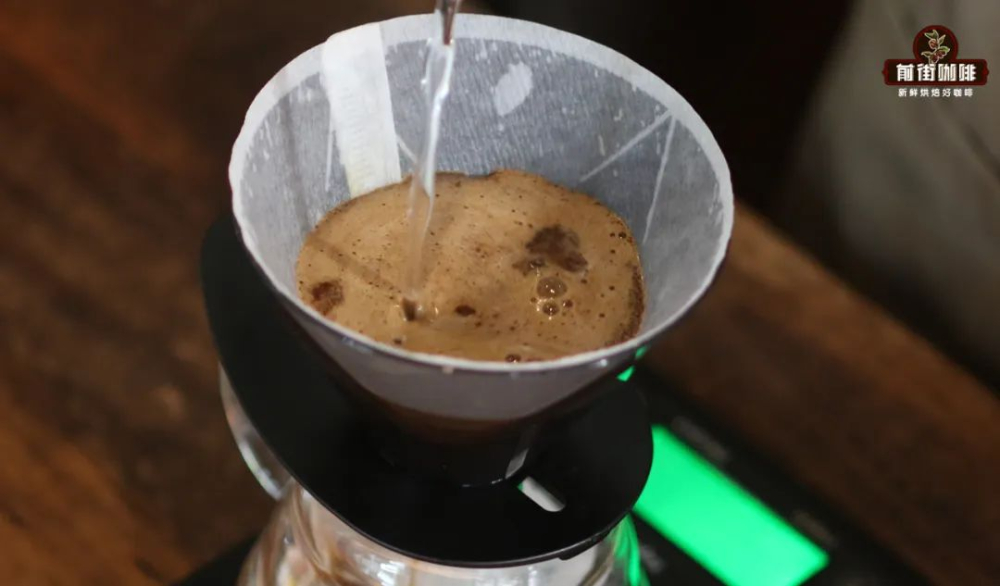
Whether it's this method or the approach used in Front Street's shops, the underlying logic is exactly the same: by coordinating various parameters, extract a coffee liquid with higher concentration and a reasonable extraction yield, then rely on ice to cool and dilute it.
Next, Front Street will discuss a few key points to note with this brewing method. First, the one-pour method is essentially immersion extraction, so you should extend the contact time between the coffee liquid and the water as much as possible. Choosing a slow-flow dripper and grinding the coffee finer can achieve this. You don't have to use only the Mugen dripper; equipment known for immersion extraction, such as wedge-shaped drippers, is equally suitable.
Second, the requirements for grind quality are relatively lenient. For example, hand grinders tend to produce more fines, but the negative impact on this brewing method is minimal—what truly causes unpleasant flavors in coffee is over-extraction from fines soaking for too long. Since the coffee-to-water ratio is only 1:7.5, the immersion time isn't long, and extraction is usually finished in about 1 minute and 30 seconds. Of course, the premise is that the grind size doesn't deviate too wildly. Front Street's testing found that flavors brewed at EK43s settings between 4 and 7 were all pretty good, and this degree of coarseness feels like rough particles when touched by hand; if ground as fine as espresso, it's only expected that a long soak would produce bitterness.
Third, the barrier to pouring is low. The one-pour method has arguably the lowest demand for water-control skill, making it extremely beginner-friendly. Because it lacks a blooming stage, it may lead to a lower extraction yield and uneven extraction, so spoon stirring is needed to compensate. Stirring with a spoon in the same direction helps improve the extraction yield and uniformity. This principle isn't hard to understand—in regular pour-over coffee, the water stream essentially plays a similar role to a "spoon," agitating the coffee bed to improve extraction efficiency.
The above content is compiled by CoffeeHunters, a coffee news website.


