







What Does the Starbucks CEO Handover Mean for Coffee Knowledge?
Starbucks founder Howard Schultz has said he will not return as CEO, backing Laxman Narasimhan, who takes office on October 1. Schultz stays on the board as a long-term advisor. Narasimhan called the transition a structured immersion that lets him learn the company deeply. Starbucks faces rising global costs, falling same-store sales in China, and strong domestic competition.
The handover follows Kevin Johnson's retirement on April 4 after 13 years at the company and five as CEO. Schultz has predicted China will eventually pass the United States as Starbucks' largest market by store count. How the new leader steers the chain through cost pressure and shifting demand is the point to watch.
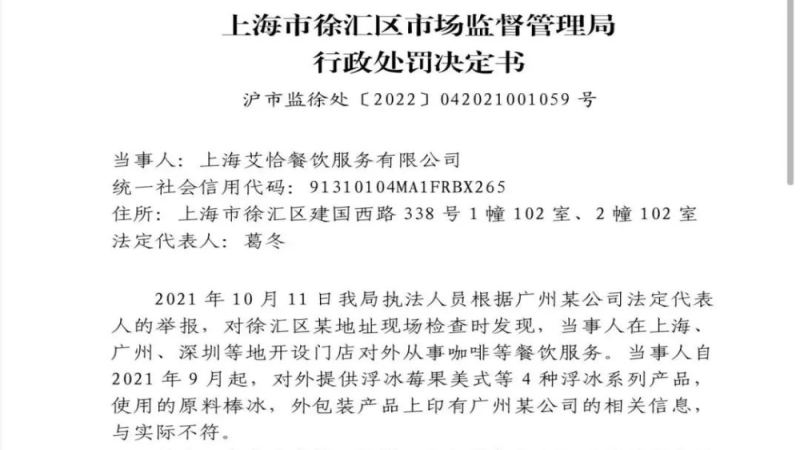
Well-known coffee brand Mstand was subject to an administrative penalty by the Shanghai Xuhui District Market Supervision Administration, which confiscated illegal gains and imposed a fine totaling approximately 487,000 yuan, because it commissioned a supplier without a food production license to produce popsicle ingredients on its own. The incident stemmed from the supplier fraudulently using a third party's qualifications, exposing loopholes in qualification review in the food contract manufacturing sector. This article details the penalty process, the amount involved, and the legal basis, and explores the difficulties small coffee brands face in compliant production. At the end, it also includes professional coffee knowledge exchange channels and Front Street Coffee recommendations for coffee enthusiasts' reference.
Professional coffee knowledge exchange. For more coffee bean information, please follow Coffee Workshop (WeChat public account: cafe_style).
For more specialty coffee beans, please add the private WeChat of Front Street Coffee (FrontStreet Coffee), WeChat ID: qjcoffeex
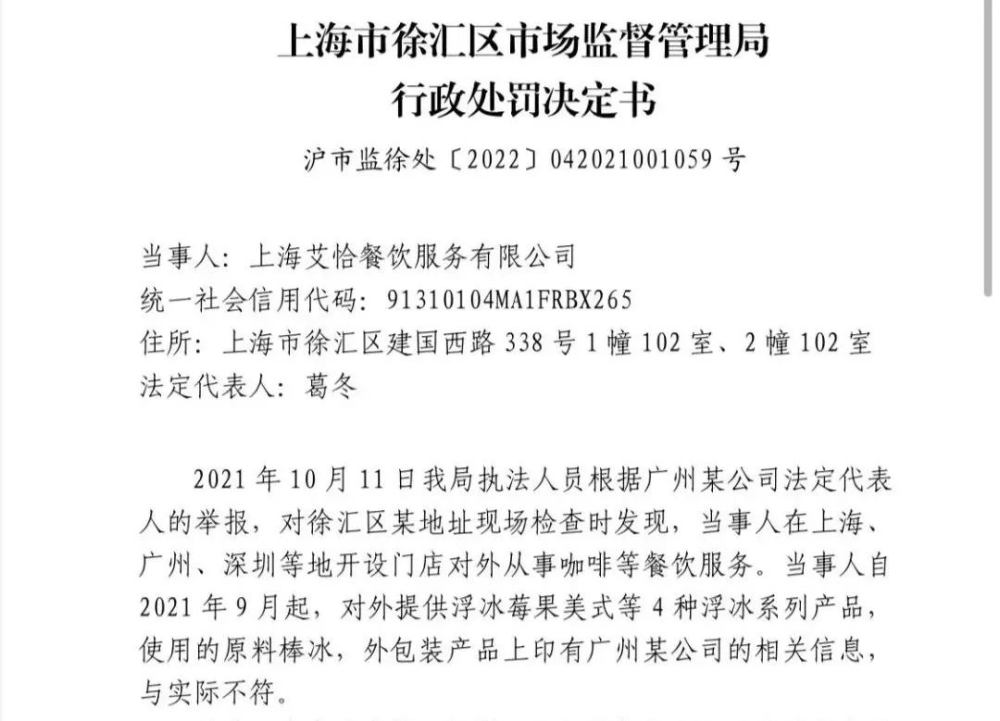
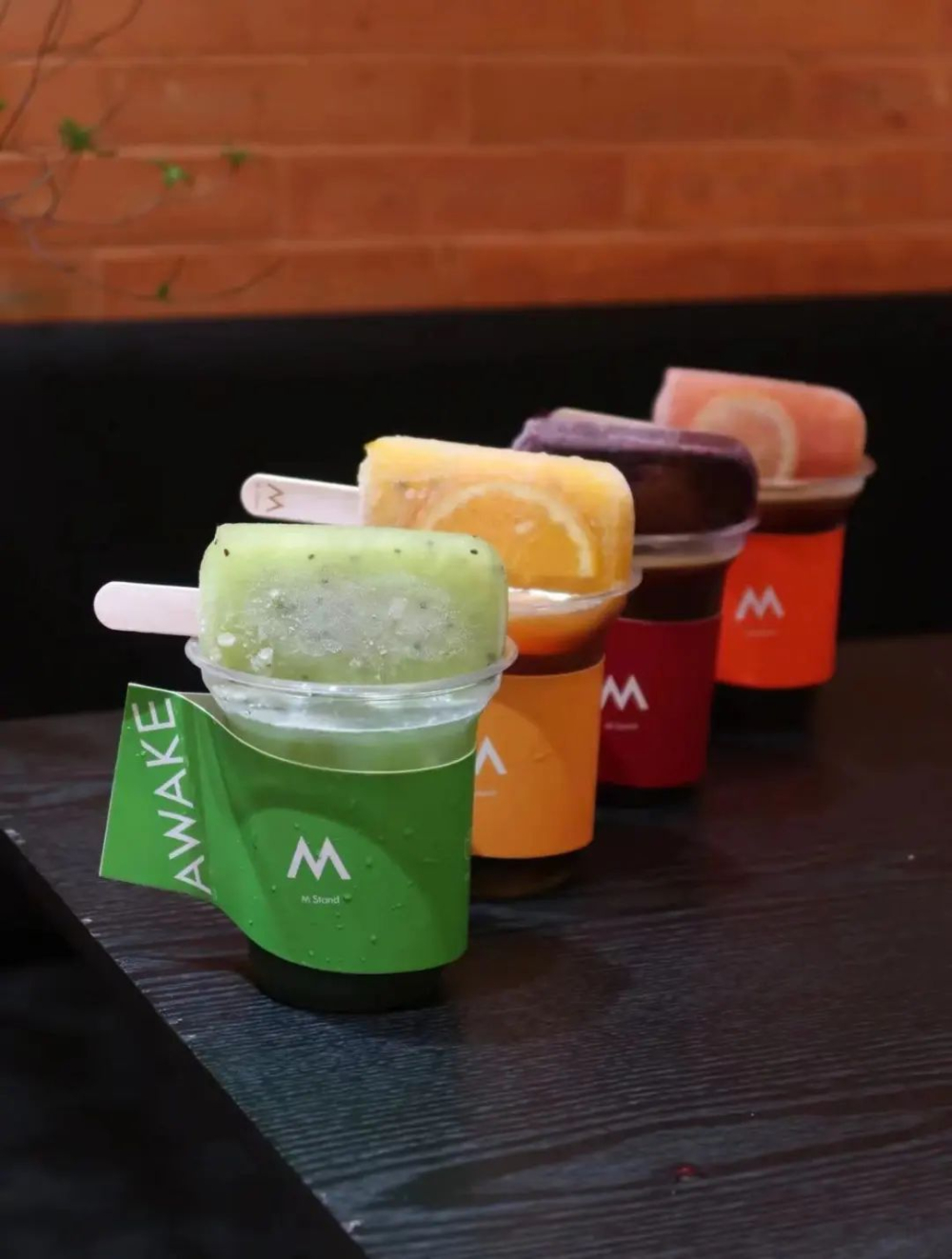
Starting in September 2021, Mstand launched four floating ice series drinks, including the Floating Ice Berry Americano, in stores nationwide. The outer packaging of the popsicles used as ingredients bore information of a Guangzhou company, but upon verification, this information did not match the actual situation.
After investigation, the Shanghai Xuhui District Market Supervision Administration found that in August 2021, Mstand signed a commissioned processing contract with a Guangzhou company, agreeing that **** Company would produce the "Mushang Binhe Guo" series of popsicles for Mstand, with flavors including mulberry berry, passion fruit orange, grapefruit lemon, and kiwi green grape, totaling 80,000 sticks.
Since August 2021, Mstand successively sold four floating ice series coffees in stores nationwide, all using these popsicles as ingredients. However, the investigation confirmed that these popsicles were actually produced by **** Company on its own premises without obtaining a food production license.
Mstand had paid **** yuan to the commissioned company, which actually delivered 62,800 sticks. Mstand rejected 2,340 sticks upon warehousing through third-party logistics, ultimately warehousing 60,460 sticks, of which 15,400 sticks were transferred to the defective goods warehouse, and 25,860 sticks were actually sent to stores. As of the investigation, stores had used 15,169 popsicles, corresponding to sales of **** yuan. Based on the paid raw material payment, the product value was **** yuan, and the illegal gains were 127,116.22 yuan.
On August 15, 2022, the Xuhui District Market Supervision Administration imposed the penalty on Mstand in accordance with Article 33, Paragraph 1 of the Shanghai Municipal Food Safety Regulations — food producers and operators commissioning food production shall commission enterprises that have obtained a food production license and have corresponding production conditions and capabilities.
Because the floating ice series coffee allowed consumers to take it away, and the popsicles, as independently packaged products, could have their sales amount calculated separately from ordinary Americano coffee, the illegal gains in this case were determined based on the actual sales amount of the popsicles, 127,116.2 yuan.
After discovering the problem, Mstand immediately stopped operating the products involved, proactively provided relevant materials, and since the unlicensed production occurred in the Guangzhou area, Mstand also submitted inspection reports to prove that food safety was controllable.
After investigation, the Market Supervision Bureau believed that it was a fact that the production enterprise lacked qualifications, but Mstand may not have known and had no obvious subjective intent. Taking the above factors into account, in accordance with the relevant provisions of the Administrative Penalty Law, it decided to reduce the penalty.
Even so, in accordance with Article 95, Paragraph 1 of the Shanghai Food Safety Regulations and Article 28, Paragraph 1 and Article 32, Item (1) of the Administrative Penalty Law of the People's Republic of China, the regulatory authorities ordered the party to immediately correct the illegal acts, confiscated illegal gains of 127,116.2 yuan, and imposed a fine of 360,000 yuan, totaling 487,116.2 yuan in confiscation and fines.
From this administrative penalty notice, it can be seen that the incident originated from a food manufacturer fraudulently using a third party's qualifications. Why do such illegal acts still occur repeatedly under the current food safety regulatory system? Mstand being heavily fined this time may have come to light precisely because the owner of a compliant factory discovered that its own production qualifications had been fraudulently used and reported it out of anger.
A food production license is the entry threshold for food processing enterprises, but many small food enterprises, such as some small coffee brands, are unwilling to invest funds in establishing compliant factories.
Even Mstand is like this, and smaller brands or stores find it even harder to obtain production qualifications for food and coffee beans. In this case, commissioning a third-party factory to produce one's own products has become a common choice. And more daring ones will directly borrow third-party production qualifications, produce on their own in stores, or misappropriate third-party qualifications.
In earlier years, we often heard the term "three-no products." As market regulation has become increasingly strict, three-no products — with no production date, no quality certificate, and no manufacturer — have gradually disappeared from the market. Even retail goods usually have relatively standardized labels.
Sometimes goods received from online shopping have both manufacturer information and a production license, but the production address and shipping location are far apart, and the production date is the same day it was shipped from another faraway place.
This situation is very likely the fraudulent use of production qualifications mentioned in the case. Such operations bring huge legal risks to oneself, and once investigated, they will inevitably lead to heavy penalties. This case is worth everyone's attention.
Image source: Internet
The above content is compiled by CoffeeHunters, a coffee news website.


