







Why Did a Coffee Supplier Fall Short on Licensing?
Mstand was fined about 487,000 yuan by the Shanghai Xuhui District Market Supervision Administration, which also confiscated illegal gains. The coffee brand had commissioned a supplier without a food production license to make popsicle ingredients used in its floating ice series drinks, starting with the Floating Ice Berry Americano sold nationwide from September 2021.
Under the August 2021 contract, 80,000 popsicles were ordered across four flavors, and the supplier produced them on its own premises without a license, delivering 62,800 sticks before Mstand rejected some on warehousing. The case, which began when packaging details did not match verification, exposes qualification-review gaps in food contract manufacturing that small coffee brands often struggle with.
Located in the Brunca region of Costa Rica, Café Rivense del Chirripó was founded in 2005 by the Ureña Rojas family at an altitude of 1,550 meters, adjacent to Mount Chirripó and Mount Muerto, where a unique valley microclimate nurtures high-quality coffee. The estate employs a black honey processing method, keeping the full mucilage layer intact for 12-15 days of sun-drying, which creates this Geisha coffee's rich fermented sweetness and fruity character. Front Street Coffee's batch of black honey Geisha, given a medium-light roast, cups with high sweetness of citrus, cherry, and cantaloupe, soft acidity, and a full body. This article details the estate's background and processing methods, and includes Front Street's recommended V60 three-pour brewing parameters to help coffee lovers recreate its rich layers at home.
Café Rivense del Chirripó
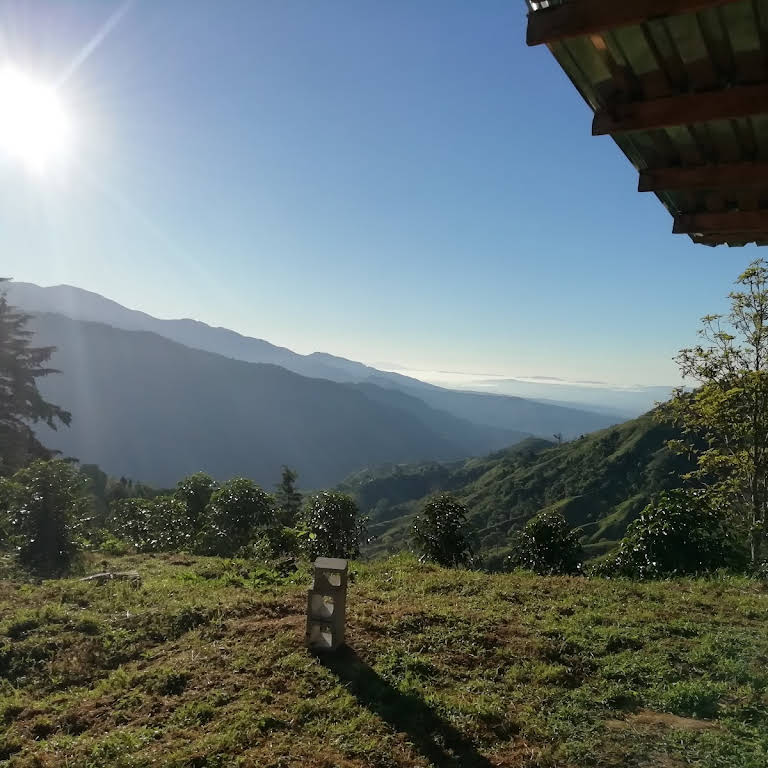
Café Rivense del Chirripó is located in the Brunca region of southern Costa Rica, at an altitude of approximately 1,550 meters, directly facing the highest mountain range in the area, the Chirripó range.
In 2005, Régulo Gerardo Ureña Chacón and his wife Isabel Rojas purchased this 8-hectare plot of land and began growing coffee. Every morning, as the couple tended the coffee trees on the estate, they would look up and see the magnificent scenery of the Chirripó mountain range, and so the estate was named "Rivense" (meaning "view of the mountain"). This micro-region lies between Costa Rica's two highest peaks—Mount Muerto (3,491 meters) and Mount Chirripó (3,820 meters)—and the valley between the mountains forms a unique microclimate that provides ideal conditions for coffee cultivation.
In the early years of operation, the Ureña Rojas family faced many setbacks in coffee cultivation due to the harsh environment and lack of experience. After repeated trial and error and years of dedicated effort by the couple, they finally won fifth place in the Cup of Excellence (COE) in 2019. Today, Café Rivense del Chirripó not only processes green coffee beans for neighboring farmers but also helps them sell their products to overseas markets, and continues to encourage more farmers to engage in high-quality specialty coffee production.
Café Rivense del Chirripó has always regarded environmental protection as its core, adopting sustainable management systems throughout the process from coffee cultivation to green bean processing, striving to reduce its carbon footprint: applying organic fertilizer in doses tailored to differences in soil composition, ensuring coffee tree nutrition while avoiding excessive chemical intervention; all water resources on the estate are properly protected; and a variety of fruit trees have been planted to shade the coffee trees while also providing food for surrounding wildlife. In such a green ecological environment, the quality of the coffee cherries is naturally better guaranteed.
Black Honey Processing
All coffee cherries at Café Rivense del Chirripó are dried using natural or semi-natural methods, so the coffees produced have extremely high sweetness while also greatly conserving water resources.
The Ureña Rojas family picks the coffee cherries at their optimal ripeness, when the fruit has the highest sugar content. The coffee skin and pulp are removed in a dry environment, ensuring the mucilage layer remains fully intact. The parchment beans with the entire mucilage layer intact are placed on drying beds for 12 to 15 days of sun-drying. Because the mucilage layer is the thickest, the drying process takes a longer time and the temperature must not be too high; only even drying allows the sugars to fully transform. Therefore, Café Rivense del Chirripó strictly controls every step: drying, hulling, grading, packaging, and export, to ensure the traceability of each coffee lot.
Front Street Coffee: Café Rivense del Chirripó Black Honey Geisha Coffee Beans
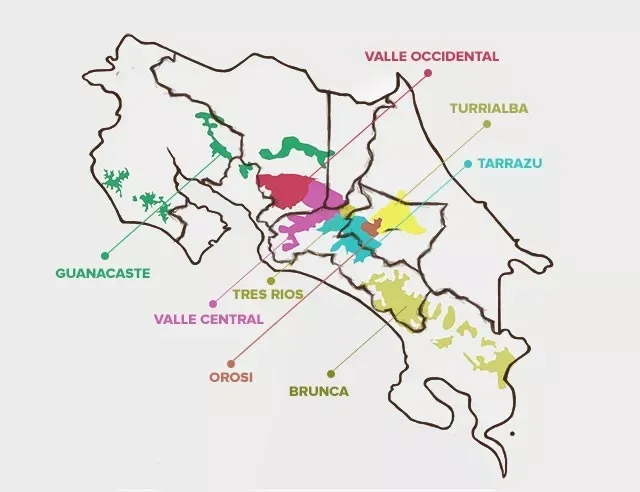
Region: Brunca, Costa Rica
Estate: Café Rivense del Chirripó
Variety: Geisha
Altitude: 1,550m
Processing Method: Black Honey
Flavor: Dried Fruit, Honey, Fermented Fruit, Cherry
This black honey Geisha coffee bean sourced by Front Street is dominated by fruity notes; to preserve more fermented sweetness, Front Street's roaster used a medium-light roast. Through cupping, the dry aroma presents intense fermented aromas of dried fruit and berries, while the flavor shows high sweetness of citrus, cherry, and cantaloupe, soft acidity, and a full body.
Brewing Reference
This black honey Geisha is a Costa Rican high-altitude SHB extremely hard bean. To brew out the coffee's rich fruity layers, Front Street recommends using a higher water temperature and a finer grind. The harder the coffee bean, the finer the grind needed to increase the extraction surface area, thereby raising the extraction yield.
Dripper: V60
Water Temperature: 90-91ºC
Dose: 15g
Coffee-to-Water Ratio: 1:15
Grind Size: Fine granulated sugar (78% passing through a No. 20 sieve)
Three-Pour Extraction: Pour the coffee grounds into the V60 dripper, wet the coffee bed with twice the amount of water as the coffee grounds, and let it bloom for 30s. Then, using a slow stream of water, pour in circles from the inside out until reaching 125g, pause, and when the coffee bed drops to the halfway point of the dripper, continue pouring the third pour with the same slow stream until 225g, and once all the coffee liquid has filtered through, remove the dripper. The total time should be about 2 minutes (with a 10-second margin of error).
Through pour-over brewing, Front Street found that this black honey Geisha coffee has an intense fermented aroma of cantaloupe and tropical fruit, a balanced acidity of berries and cherry, and a more pronounced fruity tea finish as the temperature drops, with an overall full sweet-and-sour profile.
For professional coffee knowledge exchange and more coffee bean information, please follow Coffee Workshop (WeChat public account: cafe_style)
For more specialty coffee beans, please add the private WeChat of Front Street Coffee (FrontStreet Coffee), WeChat ID: qjcoffeex
The above content is compiled by CoffeeHunters, a coffee news website.


