








How Does This Kenya Coffee Beans Origin Shape the Cup?
The Baramunya AA coffee comes from the Rugi Cooperative in Kenya's Nyeri region, a highland area between Mount Kenya and the Aberdare Range. Volcanic red soil and altitude support the SL28 and SL34 varieties grown there. The washed process and AA grade, Kenya's top classification by green bean size, produce a cup with dark plum, plum, apricot, and a black tea finish.
The Rugi Farmers Cooperative Society was founded in 2005 and has about 4,000 members whose cherries come from the Wajee Nature Park area. SL28 and SL34 have been planted locally since the 1930s; SL28 brings Typica lineage, sweetness, and citrus aroma, while SL34 resists disease better and yields more. Cherries are pulped, dry fermented for 12 to 24 hours, washed, and soaked.
Kenya's Nyeri region, with its volcanic red soil and high-altitude environment, has long been a star origin in the specialty coffee world. This article focuses on the Bulamuya AA coffee beans produced by the Rugi Cooperative, covering its origin background, the characteristics of the SL28 and SL34 varieties, the washed processing flow, and the AA grade classification standards, and shares Front Street Coffee's cupping flavors and three-stage brewing parameters. From dark plum and plum to apricot and black tea finish, this takes you through the complete flavor profile and extraction approach of this Kenyan coffee.
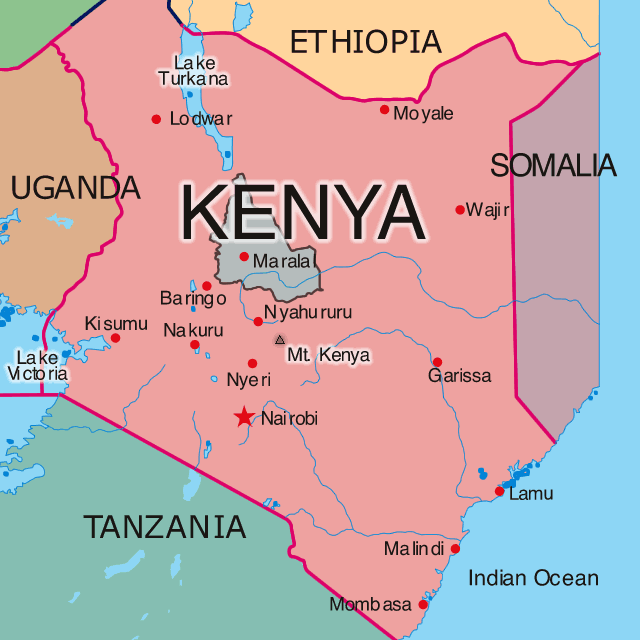
Nyeri
Nyeri is located in the highlands between central Mount Kenya and the Aberdare Range, and is one of Kenya's most renowned coffee-producing regions. The fertile red soil left by volcanic activity provides excellent conditions for local coffee cultivation and has also given rise to a large number of outstanding Kenyan coffees.
Rugi Cooperative
The Bulamuya coffee introduced in this article comes from the Rugi Cooperative in Nyeri (Rugi Farmers Cooperative Society). The cooperative was founded in 2005 and has about 4,000 farmer members.
The coffee cherries processed by the cooperative come from the nearby Wajee Nature Park area. This area is a natural bird sanctuary inhabited by many rare species, and its pristine ecology creates favorable conditions for coffee tree growth.
Green coffee beans
The two main varieties cultivated around the cooperative are SL28 and SL34, which have been widely planted since the 1930s. SL28 has Typica lineage, offers rich flavor layers, high sweetness, and citrus aromas. SL34 is similar in flavor to SL28, has stronger disease resistance and higher yield, and can grow normally even at lower altitudes.
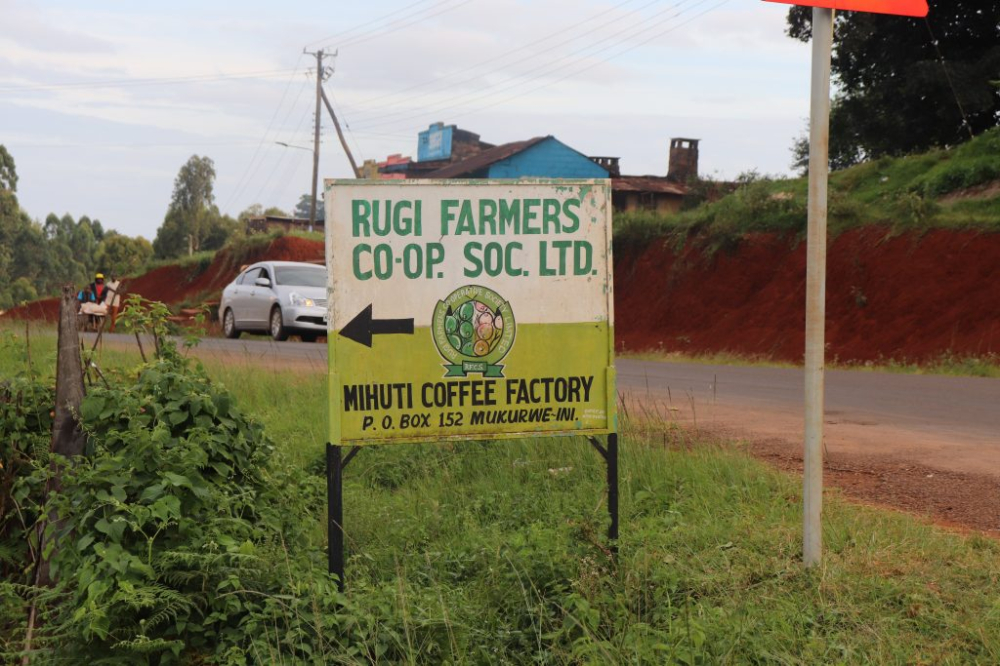
Kenya grades coffee by green bean size and cupping score. According to green bean size, shape, and hardness, the grades include AA, AB, PB, C, E, TT, and T, with AA being the highest grade.
Processing method
The Rugi Cooperative operates multiple washed processing stations. The processing station first places the coffee cherries harvested by farmers on a disc to pulping and remove the skin, then puts them into containers for dry fermentation for 12 to 24 hours. After that, the coffee beans enter washing channels, where the mucilage is removed by rubbing and washing, and then they are soaked in clean water for a second fermentation lasting about 36 hours, with the water changed every 5 to 12 hours during this period. After fermentation and washing are completed, the coffee beans are moved to raised beds to dry for about ten days.
Front Street Coffee: Kenya Bulamuya Coffee Beans
Origin: Kenya Nyeri Rugi Cooperative
Altitude: 1580-1750 meters
Variety: SL28 SL34
Grade: AA
Processing method: Washed
Flavor: Dark plum, plum, grapefruit, apricot
Brewing reference
This Kenyan coffee obtained by Front Street has flavors of apricot and stone fruits. In order to retain more fruity aroma, Front Street roasters use a light roast. Through cupping comparison, its dry aroma shows dark plum and caramel, while on the palate it presents the texture of dark stone fruits such as plum, plum, and apricot, with full-bodied acidity.
For brewing, Front Street uses a finer grind for high-altitude Kenyan coffee, using a Chinese No. 20 standard sieve with a passing rate of 78%. Paired with a V60 dripper, this makes the flavor layers clearer.
The extraction uses three-stage pouring: after the coffee grounds are ground, put them into the filter paper, start pouring 30g of water from the center for a 30-second bloom, keeping a small steady stream in circles from the inside out throughout; pour 95g of water in the second stage, and after the coffee liquid has basically flowed through, begin the third stage by pouring 100g until all the coffee has filtered through, then remove the dripper. The total time is about 2 minutes, with a margin of about 10 seconds.
This Kenyan Bulamuya coffee enters with the acidity of dark fruits such as plum and dark plum, shifts to the rich sweet-and-sour character of apricot and stone fruits at medium temperature, and has a rounded finish with a black tea-like aftertaste.
For professional coffee knowledge exchange and more coffee bean information, please follow Coffee Workshop (WeChat public account: cafe_style)
For more specialty coffee beans, please add the private WeChat of Front Street Coffee: qjcoffeex
The above content is compiled by CoffeeHunters, a coffee news website.


