








How does the coffee process build flavor from farm to cup?
Coffee flavor is not set by one step. It builds in layers: origin climate and soil set the base style, variety sets the flavor ceiling, green bean processing directs fermentation and cleanliness, roasting releases aromas, and brewing makes the final adjustment. Each stage narrows or opens what the next one can deliver.
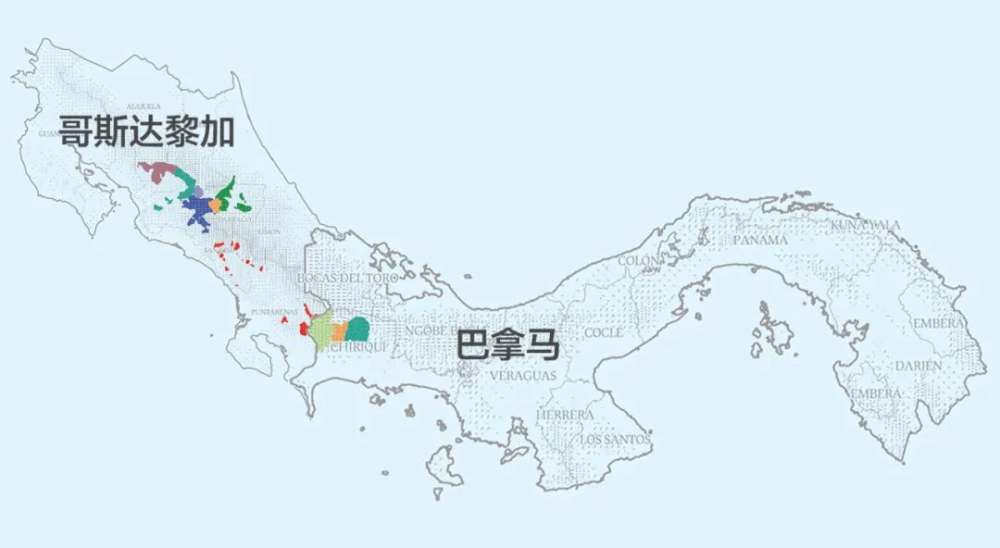
The clearest example is Geisha. It made Panama famous, yet the variety traces back to Ethiopia and reached Panama by way of Costa Rica. Costa Rican and Panamanian Geisha now sit side by side on the market. Understanding the chain makes it easier to judge why a cup tastes the way it does and which step shaped the result.
Many people ask "what flavor does this bean have" when drinking pour-over, and at Front Street stores we often first learn about the customer's preferred origin or taste. The reason coffee shows such diverse expressions as floral, fruity acidity, nutty, and chocolate is not determined by a single step, but is the result of layer upon layer of accumulation from origin terroir, variety selection, green bean processing, roasting development, to final brewing. Origin climate and soil shape the underlying style, variety determines the flavor ceiling, processing method influences fermentation direction and cleanliness, roasting releases potential aromas, and brewing is responsible for the final direction adjustment. Understanding this chain allows you to more clearly judge why a cup of coffee tastes good, and which steps truly determine flavor.
Today when we taste pour-over coffee, we often first pay attention to where this bean comes from. Similar conversations often happen at Front Street stores: when a customer walks in, the staff first asks "what flavor do you usually like" or "which origin country's beans do you usually drink." The reason is that different origin countries and regions do form their own taste tendencies, which is what Front Street often calls origin flavor. When the concept of specialty coffee was first proposed, one of its core viewpoints was that coffee possesses the attribute of origin flavor.
Origin Flavor
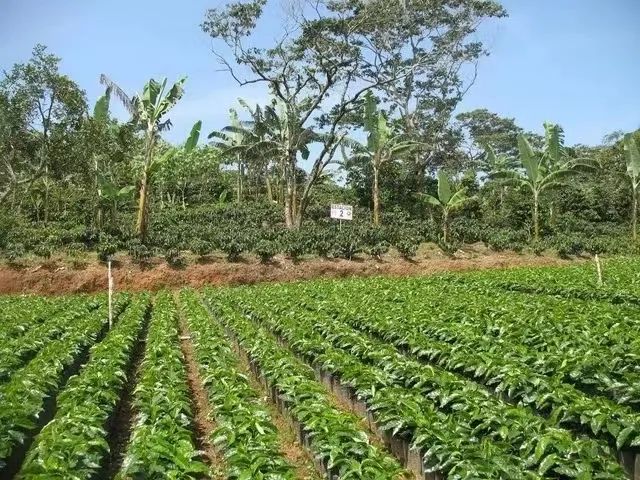
The ancients said, "Oranges grown south of the Huai River are oranges, while those grown north of it are trifoliate oranges." When the same plant is moved to a different environment, the taste of its fruit changes. Coffee is the same. Agricultural and geographical conditions such as soil, altitude, variety, and cultivation methods all participate in shaping flavor, which is why each origin has different coffee flavor characteristics.

Geisha is a very typical example. It made Panama famous worldwide, but tracing back to its source, Panama's Geisha actually came from Ethiopia. Setting that aside for now, just look at Costa Rica and Panama: Panama's Geisha was introduced from Costa Rica. The two countries are neighbors, and after Panama's Geisha became popular, Costa Rican coffee farmers also began to value this variety. Now Costa Rican Geisha and Panamanian Geisha are easily available on the market, and interested readers may wish to drink them side by side to experience how microclimate, altitude, soil, and cultivation patterns affect coffee flavor.
Coffee Varieties
In the past, when discussing coffee, people talked more about "where the coffee tastes good," such as Santos, Blue Mountain, Yirgacheffe, and Kenya, mostly identified by origin names, which also confirms what Front Street calls origin flavor. At that time, variety was not completely ignored, but coffee farmers at origin also had to consider disease resistance, pest resistance, and yield when choosing varieties to plant. Therefore, although variety names differed, the flavor gaps were not necessarily very large. For example, Typica, Bourbon, Caturra, and Catuai have original species and variant relationships, and while their tastes differ, they are not especially far apart.
For a long time, agricultural departments in various origin countries have studied and bred coffee varieties, aiming to find combinations with good flavor, high yield, and strong disease and pest resistance. This also led to the discovery of varieties such as Geisha, making people realize that coffee could display such astonishing flavor expression. Since then, the search for more delicious varieties has continued to intensify, such as Eugenioides (mother species), Pacamara, WushWush, and others that have attracted much attention in recent competitions.
At the same time, coffee research institutions in various countries have also tried artificial hybridization and selective breeding to cultivate high-yield and disease-resistant varieties, but these coffees usually perform slightly worse in flavor.
Processing Methods
The initial changes in coffee processing were mainly to improve efficiency and quality. For example, the washed process, which only appeared in the 18th century, was a new method compared with traditional natural processing and had obvious advantages in both efficiency and quality. Natural processing at that time was relatively rough, simply spreading coffee cherries on the ground to dry. Affected by weather and soil microbial colonies, moldy beans and rotten beans were very common, quality was poor, and it was time-consuming. Natural processing often required 3 to 5 weeks.
Later, the washed process first removed the skin, pulp, and mucilage before drying, shortening drying time, improving efficiency, and also improving quality, though it consumed a large amount of water. Brazil's semi-dry process and Costa Rica's honey process are methods that adapt to local conditions while balancing quality and efficiency. It can be understood that once coffee quality improves, the taste is naturally better.
Later still, as specialty coffee became popular, flavor began to be emphasized. Coffee beans from the same origin, processed by natural and washed methods, also perform differently. Natural processing involves more substances in fermentation because the whole fruit participates, so the flavor is often sweeter, richer, and has a stronger fermented quality. In washed processing, only the coffee bean participates in fermentation, so the acidity is more obvious, clean, and bright.
In addition, natural processing in the past had poor quality because the method was too primitive. If raised drying beds are used to isolate soil contamination, if the beans are frequently turned to avoid excessive fermentation or mold in the lower layer, and if a dryer is used during rainy days, then through a series of measures high-quality natural coffee can be produced, and its sweet, full flavor will naturally emerge.
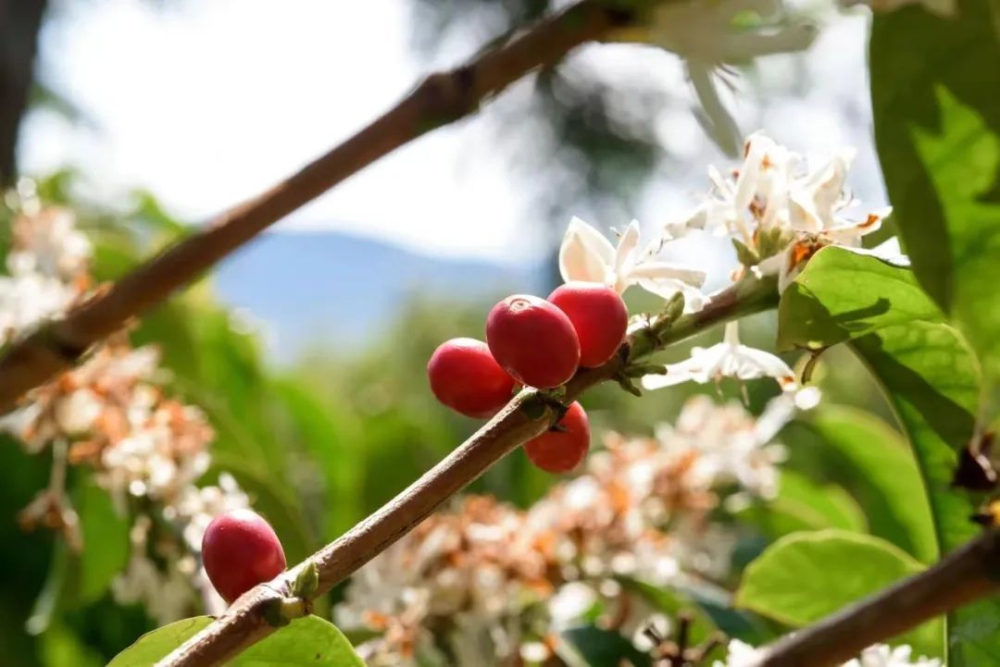
Now more and more coffee estates are studying the use of anaerobic methods and added enzymes to enrich coffee flavor, and this is also an important factor in how processing methods drive flavor formation.
Roasting
What Front Street mentioned above is all about "saving up flavor" for coffee beans, and roasting is the step that reveals the flavor. After the aromatic substances in green beans are heated to a certain degree, complex degradation and polymerization reactions occur, producing richer volatile aromatic compounds. This is mainly thanks to the Maillard reaction and caramelization reaction.
The Maillard reaction runs through almost the entire roasting process. During continuous heating, amino acids that make up proteins in green beans, as well as reducing sugars such as glucose, fructose, and lactose, undergo complex mutual degradation and polymerization, generating aromatic substances and compounds. This process repeats continuously under heat, producing more aromatic compounds like a rolling snowball.
During this process, more than 600 volatile aroma compounds are produced inside the coffee bean. As reaction time increases, fresh floral and fruity notes first appear, then lower-toned floral and fruity aromas, followed by more nutty, vanilla, creamy, and caramel tones, but the floral and fruity aromas formed earlier begin to weaken.
The caramelization reaction occurs after first crack. Sugars brown and produce aromatic substances such as diacetyl (the source of buttery aroma), furans (the source of caramel aroma), and hydroxymethylfurfural (the source of honey and fruit juice aroma). But excessive caramelization develops into carbonization, and burnt bitterness increases greatly.
If this is hard to understand, Front Street will say it again in plain terms: during coffee roasting, the point now generally considered "done" is "first crack," and the coffee can be dropped at any time after first crack. The earlier it is dropped, the lighter the roast, and the more obvious the fruity acidity and floral aroma; the later it is dropped, the darker the roast, the heavier the roasted taste, and the more prominent the nutty, chocolate, and caramel base, with a fuller body.
Brewing
Brewing is the final step in flavor expression. For a cup of coffee, from seed selection, cultivation, processing, and roasting to brewing, the further upstream the step, the greater its influence on flavor; by the downstream brewing stage, the influence on coffee flavor is relatively limited.
How high the flavor floor of coffee beans is depends on variety, cultivation, and processing, and high-quality coffee beans naturally have a higher floor. Roasting determines whether this cup of coffee is acidic or bitter, and this is something brewing cannot change.
But brewing can adjust the inclination of the coffee. For example, for the same acidic coffee, different brewing parameters can be used to brew a cup leaning toward bright acidity, or a cup leaning toward juicy, sweet-and-sour coffee.
The above content is compiled by CoffeeHunters, a coffee news website.


