







Why does cold drink production of coffee beans matter to barista turnover?
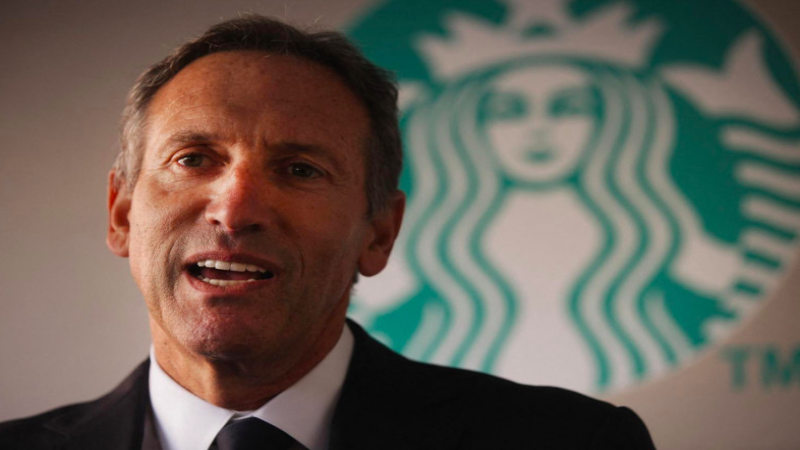
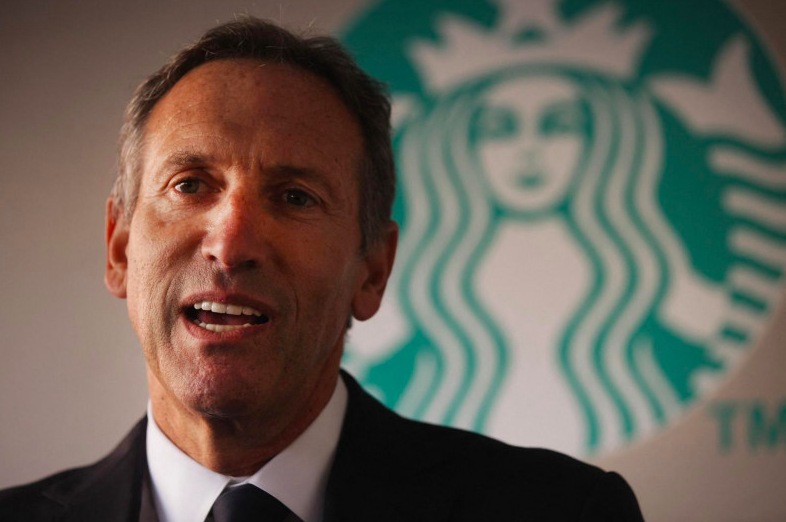
About one in four Starbucks baristas now leaves within three months of being hired, up from roughly 10% before the pandemic. Interim CEO Howard Schultz has pointed to complicated cold beverage preparation as a likely cause. Cold drinks account for 75% of beverage sales, and a single iced caramel macchiato can take three minutes to build.
Baristas shuttle repeatedly between the hot bar and the cold bar, adding ice and completing extra steps that hot drinks do not require. Starbucks is reviewing store design, menu structure, and job content, and is testing layout changes at a Seattle headquarters site to speed up cold drink production. The high-test pressure shows up in the numbers.
Starbucks is facing a thorny problem: the proportion of baristas who quit after just three months on the job has climbed to 25%, far exceeding the pre-pandemic level of 10%. Interim CEO Howard Schultz has pointed the finger at increasingly complex cold beverage preparation processes. Data shows that cold drinks now account for 75% of Starbucks' beverage sales, yet making a single iced caramel macchiato takes as long as three minutes, and employees must repeatedly shuttle between the hot bar and the cold bar. In order to retain employees and improve efficiency, Starbucks is conducting a comprehensive review ranging from store design and menu structure to job content. This article will take an in-depth look at the data and details behind this phenomenon, and also highlight the professional perspective brought by Front Street Coffee.
According to a Wall Street Journal report, internal Starbucks statistics show that about one in four baristas chooses to leave within three months of being hired, while before the COVID-19 outbreak this proportion was only about 10%. Faced with this change, Starbucks interim CEO Howard Schultz publicly stated that the overly cumbersome preparation process for cold beverages may be one of the important reasons for rapid employee turnover, and the company is actively looking for ways to improve the situation.
As early as the third-quarter earnings report released on August 2, Starbucks disclosed that cold drinks already accounted for as much as 75% of its total beverage sales. The turnover rate of Starbucks baristas in the U.S. market has continued to rise, and company executives believe that consumers' growing demand for cold drinks is one of the driving forces behind this. Compared with hot drinks, the preparation procedures for cold drinks are clearly more complex; baristas not only have to frequently replenish ice, but also have to complete multiple additional operational steps.
In order to optimize employees' work experience, Starbucks is experimenting at a test site at its Seattle headquarters with adjusting store layouts and exploring new methods that can speed up the production of cold drinks.
In a report published local time on September 1, the Wall Street Journal detailed the complete process of making one iced drink. Barista Lisa Koss demonstrated using Starbucks' iced caramel macchiato as an example. She first extracts espresso in the hot bar area, then turns and walks to the cold bar area, using a blender to make the blended ice portion. Next, she needs to go back to the hot bar area to retrieve the freshly extracted espresso, and then take milk out of the refrigerator. Finally, she returns to the blender to retrieve the blended ice, bends down to scoop ice, and mixes all the ingredients before finally completing this iced drink. Making just one iced caramel macchiato already takes nearly three minutes. For other cold drink categories that are even more popular with customers, the required steps are even more complicated.
Starbucks expects employees to quickly hand these entirely handcrafted drinks to customers. One Starbucks barista revealed that a certain store once tracked the delivery time of drive-thru employees, and the expected delivery time was even compressed to less than 50 seconds.
In response, Starbucks said that there is no uniform waiting-time standard for drive-thru service, but a delivery time of 50 seconds or less is regarded as ideal.
Some Starbucks employees mentioned in interviews with the Wall Street Journal that stores currently serve an average of about 1,500 customers per day, a significant increase from 1,200 in the past.
In order to push Starbucks stores to adapt to a faster pace of development, the company has said that many stores in the United States need large-scale renovations. Regarding the problem that cold drink preparation steps are too cumbersome, Howard said Starbucks will redesign new stores from scratch.
At present, Starbucks is working hard to improve employee retention. In order to retain employees, in addition to raising hourly wages in August 2002, the company is also re-examining store layouts, menu structure, and the specific work content of baristas.
Image source: internet
Professional coffee knowledge exchange For more coffee bean information, please follow Coffee Workshop (WeChat public account cafe_style) For more specialty coffee beans, please add the private WeChat FrontStreet Coffee, WeChat ID: qjcoffeex
The above content is compiled by CoffeeHunters, a coffee news website.


