







How does coffee processing shape Kenya Kangunu Limpopo beans?
The Kangunu cooperative sits in the Kangema area of Muranga County, Kenya, at 1,600 to 1,750 meters, near Mount Kenya. Its Limpopo coffee beans go through the K72 washing method: after depulping, the cherries are washed and the mucilage ferments for 24 hours, removing about 90% of the pectin, followed by a second soak of 24 to 48 hours to clear what remains.
The beans are light roasted and show hawthorn, berries, plum, and dried fruit, with bright acidity and solid sweetness. Varieties include SL28, SL34, and Batian, and the green beans meet the AA grade standard. Both the cooperative and its producers hold Rainforest Alliance certified coffee beans status, applying environmental measures that limit the ecological impact of coffee processing and cultivation in the region.
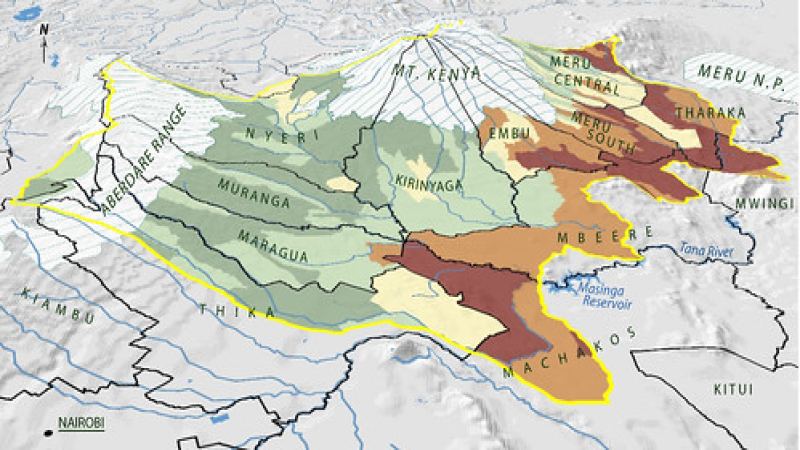
The Muranga region of Kenya is located near Mount Kenya and adjacent to the Nyeri region, with fertile volcanic soil and abundant rainfall from two rainy seasons, providing superior natural conditions for coffee cultivation. This article focuses on the Limpopo coffee beans from the Kangunu cooperative in the Kangema area of Muranga County, detailing its regional background, the K72 washing process, the origins and characteristics of the three varieties SL28, SL34, and Batian, as well as the green bean standards for the AA grade. The Limpopo coffee beans obtained by Front Street Coffee, after light roasting, present flavors of hawthorn, berries, plum, and dried fruit, with bright acidity and solid sweetness. The article also includes V60 pour-over parameters and staged extraction techniques for coffee enthusiasts' reference.
The Muranga region is situated around Mount Kenya, not far from the Nyeri region. This area possesses mineral-rich volcanic soil that provides ample nutrients for coffee tree growth. Two rainy seasons arrive each year from March to April and November to December, with abundant rainfall, so local coffee cultivation does not rely on artificial irrigation.
Several green coffee processing plants are distributed throughout the Muranga region. Since individual farmers generally have limited coffee production, they typically send their freshly harvested coffee cherries to nearby processing plants for centralized processing.
The Kangunu cooperative is located in the Kangema area of Muranga County, at an altitude between 1,600 and 1,750 meters. Over two thousand coffee cooperatives are clustered nearby, and all coffee cherries are harvested and processed on the same day, earning the finished product a strong local reputation for quality. In addition, both the Kangunu cooperative and its producers have obtained Rainforest Alliance certification, implementing a series of environmental measures to reduce the ecological impact of coffee cultivation.
Processing Method
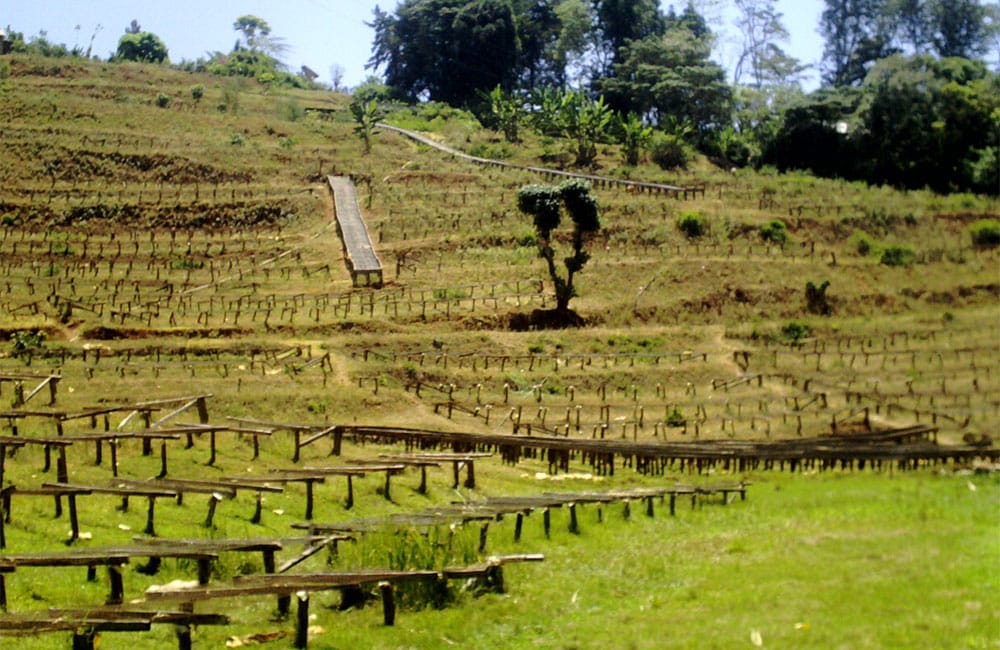
After the coffee cherries are depulped at the Kangunu cooperative, they are immersed in water for washing, allowing the mucilage layer to ferment for 24 hours, during which about 90% of the pectin is removed. Then the second washing stage begins, where the cleaned beans continue to soak in a tank for 24 to 48 hours, after which any remaining pectin is removed once more. Finally, the beans are spread on raised beds for sun drying, usually taking 5 to 10 days. This process is precisely Kenya's unique 72-hour washing method, also known as the K72 washing method.
Green Coffee Beans
The Limpopo coffee beans from the Kangunu cooperative obtained by Front Street Coffee belong to the Kenya AA grade. The AA grade requires green beans to reach a screen size of 17-18, with strict screening for defective beans.
The name Limpopo encompasses three coffee varieties: SL28, SL34, and Batian.
SL is short for Scott Laboratories in Kenya. In the 1930s, coffee berry disease broke out on a large scale among Kenyan coffee trees, and Scott Laboratories was commissioned by the government to develop new disease-resistant varieties. Among the many research results, No. 28 and No. 34 showed strong disease resistance and exceptionally outstanding flavor, and were subsequently promoted to farmers for widespread cultivation.
Kenya's exploration in coffee disease-resistance breeding continued for many years, and Batian is one of the new varieties that emerged from this work, officially released in 2010. This variety has extremely high tolerance to coffee diseases, considerable yield, and very elegant flavor. In recent years, Batian's cultivation area in Kenya has been gradually expanding.
Front Street Coffee: Kenya Limpopo Coffee Beans
Region: Kenya, Muranga Region, Kangunu Cooperative
Altitude: 1,600-1,750 meters
Varieties: SL28, SL34, Batian
Grade: AA
Processing Method: Washed
Flavor: Hawthorn, Berries, Plum, Dried Fruit
Brewing Reference
This Kenyan coffee has been washed and carries a distinct fruity character. Front Street Coffee uses a light roast to preserve the fruity aromas in the coffee as much as possible. Through cupping, Front Street Coffee considers this Limpopo coffee to have very prominent acidity, presenting on the palate an acidity reminiscent of dark fruits such as plum, hawthorn, and prune, accompanied by a dried-fruit-like high sweetness.
Dripper: V60
Water Temperature: 90-91ºC
Dose: 15g
Coffee-to-Water Ratio: 1:15
Grind Size: Fine granulated sugar size (80% passing through a No. 20 sieve)
Staged Extraction: First, bloom with 30 grams of water for 30 seconds, then pour in a small stream in circles until reaching 124 grams for the stage break; when the water level drops and is about to expose the coffee bed, continue pouring until 228 grams and stop; when the water level drops again and is about to expose the coffee bed, remove the dripper. (Timing starts from the beginning of the bloom.) Total extraction time is 1'55".
The pour-over Limpopo coffee exhibits a rising acidity reminiscent of hawthorn and black plum, and as the temperature drops, the dried-fruit sweetness becomes clearer, with a solid mouthfeel.
For professional coffee knowledge exchange and more coffee bean information, please follow Coffee Workshop (WeChat public account: cafe_style)
For more specialty coffee beans, please add the private WeChat of Front Street Coffee, WeChat ID:
qjcoffeex
The above content is compiled by CoffeeHunters, a coffee news website.


