







Is Coffee Treated as Chinese Medicine in Herbal Coffee?
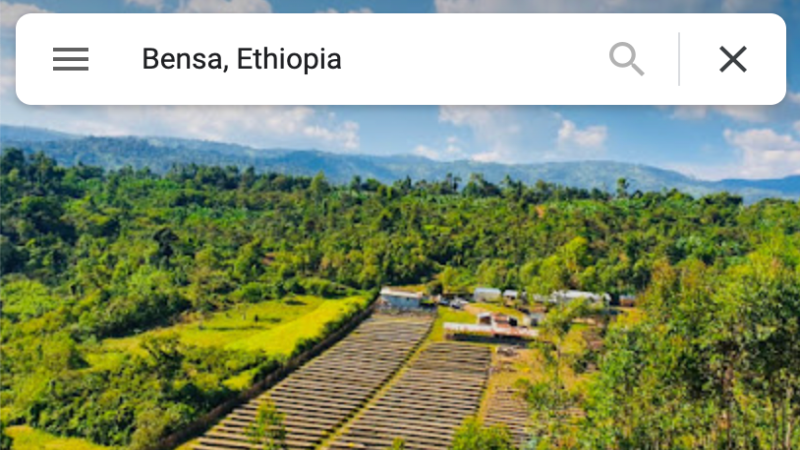
Coffee is not classified as Chinese medicine. The idea began as an internet joke tied to Bensa, a small town in eastern Sidamo, Ethiopia, whose coffee is exported under the town name and sounds like the Cantonese word for herbal tea. Herbal coffee drinks are a real trend, though, with brands such as Tongrentang selling goji berry lattes and hawthorn dried tangerine peel Americanos.
The trend draws on the health-conscious habits of younger consumers and the principle that medicine and food share the same origin. Blending herbs with coffee is not automatic: the flavors of medicinal materials and coffee beans have to be balanced, and the properties of each ingredient considered. For the coffee enthusiast, the practical question is what a given blend actually contains and how it tastes, not whether coffee counts as medicine.
In the eastern part of Ethiopia's Sidamo Province, there is a small town called Bensa. Local coffee is exported under the town's name and jokingly called "Bansha coffee," which gave rise to an amusing meme: coffee is Chinese medicine, and drinking more of it can nourish life. Behind this joke, Chinese herbal medicine coffee has indeed become a new consumption hotspot in recent years. Brands such as Tongrentang have rolled out products like goji berry lattes and hawthorn dried tangerine peel Americanos, attracting a large number of young consumers. But the mix of Chinese herbal medicine and coffee cannot be done casually. How to harmonize the flavors of medicinal materials and coffee beans, and how to grasp the principle that medicine and food share the same origin, are both worth serious discussion. This article will take you through the origins and development of this "medicinal coffee" trend, as well as the issues that need attention.
For professional coffee knowledge exchange and more coffee bean information, please follow Coffee Workshop (WeChat public account: cafe_style)
For more specialty coffee beans, please add the private WeChat account Front Street Coffee (FrontStreet Coffee), WeChat ID: qjcoffeex
Haha! This is actually an internet joke!
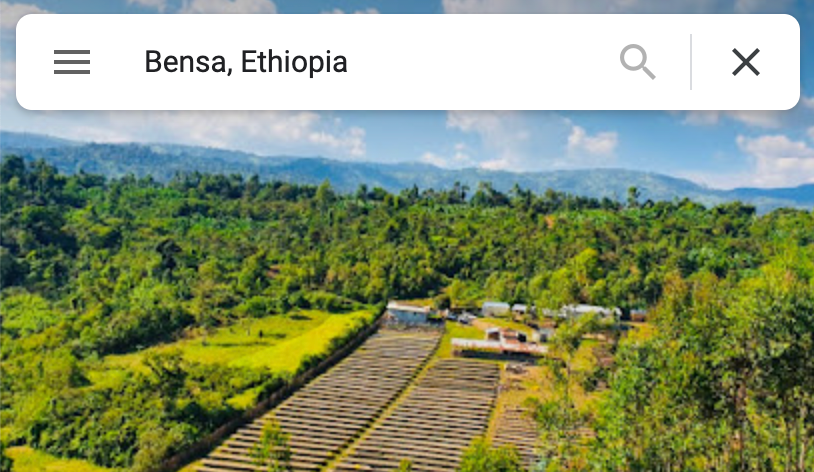
The origin of this joke has to start from the eastern part of Sidamo Province, a well-known coffee-producing region in Ethiopia. There is a small town called Bensa, where local coffee is mostly grown in family backyards. After harvest, it is uniformly sent to the town's processing station for processing, and then exported under the town's name, so this batch of beans came to be called "Bansha coffee."
For Cantonese people, as soon as the pronunciation "ban sha" enters their ears, the herbal tea gene in their body immediately sends a signal to the brain: Bansha (herbal tea) coffee?! Thus the joke was born: "Coffee is Chinese medicine, drink more to nourish life! Ethiopia has a coffee bean called Bansha, which is the best proof."
So, does coffee actually count as Chinese medicine? Everyone has a different view, and we will not discuss it in depth here. However, in recent years, Chinese herbal medicine coffee has indeed firmly grasped the health-preserving psychology of the new generation of consumers!
According to the "2017-2022 China Health and Wellness Industry Market Development Status and Investment Prospect Forecast Report," among people focused on wellness, the proportion of young people aged 18 to 35 reached 83.7%. Because of this, more and more industries are pouring into the "wellness" track, and combinations of Chinese medicinal materials + something have become a traffic code.
The coffee world is naturally no exception! Coffee itself is also a traffic code, and "wellness" was one step ahead in pulling it into the group. In 2020, in order to make more young people pay attention to and understand Chinese medicine, Tongrentang chose coffee as an entry point and opened a coffee shop combining Chinese and Western elements. It was among the first to launch Chinese herbal medicine coffee products such as goji berry lattes, motherwort rose lattes, hawthorn dried tangerine peel Americanos, and longan red date pour-over coffee, embarking on a coffee wellness route: "Never relax on wellness, rise to the peak of life," "Red dates plus coffee, tomorrow you can get up early."
The combination of Chinese herbal medicine + coffee quickly became a new consumption fashion pursued by young consumers. People have this demand not because the drinks can truly nourish life, but precisely because they cannot truly do so, the sense of ritual must be maxed out. They can only settle for the next best thing, upholding the health principle of "Staying up late is staying up late, but wellness must not be neglected," and step into a new realm of "punk wellness."
So in addition to Chinese medicinal materials + coffee, more and more coffee shops today decorate their stores to look like Chinese medicine shops or herbal tea shops, and some even directly convert Chinese medicine shops into coffee shops, so that consumers can already feel a strong wellness atmosphere visually.
In these shops, apart from a small number of specialty coffees with Chinese medicinal materials added, the remaining products are still mainly specialty coffee. The hope is that when drinking a normally extracted cup of coffee, people can reduce the psychological burden of "internal heat."
Such creativity is actually not bad. After all, the development of the coffee industry needs these impactful combinations to stimulate public consumers' attention to coffee. But! Not every kind of Chinese herbal medicine can be mixed with coffee!
Now more and more people are imitating the practice of "putting medicine into coffee," successively adding some Chinese patent medicines and medicinal preparations that should avoid cold and raw things, such as the "Huoxiang Zhengqi iced Americano" that trended on social media a few days ago...
All medicine is somewhat toxic. Once used improperly, not every friend can withstand its side effects. When putting Chinese herbal medicine into coffee, materials that are both medicine and food must be used!
These seemingly simple mix-and-match combinations actually greatly test the maker's understanding of the characteristics of Chinese medicinal materials and coffee beans. On the one hand, one must be familiar with the medicinal materials themselves; on the other hand, one must consider whether the taste of the medicinal materials will be too overpowering and cover up the original flavor of the coffee; and on another hand, one must also consider whether the taste after combining the medicinal materials with coffee can be accepted by the public.
When putting products on the market, many merchants choose some drinks that look very impactful or are popular online, without considering whether such combinations are appropriate and suitable.
Although "medicinal coffee" is very popular, each consumer's sensitivity to each medicinal material is different. Therefore, without a deep understanding of the "medicine" added to coffee, it is still advisable not to try blindly. Be responsible for yourself, and also responsible for others.
Image source: Internet, Xiaohongshu
The above content is compiled by CoffeeHunters, a coffee news website.


