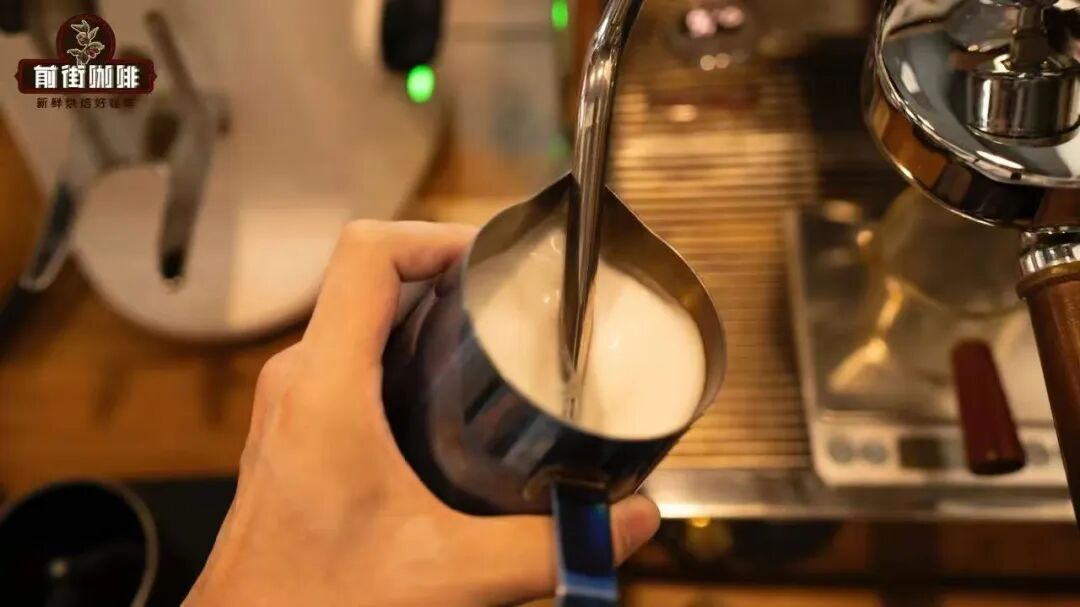
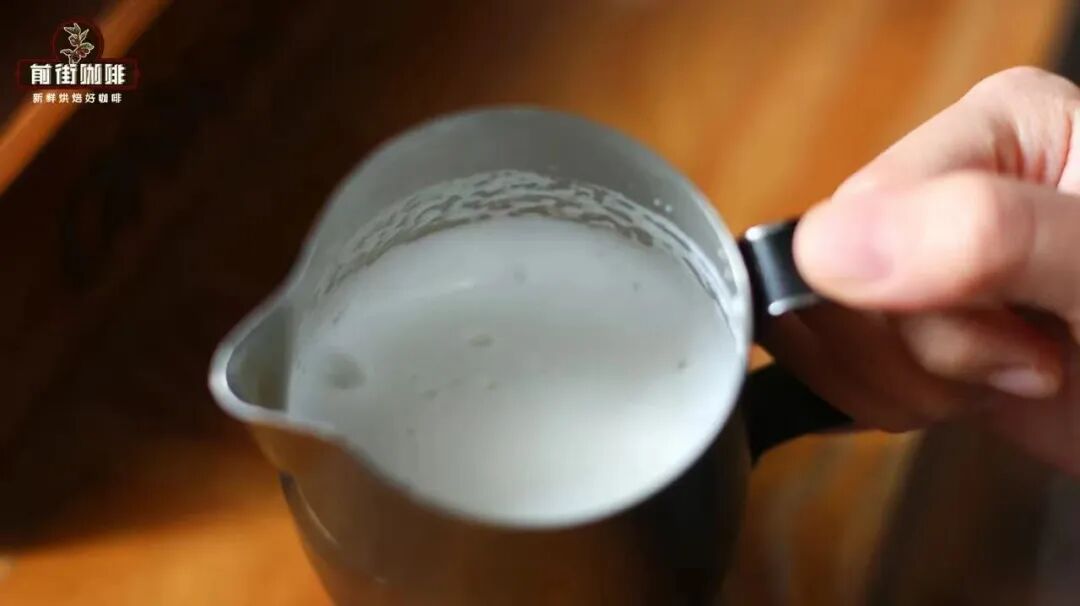
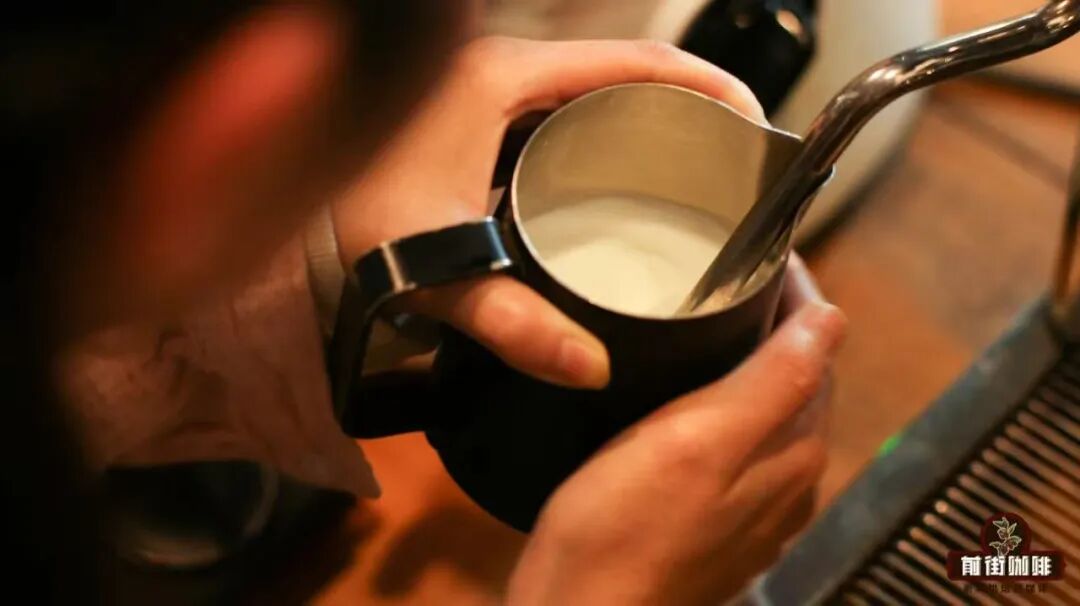
The surface of a freshly made latte is incredibly fine and smooth. But if we leave it sitting without drinking, we can see the smooth, delicate surface gradually become rough and uneven. This phenomenon is called "defoaming," a process in which the milk foam continuously dissipates.Milk foam is a foamy substance formed by injecting air into milk, so it is lighter than the liquid. Under external forces such as steaming, shaking, and pouring, most of the foam blends with the liquid, and at this point the foam breaks down relatively slowly. But when left to sit, the lighter foam gradually rises while the heavier liquid sinks, and separation occurs as a result.After the foam separates, because of the pressure difference, these tiny bubbles begin to slowly dissolve and combine into larger bubbles. And when the air pressure inside a large bubble exceeds the strength of the protein wrapping the air, the bubble bursts and breaks apart.Although this layer of milk foam floating on the surface of a latte will eventually dissipate, the rate of breakdown can vary. For example, a latte made at the Front Street shop needs to sit for ten minutes before obvious defoaming appears, while some lattes develop many obvious large bubbles shortly after being made and look rougher overall.The reason these two lattes defoam at such different rates is mainly their stability. The higher the stability of the milk foam, the slower the defoaming; the lower the stability, the faster the defoaming.When you find that a latte starts defoaming quickly shortly after being made, it means the milk foam's stability may not be high enough. And among the many factors that measure the quality of a latte is the stability of the milk foam.There are many factors that can affect the stability of milk foam, so today Front Street will share with you exactly what reasons influence the stability of milk foam.1. The milk foam wasn't steamed properlyThe most common reason is not steaming the milk foam well(this refers to the steps of aeration and texturing). As Front Street mentioned earlier, milk foam is made by injecting steam into milk to create bubbles, but simply injecting air is far from enough. We also need to texture these large bubbles, cutting them into countless smaller, more stable bubbles.If the texturing step isn't done well, the resulting milk foam will be of lower quality with less stability, and the latte made from it will defoam much faster.There are mainly three reasons for this. The first is insufficient texturing time, because the milk isn't cold enough, or the target steaming temperature isn't high enough, so the texturing time is shortened. Without enough texturing time, the milk foam won't be as dense, and the defoaming rate will naturally be faster.The second situation isa problem many friends run into when they're just starting out:the milk isn't being pushed by the steam to form a vortex during texturing.When the milk doesn't form a vortex in the pitcher, the large bubbles created earlier can't be drawn into the milk to be cut apart. For the same reason as the previous point, the bubbles won't be fully textured, so the defoaming rate will naturally be faster.The third situation is one that even experienced hands trigger from time to time: accidentally letting the steam wand come above the surface during texturing, causing brief aeration, and then, because there isn't enough time left, these large bubbles can't be fully textured, so their presence speeds up the dissipation of the milk foam.These three points are the problems we easily run into during texturing. If you can see many obvious bubbles in the pitcher after pouring latte art, then it's best to check whether any of these three situations occurred during texturing. If so, it's best to improve them~
Also, after steaming the milk foam, we tap the pitcher to eliminate large bubbles that weren't textured, and although this does work, when you tap too many times, the foam's breakdown and separation rates both increase. So when tapping the pitcher, try to limit the number and force of the taps.2. The milk temperature is too highNext is the issue of milk temperature. As Front Street mentioned earlier, when the steamed milk temperature isn't high enough, the milk foam won't be as stable because the texturing time is too short. In addition, when the steamed milk temperature is too high, the stability of the milk foam also decreases.When beginners are learning to steam milk foam, the first thing they need to learn is controlling the milk temperature. The steamed milk temperature is best kept between 55°C and 65°C. The reason for keeping it in this range isn't just that this temperature activates the milk's sweetness, but also that the milk foam can achieve quite high stability.When the milk temperature is below this range, as Front Street said earlier, there may not be enough texturing time, causing the defoaming rate to speed up; andwhen the milk temperature is too high, exceeding 70°C, some substances in the milk are destroyed by the high heat, and the stability of the milk foam drops significantly as a result. Not only does the milk foam defoam faster, but the taste and sweetness of the coffee/milk both decrease.So when we need to make exquisite latte art, the milk temperature is best kept in the 55°C~65°C range. If it's not for latte art, then as long as the milk temperature doesn't exceed 70°C, it's fine~3. Problems with the ingredientsBesides operational issues, the ingredients used also determine how fast the milk foam defoams. For example, when the coffee beans we use are very fresh, defoaming will be accelerated.This is because fresh coffee beans contain a large amount of carbon dioxide. Although this helps us extract richer crema, this crema is inherently unstable and breaks down quickly, so when unstable crema combines with stable milk foam, the foam also becomes less stable, and the defoaming rate speeds up as a result.This situation is the easiest to solve—simply let the coffee beans rest for about seven days to let the carbon dioxide inside be released. The espresso crema extracted this way will have higher stability and won't have too much effect on the milk foam.The above are the reasons why the milk foam of a latte dissipates quickly right after it's made. In addition, there are also factors like the choice of milk, the thickness of the foam, and the evenness of the pour, but their impact is relatively small, so Front Street won't go into detail here~ The above content is compiled by CoffeeHunters, a coffee news website.