







How reliable is coffee knowledge from online store-visit reviews?
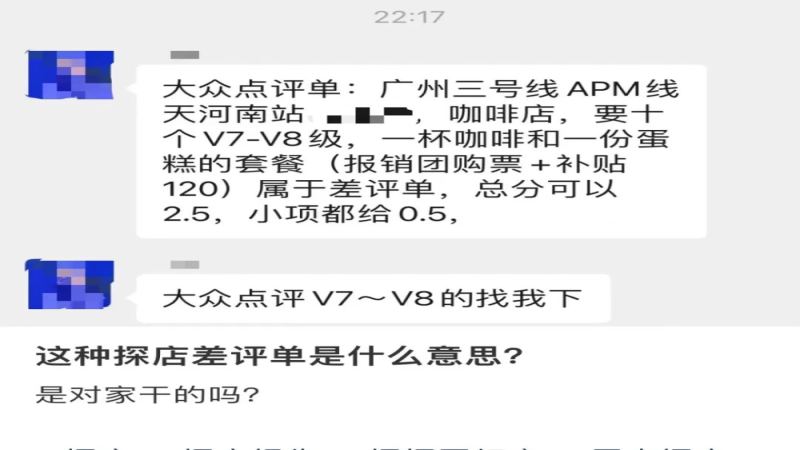
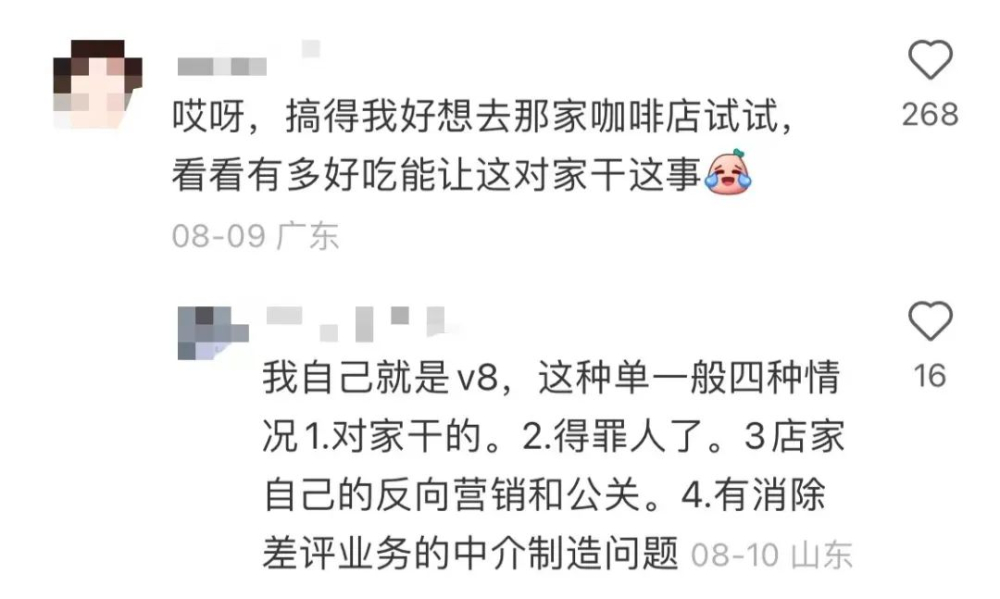
Paid negative reviews have turned cafe ratings into a traded commodity. Chat logs shared on Xiaohongshu show people hiring accounts to post low scores for a cafe, with rules on the score and account level. Commenters split the motives into four: a competitor, a grudge, reverse marketing by the owner, or an intermediary stirring trouble. Platforms often ban accounts caught posting malicious reviews.
Store-visit blogging grew alongside influencer culture, and awkward incidents involving reviewers have spread quickly online. Because a rating can be bought in either direction, the practical takeaway for owners and drinkers is to look at patterns across many posts rather than one review. Legal experts quoted in the coverage advise collecting evidence before seeking redress for malicious reviews.
Before deciding which café to visit, many people are in the habit of first going online to check ratings, scroll through reviews, or watch a few store-visit videos to do their homework. But when "positive reviews aren't necessarily real, and negative reviews aren't necessarily fake" becomes the norm, store-visit reviews themselves turn into a business. This article sorts through the chat logs exposing paid negative reviews on Xiaohongshu, the "cringe" incidents involving store-visit bloggers in recent years, as well as the payment chains and regulatory gaps in the store-visit industry, and invites legal experts to offer advice on seeking redress for malicious negative reviews, freeloading meals, and similar phenomena. For café owners and consumers alike, seeing clearly how this traffic game operates may be more important than arguing over whether a single review is real or fake.
Before heading to a shop they've never been to, many people do a round of online research first. Some are in the habit of browsing Dianping's star ratings and comments, while others prefer to search short-video platforms for related store-visit reviews. With the mindset of "positive reviews might be bought, but negative reviews should at least be real," store-visit reviews have gradually become a business that can be monetized.
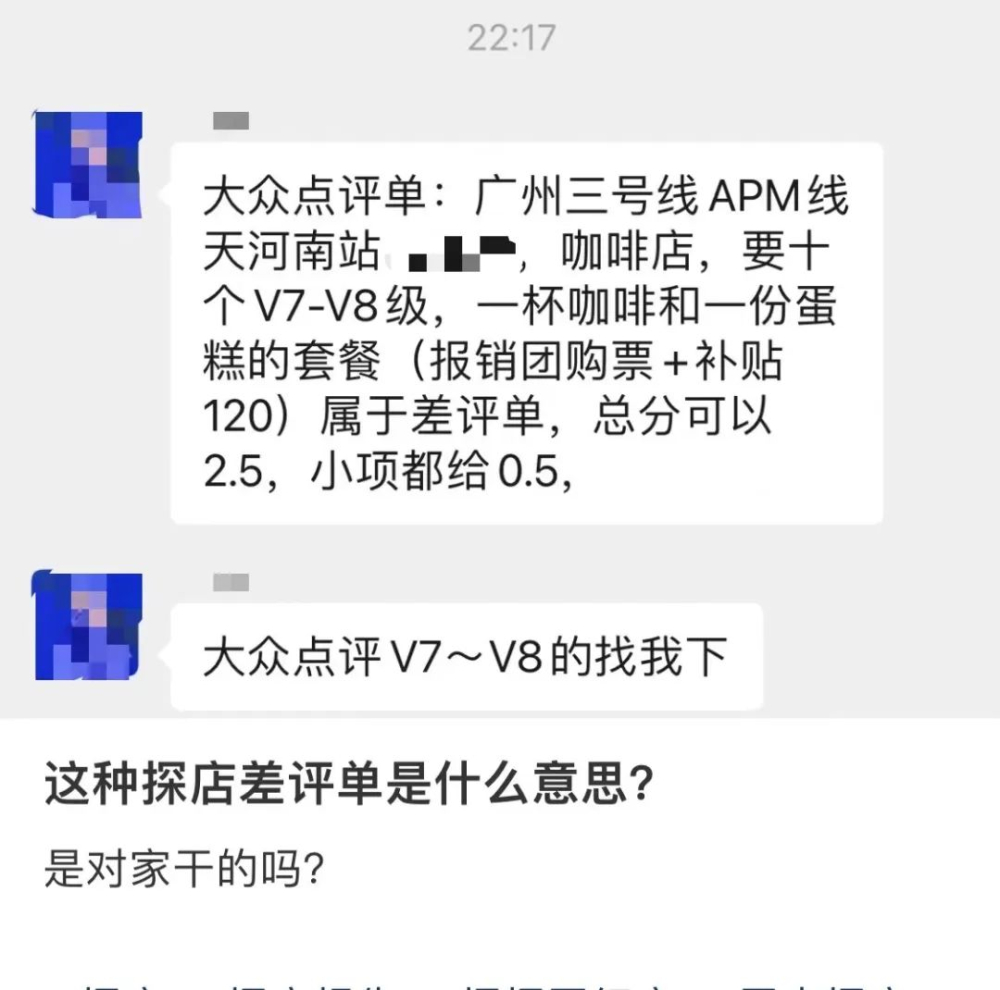
On Xiaohongshu, some netizens posted chat screenshots of someone on a certain platform looking to hire people to leave negative reviews for a café, with the other party even specifying requirements for the review score and account level.
Some netizens summarized in the comments that this kind of operation usually falls into one of four possibilities: first, a competitor is behind it; second, the shop owner offended someone; third, the shop owner is staging a reverse-marketing stunt; fourth, an intermediary in the related business is deliberately creating problems.
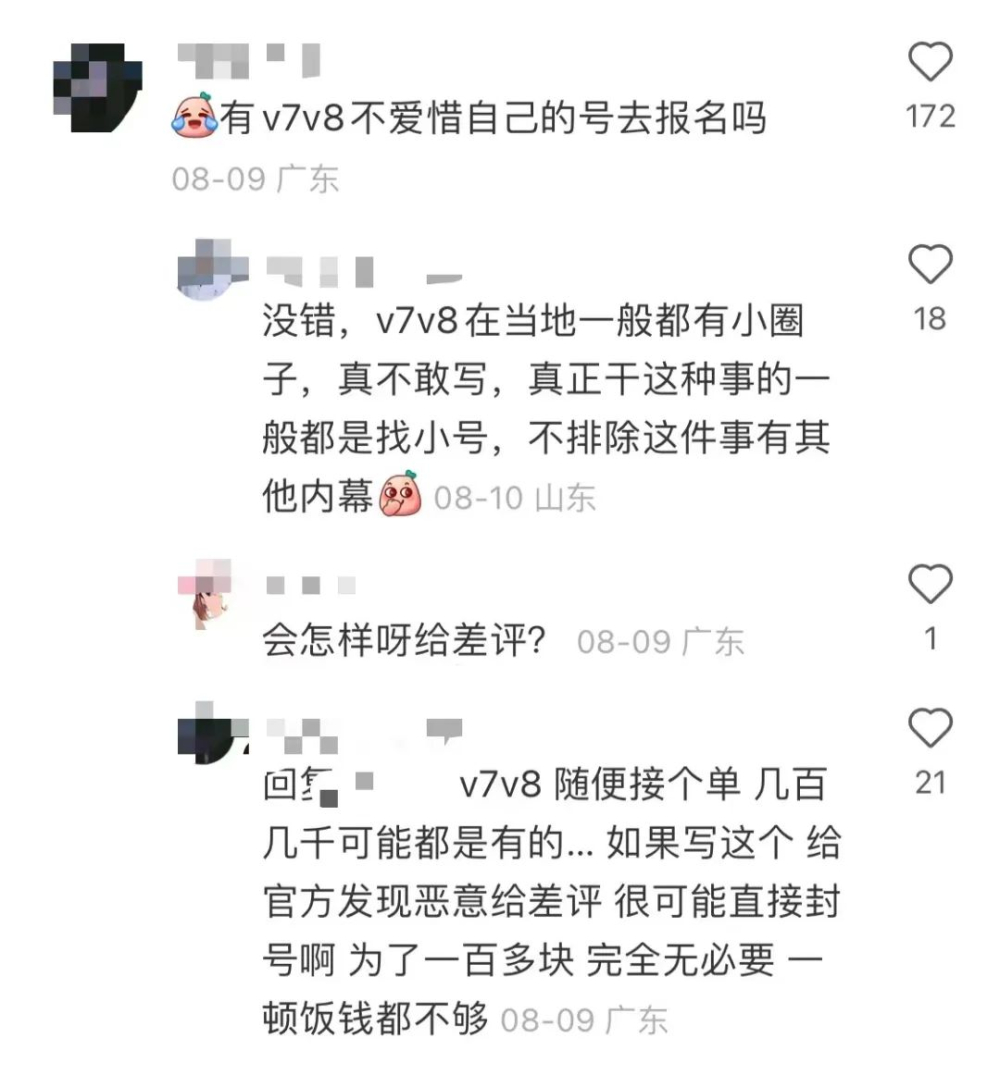
Others left comments warning that once an account is deemed to have posted a malicious negative review by the platform, it will most likely be banned outright.
As the influencer economy grows ever larger, a large number of self-media bloggers have swarmed into the store-visit niche in recent years, and news of store-visit bloggers "cringing" has come one after another, with the whole process spreading like wildfire online and leaving people shaking their heads in disbelief.
In August 2021, a man claiming to have 6 million followers demanded a freeloading meal and was angrily called out on the spot by a waiter: "Does being a Douyin store-visit blogger mean you don't have to pay the bill?" In May 2022, a store-visit blogger agreed with a merchant on a free "three-person meal," but showed up with 8 relatives and friends, then refused to pay for the meal beyond three people, kicking up a huge online fight with the merchant. In July 2022, a local store-visit blogger in Jiangsu tried to dine and dash after spending 710 yuan, was chased back to the shop by the merchant to settle the bill, and that same day the man posted a negative review video.
So-called store visits mean consumers actually go to a merchant to spend money, learn about the environment, products, and service, and then share their experience on social platforms in the form of text-and-photos or videos. Now that the internet is everywhere and everyone has a phone, before going out to spend money, most people are in the habit of first looking for some store-visit videos or store-visit guides, and this content is treated by a large number of potential customers as an important basis for "种草" and "避雷."
Store-visit-related topics routinely rack up hundreds of millions of views on popular social platforms. It is understood that store-visit bloggers with millions of followers start their promotion quotes at tens of thousands of yuan per post; streamers with over a hundred thousand followers mostly charge in the four figures; and bloggers with over ten thousand followers charge a few hundred yuan per order.
However, the store-visit business has never had clear industry standards, and chaos keeps emerging. Bilibili uploader "吃肉的梅阿婆" once shared in a video what restaurant industry people around her had seen and heard about store-visit reviews.
The store-visit business, of course, cannot escape being questioned for false advertising either. In November 2021, a food blogger with a million followers went to the same KFC twice in a row and ordered the same zhajiangmian.
Because the blogger's attitude toward the meal was so wildly different between the two tastings, it drew a lot of attention from netizens.
The ratings and reviews of major platforms or bloggers are now shaping people's choices in clothing, food, housing, and transportation. Some bloggers, relying on their large followings and high account weight, are suspected of hyping or false advertising in exchange for certain treatment, or maliciously leaving negative reviews because they are dissatisfied with the treatment they received.
Regarding problems in the探店 chaos such as malicious negative reviews and freeloading meals, Chen Yinjiang, deputy secretary-general of the Consumer Law Research Association of the China Law Society, believes that merchants can reject bloggers' unreasonable demands and can also report them to the relevant cyberspace authorities; if a blogger harms a merchant's reputation and right of reputation through false negative reviews or information, the merchant can file a lawsuit demanding that the blogger compensate for losses.
Today the internet covers almost every aspect of life, and various apps and channels have made life extremely convenient, with internet users benefiting as a result. The group of self-media practitioners keeps growing, and more and more young people are joining the ranks of探店 bloggers. As intermediaries between merchants and consumers, integrity is an important and basic element.
A single false promotion or one malicious negative review may bring in a sizable income in the short term, but once it is repeated too many times, the intermediary will eventually lose others' trust and become worthless.
Image source: Xiaohongshu, internet
For more coffee bean news, please follow Coffee Workshop (WeChat public account cafe_style) For professional coffee knowledge exchange, please add WeChat ID kaixinguoguo0925
The above content is compiled by CoffeeHunters, a coffee news website.


