







What Does Shanghai's Cafe Boom Say About Coffee Culture?
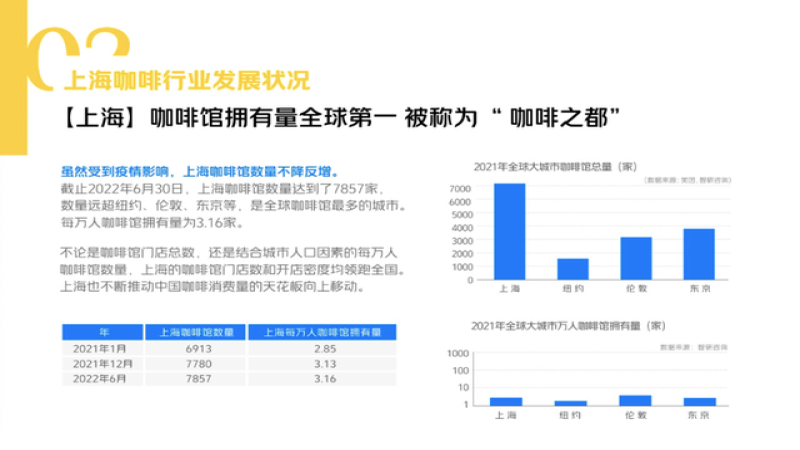
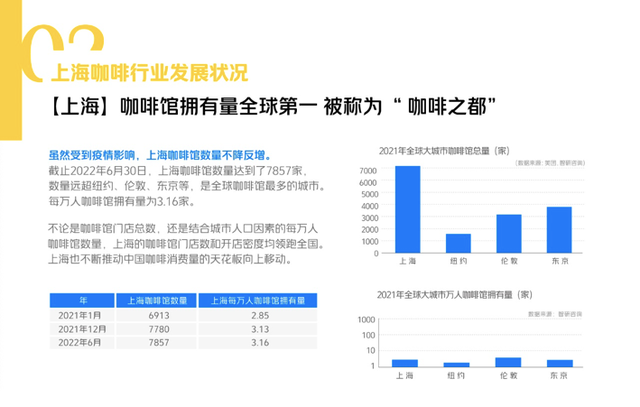
As of June 30, 2022, Shanghai had 7,857 coffee shops, more than New York, London, or Tokyo, making it the city with the most cafes anywhere. The count rose from 6,913 in January 2021 to 7,780 that December. Openings slowed in the first half of 2022 under pandemic restrictions, then rebounded in the second half.
Density is part of the story: Huangpu District holds 38.5 coffee shops per square kilometer and Jing'an District 20.1, and both figures keep climbing. Analysts describe coffee as central to Shanghai's identity, comparable to anime in Tokyo or design in London. The growth is driven by capital-backed specialty brands, while small independent shops face harder odds.
Shanghai, a city deeply steeped in coffee culture, is setting new global records for the number of coffee shops at an astonishing pace. As of June 2022, the city had 7,857 coffee shops, not only ranking first in China in terms of quantity but also surpassing international metropolises such as New York, London, and Tokyo, making it the city with the most coffee shops in the world. However, behind this numerical growth lies both the rapid expansion of specialty coffee brands driven by capital and the harsh reality of small shops struggling to survive amid the pandemic. From 867 new shops in 2021, to a slowdown in the first half of 2022, and then a rebound in the second half, what resilience and challenges does Shanghai's coffee market reveal? This article combines the latest data and industry cases to analyze the driving forces and hidden concerns behind the counter-trend growth of Shanghai's coffee industry.
"Coffee culture is to Shanghai what anime is to Tokyo and design is to London." This widely circulated analogy precisely captures the unique status of coffee in this city. As a beverage that has swept the globe for hundreds of years, coffee is gradually becoming one of Shanghai's most recognizable cultural labels. According to the "2022 China Coffee Consumption Insights" released by Meituan at the end of July 2022, as of June 30, 2022, the total number of coffee shops in Shanghai had climbed to 7,857.
Although the pandemic dealt a blow to every industry, the number of coffee shops in Shanghai did not decrease as a result; instead, it showed counter-trend growth. The scale of this metropolis's coffee shops not only leads far ahead within China but also far exceeds that of international cities such as New York, London, and Tokyo, making it the city with the most coffee shops in the world. The report also showed that Huangpu District has 38.5 coffee shops per square kilometer, while Jing'an District has 20.1 per square kilometer, and this density continues to rise.
The pace of coffee shop openings in Shanghai exceeded many people's expectations. Report data shows that in January 2021, Shanghai had 6,913 coffee shops; by December 2021, the number had increased to 7,780; and by June 2022, it had further reached 7,857. In the first half of 2022, affected by the pandemic, the pace of openings slowed markedly. However, in 2021 alone, Shanghai added 867 new coffee shops.
Entering the second half of 2022, as the pandemic was effectively brought under control, Shanghai's coffee industry shifted back into high gear. On June 21, 2022, Nowwa Coffee announced the opening of a hundred stores at once; in the first quarter of 2022, Manner Coffee opened 200 new stores simultaneously; on May 30, M Stand announced the opening of 25 new stores in 10 cities; and on August 9, Seesaw Coffee officially announced that its number of stores had reached 100.
All of the above coffee brands are positioned in specialty coffee without exception; they are rooted in Shanghai and extend their influence nationwide. This "city of coffee" has not only nurtured many well-known local brands but also attracted the attention of overseas "internet-famous" brands.
In April 2020, the century-old Italian coffee brand Lavazza opened its first overseas coffee shop in Shanghai.
In March 2021, Blue Bottle Coffee, known as the "Apple of the coffee world," began recruiting staff in Shanghai, and the news immediately attracted close industry attention. In November of that year, news emerged that its first mainland store was being renovated. It was not until the end of February 2022 that this store officially opened its doors. On opening day, some consumers were even willing to queue for seven hours just to have a cup of coffee.
In a fiercely competitive landscape made up of nearly 8,000 coffee shops, there are both chain brands backed by abundant capital and formidable independent small shops, and competition can be described as white-hot. Yet none of this could stop Shanghai's pace of adding nearly a thousand coffee shops a year.
Data shows that Chinese people consume about 4 to 5 cups of coffee per capita each year, while in Shanghai the figure exceeds 20 cups; Shanghai's coffee-consuming population and spending both far outstrip those of other Chinese cities.
A person in the coffee industry said in an interview with an International Finance News reporter that the cost of opening a coffee shop is actually not high; the storefront does not need to be too large, and with equipment, apparatus, raw materials, and so on added together, about 200,000 yuan is enough to open a shop.
One important reason Shanghai's number of coffee shops has maintained strong growth against the trend is that the cost of entry is relatively low.
Although the number of coffee shops in Shanghai has grown by nearly a thousand over the past year and a half, the number of coffee shops exiting the market is also considerable. The data shows growth, but indeed many shops failed to withstand the impact of the pandemic. The silent coffee shop LiLi Time only "came back to life" after sending out a distress letter in mid-June, but how many lucky ones can there be?
A coffee shop operator said in an interview that perhaps we see an increase of a thousand, but the actual number of newly opened shops may be two thousand; it is just that many closed shops were not recorded.
Some media also reported in mid-July that the decline of Shanghai's restaurant industry had brought an unusual busyness to the scrap recycling industry; in just half a year, warehouses were piled full of all kinds of secondhand restaurant equipment.
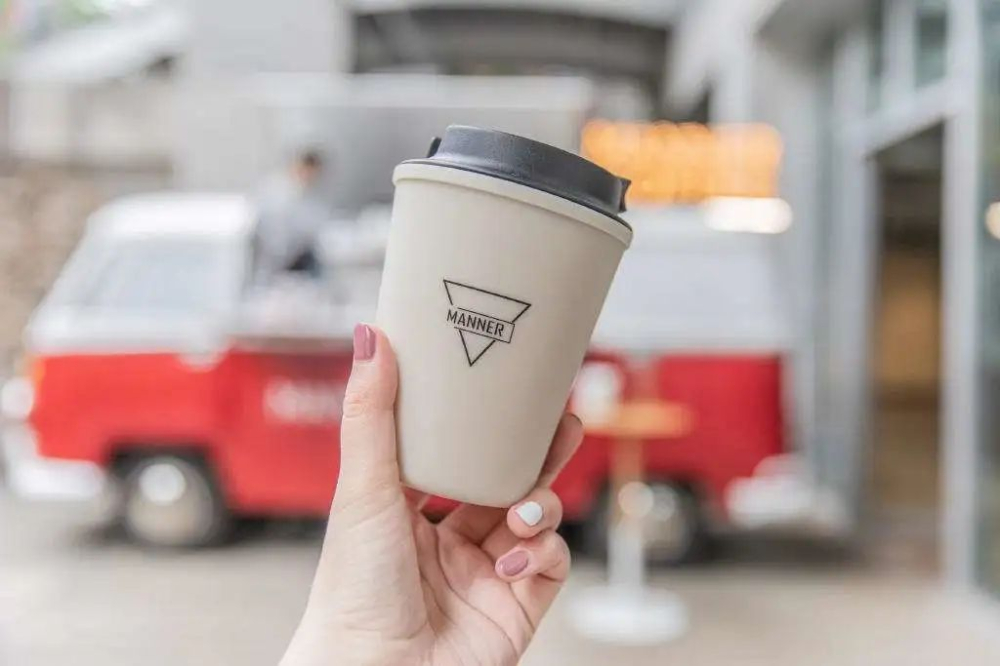
Starting a business is easy, but maintaining it is hard; although the threshold for opening a coffee shop is low, long-term operation is full of challenges.
Image source: the internet
For more coffee bean information, please follow Coffee Workshop (WeChat public account: cafe_style) For professional coffee knowledge exchange, please add WeChat ID: kaixinguoguo0925
The above content is compiled by CoffeeHunters, a coffee news website.


