







Can Arabica Bean Labels Be Trusted After the Seattle Case?
Taiwan-based chain Seattle Premium Coffee sold prepackaged beans labeled 100% Arabica that testing showed contained Robusta. Prosecutors charged founder Liu and two others with adulteration and counterfeiting under food safety law. The court put criminal proceeds at about 4.07 million RMB, and Liu sought a suspended sentence through a public welfare payment.
Adding Robusta to a blend is not itself illegal; the dispute turns on whether a label that does not match the contents counts as adulteration. The brand first argued Timor is a natural hybrid of two varieties, then said administrative oversight had left labels unupdated, and offered to recall only some batches. The outcome will shape labeling standards for arabica bean products.
Taiwan, China-based chain brand Seattle Premium Coffee was found to have adulterated several prepackaged beans labeled "100% Arabica" with Robusta, and prosecutors charged founder Liu and two others with adulteration and counterfeiting. The brand first argued that Timor is a hybrid of two varieties, then changed its statement to say that administrative oversight had failed to update the labels, and was willing only to recall some batches. The court calculated criminal proceeds at about 4.07 million RMB, and Liu sought a suspended sentence by paying a public welfare fund. The core dispute in the case is: adding Robusta itself is not illegal, but whether a label inconsistent with the contents constitutes adulteration and counterfeiting under food safety law. This article sorts out the timeline, test data, and new courtroom statements for coffee enthusiasts to understand industry labeling standards.
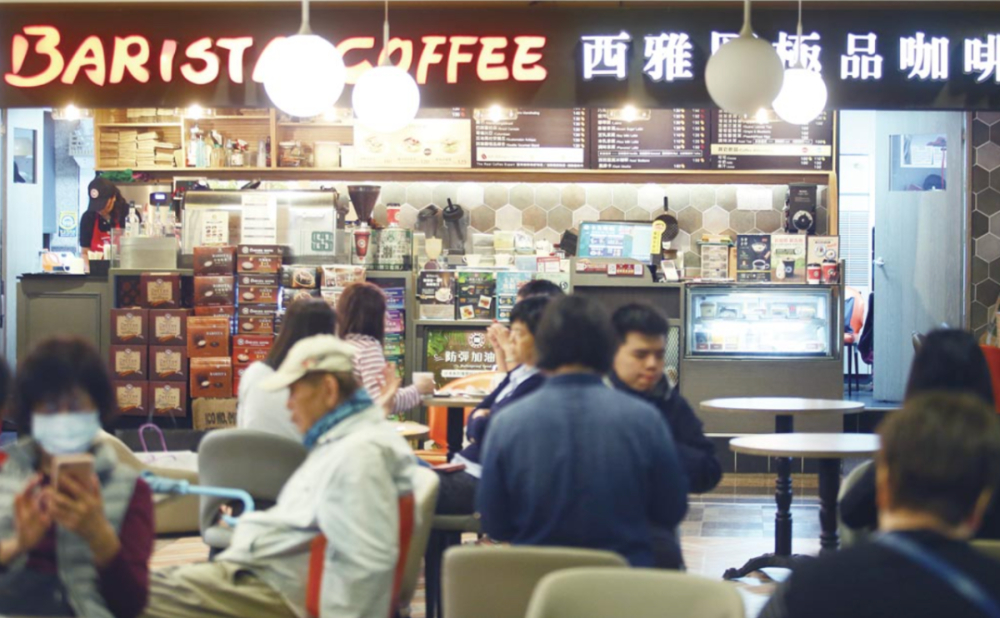
In mid-October 2019, the well-known Taiwan, China chain coffee brand "Seattle Premium Coffee" was exposed by the local food and beverage industry media "foodNext" for mixing Robusta beans into several prepackaged coffee beans labeled "100% Arabica" on the outer packaging and selling them, suspected of selling adulterated and counterfeit food.
On January 22, 2020, after confirming the relevant offenses, prosecutors filed a public prosecution against three responsible persons, including the brand's founder and legal representative Liu Zengxiang (hereinafter Liu), and baking factory head Li, under the adulteration and counterfeiting offense in the local food safety law. The case has recently seen new developments.
Seattle Premium Coffee was founded in 1997 and is a relatively historic local chain coffee shop in Taiwan. At first, the brand only operated stores, and the supply from its baking factory was not sold externally. It was not until a wind disaster in 2001 caused flooding at some baking factories and stores that the combined losses from store revenue and factory materials and equipment reached about more than 1 million RMB. That same year, a shareholder also attempted to hollow out the company, dragging down its stock price.
Facing a financial crisis, Liu decided in 2002 to shift coffee toward industrialized production and enter the prepackaged coffee product sector, allowing the brand to survive to this day. However, this long-established coffee shop, once deeply trusted by local consumers, was exposed by the media in October 2019: several prepackaged coffee beans labeled "100% Arabica" had been mixed with Robusta beans at ratios of 13% and 26% respectively and sold, with the suspected adulteration lasting about 22 months (calculated from January 1, 2018).
The media also noted that at the time the price difference between Arabica beans and Robusta beans was about 10 RMB per kilogram, illegal monthly profit was about 103,000 RMB, and by the time of the media exposure the brand's illegal profit amounted to about 2.262 million RMB.
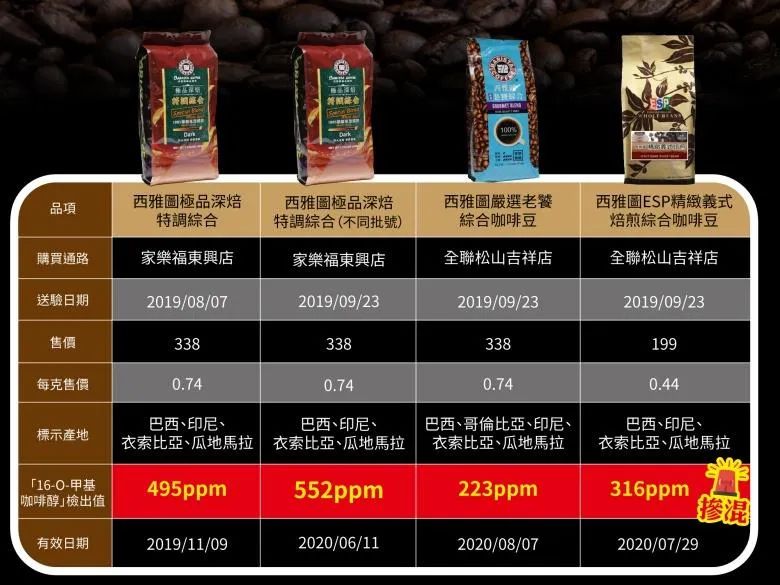
In its exposé article, "FoodNext" stated that between August and September 2019, they purchased 22 packaged coffee beans from 12 brands through major chain cafes, supermarkets, and other channels and sent them to Germany's "Tentamus QSI laboratory" for testing. The results showed that among the three products and four items sampled from Seattle Premium Coffee, the "16-O-methylcafestol" content ranged from 223 to 552 ppm, while 100% Robusta bean products had levels between 600 and 1,800 ppm, leading them to suspect that the proportion of other coffee bean species mixed in was not low.
In response, Seattle Premium Coffee issued a stern statement saying that "16-O-methylcafestol" also exists in Arabica coffee beans, so determining that Robusta beans had been mixed in based solely on the detection of this substance was biased.
Facing this statement, a coffee researcher immediately responded: "Even if it is there, it cannot be this high!" The brand then changed its statement again, saying that it used Timor coffee beans, a hybrid of Arabica and Robusta, so "16-O-methylcafestol" would also be relatively high.
Was that really the case? Clearly not. Most coffee researchers did not agree with Seattle Premium Coffee's explanation.
In response to the industry's explanation, Liu said at his first court appearance in 2020 that both Arabica beans and Robusta beans are food, that they are "half-siblings," and that unlike gutter oil, this was not black-hearted food.
As for why Robusta beans appeared in prepackaged beans labeled "100% Arabica," he explained: he felt that several past Arabica blends were too sour, so he orally instructed the coffee bean roasting factory head Li to add Robusta beans to enhance the coffee's rich and solid body.
But administrative staff were negligent and did not update the label at the same time, so the product packaging still said 100% Arabica coffee beans. However, the company's current products no longer use Robusta beans.
At the same time, he also provided the court with a coffee bean inspection report from October 2019, but the tested samples were not the three products sent for testing by "FoodNext." He also told the court that Seattle Premium Coffee's beans are all 100% Arabica beans and demanded that the media withdraw the report...
Regarding the mixing in of Robusta beans, Liu said he apologized to mass consumers in the company's name (Fuyu Industrial Co., Ltd.), and that the company would also actively cooperate with the investigation and handle follow-up recalls and exchanges to show sincere repentance.
Are Robusta and Arabica really half-siblings? In fact, that is not the case.
Although the two varieties both belong to the Rubiaceae family, Arabica is a small-bean coffee variety produced by mixing Eugenioides and Anthony varieties, while Robusta coffee is a medium-bean coffee variety derived from the large-leaf species. Therefore, the two do not have a half-sibling relationship.
However, regarding Liu's courtroom apology to the public and promise of recalls and exchanges, another version emerged. The company's apology announcement at the time said that foreign employees had mixed non-Arabica coffee beans into the products while hauling goods, and that it would only accept exchange requests for the affected goods "purchased before September 30, 2019."
Not only that, after the incident was exposed, apart from Carrefour supermarket removing its products from shelves, other channels were still selling the problematic products, and the packaging was even changed from "100% Arabica coffee beans" to "100% coffee beans." Local media believed this was an attempt to evade legal liability for "mixing in other coffee bean species."
Regarding Liu's not-guilty plea in court at the time and the company's subsequent handling of the incident, the court did not close the case, and the prosecutor continued to appeal against Liu. Until recently, the case saw new developments, and Liu offered a new account of the incident.
Liu stated that he admitted the goods bore false labeling, but denied that this constituted adulteration and counterfeiting under food safety law, arguing that it was merely a product labeling issue. According to the court's calculation, the company's criminal proceeds were about 4.07 million RMB, with no deduction claimed for costs or other expenses, and he was willing to pay a public welfare fund together with the plaintiff in a settlement.
Liu said that in the three years since the incident, the severe pandemic affected the food industry, and the company insisted on no layoffs and no salary cuts, with benefits unchanged; he asked the court to consider the recent difficult business environment and the difficulty of starting a local brand, and said that based on the court's method for calculating criminal proceeds, he would report the criminal proceeds and pay up to about 452,000 RMB into the public treasury as a public welfare fund in exchange for a suspended sentence.
The case will be heard on another date. 100% Arabica is a very common phrase, and adding Robusta to common espresso blends to improve coffee body is also a standard industry practice.
The biggest point of dispute in this case is: whether a substance not truthfully labeled during food production constitutes adulteration and counterfeiting as stipulated in the local food safety law. In other words, adding it is not a problem, but one cannot both use a Robusta blend and simultaneously emphasize 100% Arabica, as that misleads consumers.
Image source: Internet, FoodNext
For professional coffee knowledge exchange and more coffee bean information, please follow Coffee Workshop (WeChat public account cafe_style)
For more specialty coffee beans, please add the private WeChat FrontStreet Coffee, WeChat ID: qjcoffeex
The above content is compiled by CoffeeHunters, a coffee news website.


