







How Does Circular Pouring Speed Change Coffee Extraction?
Circling speed during a pour-over is essentially the stirring force applied to the coffee bed, and it does shift coffee extraction. A comparative test using washed Yirgacheffe and dark-roasted Golden Mandheling measured concentration and extraction yield at different circling speeds, then checked the results by tasting. Fast and slow circling produced measurable differences in the cup.
Pouring in one consistent direction keeps turbulence low; stationary pours or switching direction mid-pour create uncontrolled turbulence that disrupts the bed. Because conical drippers need even saturation, circling exists to spread water across the grounds. The stirring force also interacts with grind size, so circling speed matters more or less depending on how fine the coffee is ground.
Among the many variables in pour-over coffee, the pouring technique is often overlooked by beginners, yet it has an impact on the final flavor that should not be underestimated. The speed of circling is essentially equivalent to the force of stirring the coffee bed, so how much difference does it actually make to the taste of the coffee? Front Street conducted comparative experiments using washed Yirgacheffe and dark-roasted Golden Mandheling, measuring concentration and extraction yield, and combining that with actual tasting to verify the effect of different circling speeds on flavor. This article will present the parameters and results of both experiments in full, and further explore the role that stirring force plays when conditions such as grind size change.
Throughout the entire pour-over brewing process, objective parameters such as grind coarseness, water temperature, coffee-to-water ratio, and extraction time certainly need to be carefully controlled, but the pouring technique also accounts for a considerable proportion of the final flavor in the cup. For example, increasing or decreasing the number of pour stages, adjusting the amount of water in each pour, the rise and fall of the pouring height, and the speed of circling—these changes will all cause the coffee's taste to show varying degrees of difference.
Today Front Street will discuss just how much difference the speed of circling—fast or slow—during brewing actually makes to the taste of the finished cup, for everyone's reference.
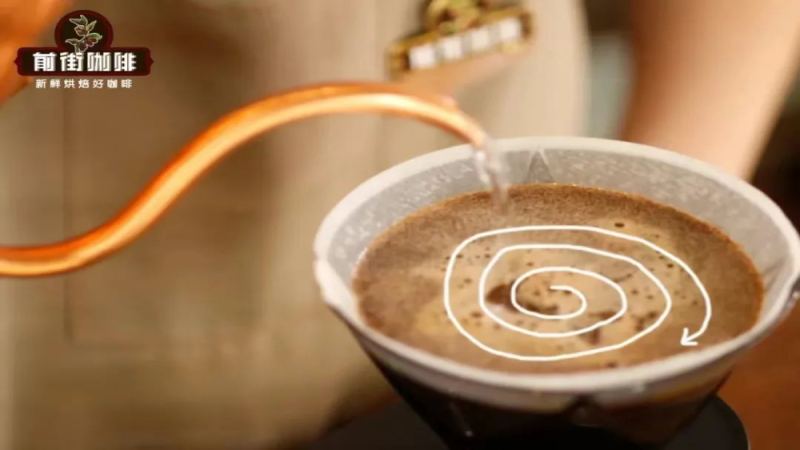
First, it is necessary to understand how circling speed acts on coffee extraction. Let's start with why we circle at all. When pouring, we usually draw concentric circles in the same direction, because keeping the direction consistent makes it less likely to create turbulence—the water flow will travel in the direction you move. If you use a stationary pour, or go clockwise one moment and counterclockwise the next, then at the instant you change direction, uncontrollable turbulence will be created, thereby disrupting the extraction of the coffee bed.
As for why we draw circles, it is because most people currently use conical drippers, and drawing circles allows the coffee bed to be extracted evenly.

The speed of circling, then, is actually equivalent to the amount of force used to stir the coffee bed. Front Street will use an analogy: it's like when brewing granular instant drink mix—if you want the granules to dissolve faster, you'd use a spoon to stir, and the more force you use, the faster the granules dissolve. Our water stream when pouring plays the role of the spoon, and the speed of circling is equivalent to the strength of the stirring force.
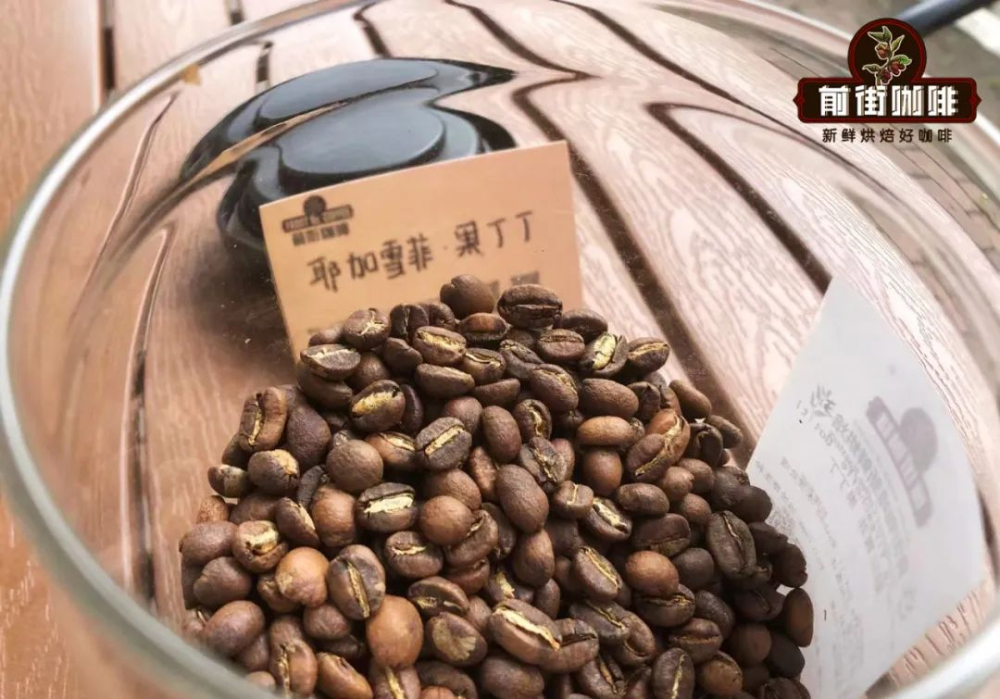
Next, let's look at the comparative experiment Front Street did. The beans used for the demonstration were washed Yirgacheffe Gotingding. The brewing parameters are as follows:
Dose: 15g Ratio: 1/16 Water temperature: 91°C Grind size: 80% passing a No. 20 sieve Pouring method: three-stage Extraction time: 2 minutes 20 seconds The comparison item is circling speed: Slow group: 3 seconds per circle; Fast group: 1 second per circle
Measured results Slow group concentration was 1.40%, extraction yield 20.73%; Fast group concentration was 1.41%, extraction yield 20.88%. Comparing the flavors, both had notes of citrus, honey, and green tea, and there was no major difference through tasting. From this, it seems that circling speed does not cause a major difference in coffee flavor.
Wait... For the sake of rigor, Front Street decided to test with another coffee bean, because the Yirgacheffe used in the first experiment was grown at a relatively high altitude and was light-roasted, so the beans were hard. This time, dark-roasted Golden Mandheling coffee beans were used for the experiment, with the following parameters:
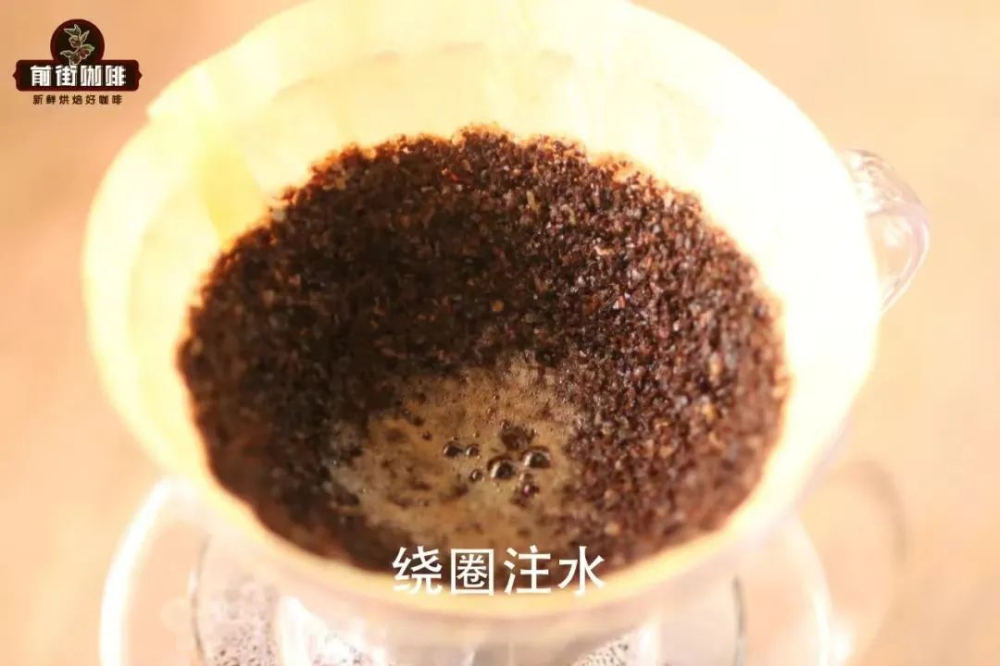
Dose: 15g Ratio: 1/15 Water temperature: 87°C Grind size: 70% passing a No. 20 sieve Pouring method: three-stage Extraction time: 2 minutes 00 seconds The comparison item is circling speed: Slow group: 3 seconds per circle; Fast group: 1 second per circle
Measured results Slow group concentration was 1.39%, extraction yield 19.11%; Fast group concentration was 1.45%, extraction yield 19.95%. In terms of taste, the slow group drank softer and more comfortable, while the fast group tasted more intense, with richer flavor. The mouthfeel of the two was basically the same. Through the comparison of these two experiments, more circling does indeed dissolve more coffee substances, but the gap varies from bean to bean. For harder coffee beans, the stirring force does not have much impact on the flavor ultimately reflected, whereas for beans with a loose texture, the greater the stirring force, the noticeably faster the release of substances from the coffee beans.
Of course, the results of this experiment are based on the parameters preset by Front Street. If the grind size changes, the experimental results will also deviate. For example, the finer the grind, the smaller the influence of stirring force; the coarser the grind, the greater the influence of stirring force on coffee flavor. The same applies to other parameters. For this reason, when Front Street shares brewing methods for dark-roasted coffee, it recommends pouring gently and slowly. And precisely because fast circling provides strong stirring force, it more easily releases flavor substances, so if other parameters are not quite accurate, it is very easy to brew out bitterness from the coffee.
The above content is compiled by CoffeeHunters, a coffee news website.


