







What water temperature suits pour-over coffee?
Most coffee beans brew well between 86°C and 93°C, but 1°C rarely makes or breaks a cup. Temperature mainly controls how fast soluble compounds are extracted. Water that is too hot pulls out bitterness quickly, so the setting should follow the bean's origin, roast level, and the flavor being chased rather than a fixed rule.
High-altitude medium-light roasts such as Ethiopia's Huakui, geisha coffee from panama, and Kenya AA sit at 91–93°C. Darker roasts like Golden Mandheling and Blue Mountain No. 1 do better at 86–88°C, while beans with both acidity and bitterness work at a straight 90°C. A customer once blamed temperature for weak aroma, but the real cause was too fine a grind.
What role does water temperature actually play when brewing coffee? Front Street Coffee believes that while it is crucial, it is not the only factor determining flavor. The higher the temperature, the faster the efficiency of extracting soluble substances, but excessively high water temperatures will quickly bring out bitterness, so it needs to be adjusted within a safe range. Most coffee beans are suitable for brewing at 86–93°C, with specific settings flexibly adjusted based on origin, roast level, and flavor goals. This article will discuss the basic range, common misconceptions, and the variable-temperature brewing methods popular in recent competitions, and analyze Wu Zelin's three-temperature brewing method to help you accurately grasp temperature as a variable.
If you ask whether water temperature is important for extraction, Front Street believes it is important but not that important. As a tool for regulating extraction speed, the higher the temperature, the easier it is to extract soluble substances, but because coffee will quickly release bitterness at too high a temperature, a conservative range should be chosen. Generally speaking, the vast majority of coffee beans on the market are suitable for brewing with water at 86–93°C.
Based on Front Street's pour-over experience, high-altitude medium-light roasted coffee beans can use 91–93°C, such as Ethiopia's Huakui, Panama's Geisha, and Kenya's AA, while darker roasted beans are recommended to use 86–88°C water, such as Golden Mandheling, Blue Mountain No. 1, Brazil's Queen's Farm, and so on. Coffee with both acidity and bitterness can directly use 90°C, making it less likely to over-extract and also not under-extract.
But precisely because the water temperature parameter is easy to control and its impact on taste is easier to understand, many friends instead fall into a misconception: that a 1°C difference is huge. For example, a customer bought a bag of Sidra coffee beans and brewed them at home according to Front Street's suggestion (91°C), felt the aroma was weak and the bitterness heavy, and subconsciously thought it was caused by the water temperature being too high. But when he lowered it by 2°C, he found the taste was still the same. After some communication, he learned that the culprit was actually that the grind was too fine.
Front Street once conducted an experiment, and the coffee flavors brewed at 91°C and 93°C were very similar. Although there were subtle differences in mouthfeel, if not compared directly, it is almost hard to find much difference. So as long as you are not using a temperature that deviates greatly from Front Street's suggestions above, when coffee shows obvious abnormalities, we can be sure it is not the water temperature's fault. The problem may lie in other parameters.
In the past two years, competitors in coffee competitions have frequently been seen using variable-temperature brewing, that is, using a higher water temperature for the first half of brewing and a lower water temperature for the second half. What is the mystery behind this brewing method that changes water temperature?
Front Street remembers that variable-temperature brewing was not proposed only recently. Earlier on, the three-temperature brewing method invented by Mr. Wu Zelin was one of the methods of variable-temperature brewing. He did it like this:
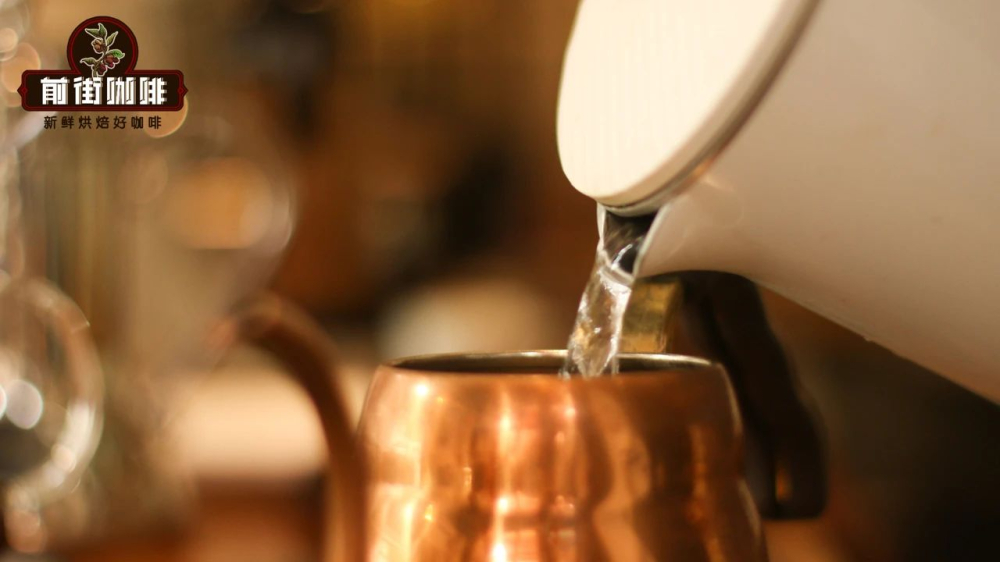
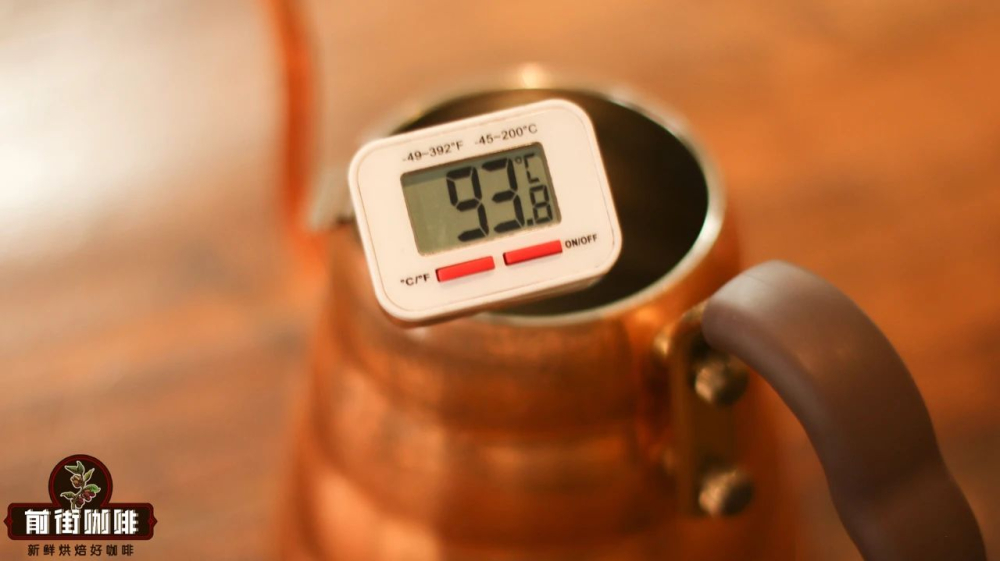
Based on 16 grams of coffee grounds, divide into 4 pours totaling 240 milliliters of water, with each pour being 40, 80, 80, and 40 milliliters respectively. The water temperature used for the first two pours is 94 ℃ , the water temperature used for the third pour is 90 ℃ , and the water temperature used for the last pour is 80 degrees Celsius. This forms a stepped variable-temperature extraction.
How to understand the flavor changes produced by variable temperature. Front Street adds two knowledge points, and I believe everyone will be able to understand it easily.
The above content is compiled by CoffeeHunters, a coffee news website.


