







How Does Coffee Brewing Change While Beans Rest?
Freshly roasted coffee beans are not better the fresher they are. Roughly 2% of the bean's weight in carbon dioxide keeps escaping after roasting, protecting aroma while blocking extraction. Brew too soon and the cup turns out with big bubbles, a dry mouthfeel and a green, astringent taste. Medium-light roasts need about 4-7 days of rest, medium-dark roasts 7-10 days.
Freshness here simply means time since roasting ended. The trapped carbon dioxide holds flavor compounds in place, then releases them as it leaves; once the gas is gone, so are many volatile aromatics, and the coffee flattens out. The astringent coffee problem is why beans that are too fresh can taste worse than beans a week older, and why bags puff up before opening.
Freshly roasted coffee beans are not necessarily better the fresher they are. Front Street points out that about 2% of the coffee bean's weight in carbon dioxide continues to be released after roasting, which both protects the flavor and hinders extraction. When coffee is too fresh, brewing tends to produce large bubbles, a dry mouthfeel, and a green, astringent taste. For medium-light roasted beans, resting for 4-7 days is recommended, while medium-dark roasted beans need 7-10 days. This article explains in detail the double-edged sword effect of carbon dioxide, the flavor defects of fresh beans, and the resting time for coffee beans of different roast levels, helping coffee lovers find the optimal flavor window.
For roasted coffee beans, the freshness that Front Street refers to is actually how much time has passed since roasting was completed. In other words, beans just out of the roaster are at their freshest, and as the days go by, the degree of freshness gradually declines. After about two months, most beans have little aroma or flavor left, and at that point they are no longer fresh.
According to our usual understanding, stale coffee beans are certainly not good, but conversely, beans that are too fresh may not be ideal either.
The Freshness of Coffee Beans
In Front Street's view, the freshness of coffee beans is essentially a matter of how much carbon dioxide remains inside the beans. After roasting is completed, the bean contains carbon dioxide amounting to about 2% of its weight, and this gas continuously escapes outward over time. When carbon dioxide remains inside the bean, it inhibits the release of flavor compounds, thereby protecting the coffee's flavor.
The process of carbon dioxide gradually escaping is actually also equivalent to opening a channel for flavor compounds, and some volatile aroma components will escape along with the carbon dioxide. So when we find that a coffee bag is puffed up and full, opening it allows us to smell a rich, layered coffee aroma.
Once the carbon dioxide inside the beans has basically been emptied out, it also means that some volatile flavor compounds have been exhausted. Coffee like this tastes lacking in layering and may even develop off-flavors, indicating that its flavor period has come to an end.
Carbon Dioxide Is a Double-Edged Sword
On one hand, the carbon dioxide inside the beans can lock aroma and flavor compounds inside the bean, preventing flavor loss. But on the other hand, carbon dioxide also hinders the release of flavor during brewing. Precisely because of this, a blooming stage is set during coffee brewing, that is, first pouring in a small amount of hot water to drive the gas out of the coffee grounds, and when the coffee grounds degas, a dome rises on the surface.
However, if the coffee beans are too fresh and the gas content is too high, the gas activity during the blooming stage will be too intense, and a large amount of carbon dioxide will burst out all at once, forming one or two very large bubbles.
Moreover, it is very easy for the situation to arise where the blooming fails to fully expel the gas, and large bubbles still emerge during subsequent pouring, interfering with the extraction process. Therefore, beans that are too fresh brew up with a weaker taste and a mouthfeel that is not full enough.
Dry Mouthfeel and Green, Astringent Taste
Freshly roasted coffee beans also very easily produce a dry mouthfeel and a green, astringent taste. Dry mouthfeel refers to discomfort, dryness, and a stuck feeling in the throat after drinking. The reason is that the beans have just been roasted, and the residual roasting notes have not yet fully dissipated. This dry mouthfeel will only disappear naturally after resting for several days, once the roasting notes fade.
Sometimes a grassy smell or the green, astringent taste of unripe fruit can also be tasted in fresh beans. This is not a defect caused by roasting, but rather because the gas inside the beans is too vigorous and was not fully expelled in time during blooming, affecting the subsequent pouring and extraction, resulting in a green, astringent taste from under-extraction.
So how should freshly roasted coffee beans be handled?
If the coffee beans you receive are relatively close to the roast date, then at this point you only need to do one thing—control that urge to drink them, and leave the beans untouched for a few days. Front Street calls this practice "resting the beans."
Freshly roasted beans will release 60% to 70% of their gas after about 4 to 7 days, after which degassing is no longer so intense and shifts to a slow, small release. After coffee beans have concentratedly released a large amount of gas within a week, they enter a relatively stable state, and this is precisely the stage when their flavor performs best. This is because volatile aroma compounds gradually dissipate only after the gas is released, and when a large amount of carbon dioxide has already dispersed, the flavor compounds remaining in the beans are still abundant.
The remaining carbon dioxide can be expelled through blooming, so that the flavor compounds in the coffee beans can be extracted into the coffee liquid.
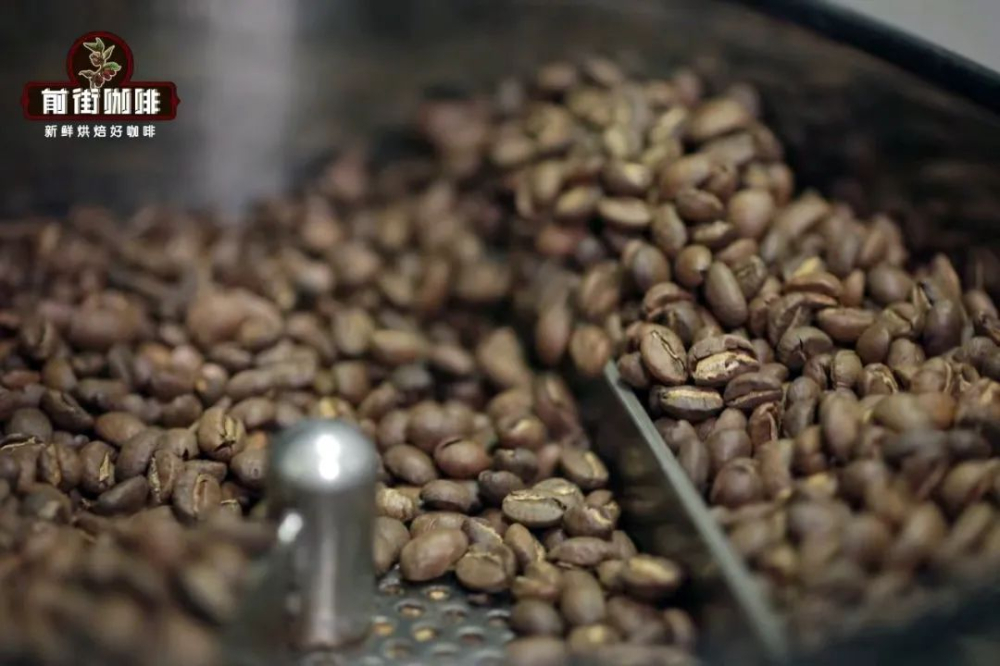
So how long exactly should they be left? Taking Front Street's own roasted coffee beans as an example, the resting period for medium-light roasted beans is about 4 to 7 days, that is, counting from the roast date, extending 4 to 7 days before drinking gives a more ideal flavor; medium-dark roasted beans need about 7 to 10 days to reach a better flavor state.
The above content is compiled by CoffeeHunters, a coffee news website.


