







How Should Espresso Extraction Parameters Be Adjusted?
Espresso extraction data is a reference point, not a fixed formula. The article explains the balance among dose, grind size and yield, and how to judge whether a shot is normal by watching the flow and tasting the flavor, then adjust parameters step by step instead of copying numbers exactly.
Daily practice at Front Street shows parameters shift with the beans and machine: 20 grams in, 40 grams out in 28 seconds one day, then 19.7 grams in at the same yield, or a 35-gram yield in 26 seconds. Similar logic guides the base for lattes and Americanos, where a diluted espresso or bitter americano result points to specific adjustments.
In the making of espresso, data parameters are always just reference coordinates, not formulas that must be copied exactly. This article revolves around the essence of extraction standards, offering an in-depth analysis of the dynamic balance among dose, grind size, and yield, and, drawing on Front Street Coffee's daily hands-on experience, systematically sorts out how to judge whether extraction is normal by observing the flow state and tasting the flavor, and how to make targeted fine adjustments to parameters. At the same time, the article also explores the differences in extraction strategies for the base of lattes and Americanos, helping you truly understand the logic of extraction rather than mechanically replicating numbers.
One point must be made clear: any extraction data has only reference value. Even if you reproduce every single value perfectly, you may not necessarily achieve a flavor performance completely identical to Front Street's. The reason lies in differences in hardware conditions such as the characteristics of the coffee beans themselves and the performance of the coffee machine. Therefore, the core of learning espresso extraction lies in becoming proficient in operating the equipment, understanding the interconnected logic among the various parameters, and ultimately being able to bring out the flavor the coffee beans should have while avoiding negative tastes—that is enough.
In its daily shots, Front Street does not always stick rigidly to the combination of "20 grams of grounds extracting 40 grams of liquid in 25 to 30 seconds." This set of parameters is fairly reasonable at the theoretical level, but in practice the condition of the coffee beans changes every day. To maintain consistency in output quality, continuous fine adjustments are needed, and the variables involved mainly include grind size, dose, and yield.
"For example, yesterday's parameters were 20 grams of grounds extracting 40 grams of coffee liquid, taking 28 seconds; today's parameters were adjusted to 19.7 grams of grounds extracting 40 grams of coffee liquid, taking 28 seconds (adjusting the dose); or 20 grams of grounds extracting 35 grams of coffee liquid, taking 26 seconds (adjusting the yield); or 19.7 grams of grounds extracting 40 grams of coffee liquid, taking 30 seconds (adjusting both the dose and the grind size)"
Through the above adjustment methods, the goal is to bring the flavor of the espresso back to a level close to that of the previous day—all judgments are based on the final flavor and mouthfeel.
In the actual daily operation of extracting espresso, you can judge whether the output is normal through two paths: observing the extraction state and tasting the flavor.
-Observation
Before extraction begins, be sure to confirm that the coffee machine's temperature and pressure are within the normal range. This step is crucial.
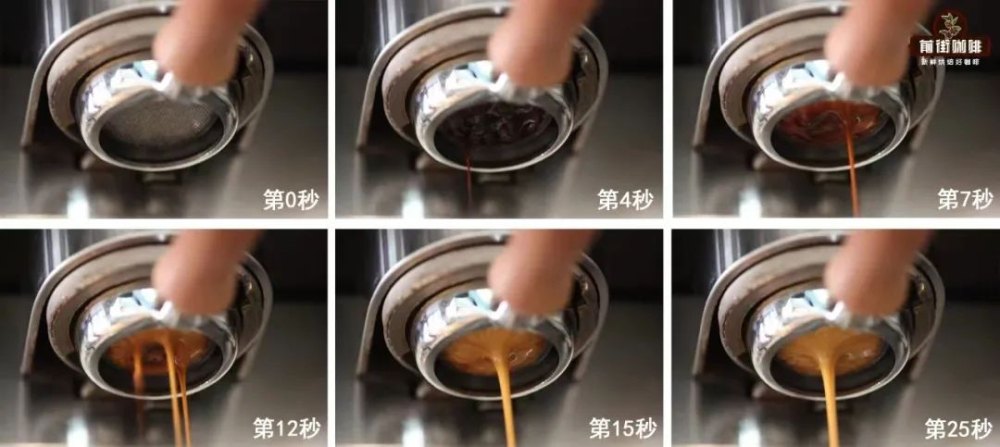
Then pay attention to how the espresso flows. Normally, after pressing the extraction button, the first drop of coffee liquid flows out at the 4th to 6th second; at this point the liquid is brown-black, viscous in texture, and flows extremely slowly. At around the 12th second, the flow rate gradually speeds up and stabilizes, the color turns brown-yellow, and the viscosity approaches that of cream. Around the 20th second, the coffee liquid appears golden yellow and the flow rate remains stable. As time continues to pass, the color of the liquid gradually becomes lighter and the viscosity gradually thins, until the coffee liquid begins to turn pale—this means extraction should be stopped (it is often finished before it turns pale).
If the following conditions appear during observation, it indicates a problem with the extraction, and you can stop it early and remake it:
1. Without pre-infusion, it takes more than 10 seconds after pressing the extraction button for liquid to flow. This is usually caused by grinding too fine or using too much coffee.
2. The flow rate of the coffee liquid alternates between fast and slow, unstable—this may be due to inadequate distribution or tamping, creating channeling.
3. The coffee liquid flows extremely fast, indicating the grind size is too coarse. If the flow starts normally and then suddenly speeds up, you need to remove the portafilter and check the puck: if there are only holes in the puck or gaps at the edges, just focus on improving distribution and tamping; if the surface of the puck is muddy and uneven, you should increase the dose.
4. After the espresso is made, you can also observe its quality. Normal espresso crema should be golden yellow, fine and smooth, with a creamy texture when swirled. If the crema is rough or clumpy, the coffee beans may be too fresh. If the crema is thin, it may be related to the roast level of the coffee beans or to storing them for too long after roasting.
-Tasting
Observing the extraction state can only help avoid some basic mistakes. Even if the flow rate is even and the ratio and time both fall within the ideal range, it still cannot guarantee that this cup of espresso will definitely taste good. Therefore, after confirming that there are no obvious abnormalities in the extraction process, you still need to judge through tasting what is lacking and which parameters need to be adjusted.
The flavor of espresso mainly depends on the coffee beans themselves. When tasting, you can compare it against the flavor description of the coffee beans. Second, you need to judge whether the espresso is lacking in taste and mouthfeel. For example:
1. If the espresso tastes rather sour with a short finish, it may be that too little coffee liquid was extracted, and you can appropriately extend the extraction time.
2. If the taste is intense with a burnt bitterness, you need to make the grind size coarser.
3. If the taste is weak and the mouthfeel is thin, you need to adjust based on the extraction data. If the flow rate is fast and the time is less than 25 seconds, you can appropriately grind finer, reduce the yield, or increase the dose.
Of course, if you ultimately plan to drink the espresso with milk or water added, the ideal way to taste is to judge the flavor after adding milk (or water). Just as Front Street's stores focus on Americanos and lattes as their main products, in the final stage of adjusting espresso parameters, you still need to confirm suitability based on the flavor performance after it is made into a latte (or Americano).
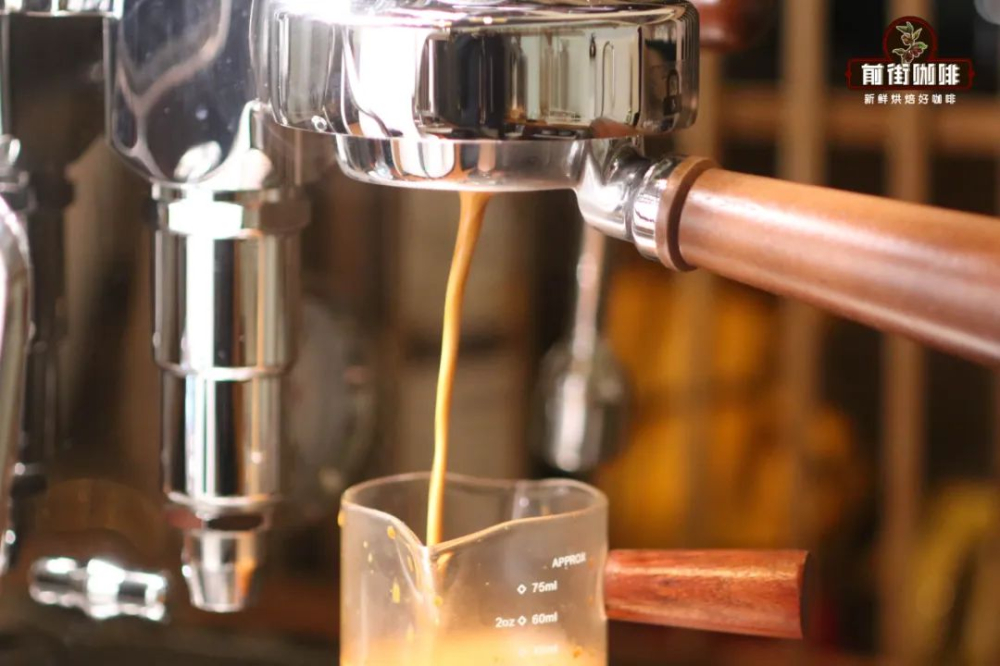
Some coffee shops use different espresso standards when making lattes and Americanos. The coffee base used for lattes extracts a little less coffee liquid, because the later part of the extraction is lower in concentration and tastes more bitter-sweet; removing this part before adding milk makes the mouthfeel fuller and the sweetness more prominent. Americanos, on the other hand, are extracted normally or with a slightly larger yield, because an Americano is itself diluted espresso, and a more complete extraction can make the Americano taste fuller (as long as the espresso has no burnt or astringent bitterness, making it into an Americano will not produce these problems either).
The above content is compiled by CoffeeHunters, a coffee news website.


