







What Are Coffee Bean Seeds and Where Do They Come From?
Coffee beans are actually seeds, not beans. They are the two seeds found inside the cherry-like fruit of Coffea plants, most commonly Coffea arabica and Coffea robusta. Each cherry typically holds two seeds, which are dried, roasted, and ground before brewing. That is why the term coffee bean seeds describes the same thing people call beans.
Green coffee seeds are processed in two main ways after harvest: washed and natural. The washed method strips the fruit before drying, giving a cleaner taste, while the natural method dries the whole cherry around the seed, adding fruity notes. Good coffee seeds are graded by size, density, and defect count before roasting.
Recently, a food-exploration blogger in Jiangsu racked up a 710-yuan bill at a restaurant and left without paying. After being chased down by a waiter, he then posted a negative review video about the restaurant, and the incident quickly went viral, sparking widespread discussion. As food-exploration bloggers proliferate, chaos has become rampant—paid fake promotion, threatening bad reviews to get free meals, occupying seats for hours to take photos, and more. How should merchants and platforms respond? This article reconstructs the course of events and takes a deep dive into the gray areas and industry dilemmas behind influencer food exploration.
On July 18, a local food-exploration blogger in Jiangsu left a restaurant without paying after running up a 710-yuan bill, and a restaurant waiter immediately ran out to bring the man back to settle the bill.
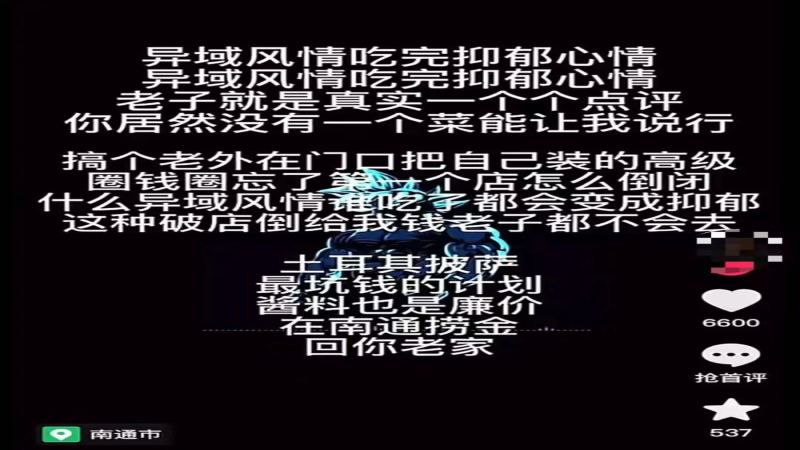
That same day, the blogger posted his food-exploration impressions of the restaurant, saying that he had spent 710 yuan there expecting to enjoy a nice exotic meal, but ended up feeling utterly depressed. At the start of the video, the blogger declared that if he did not write a diss or trash the place for this food exploration, he would delete his account and quit the internet for good; at the end of the video, he even improvised a rap to express his feelings about the visit.
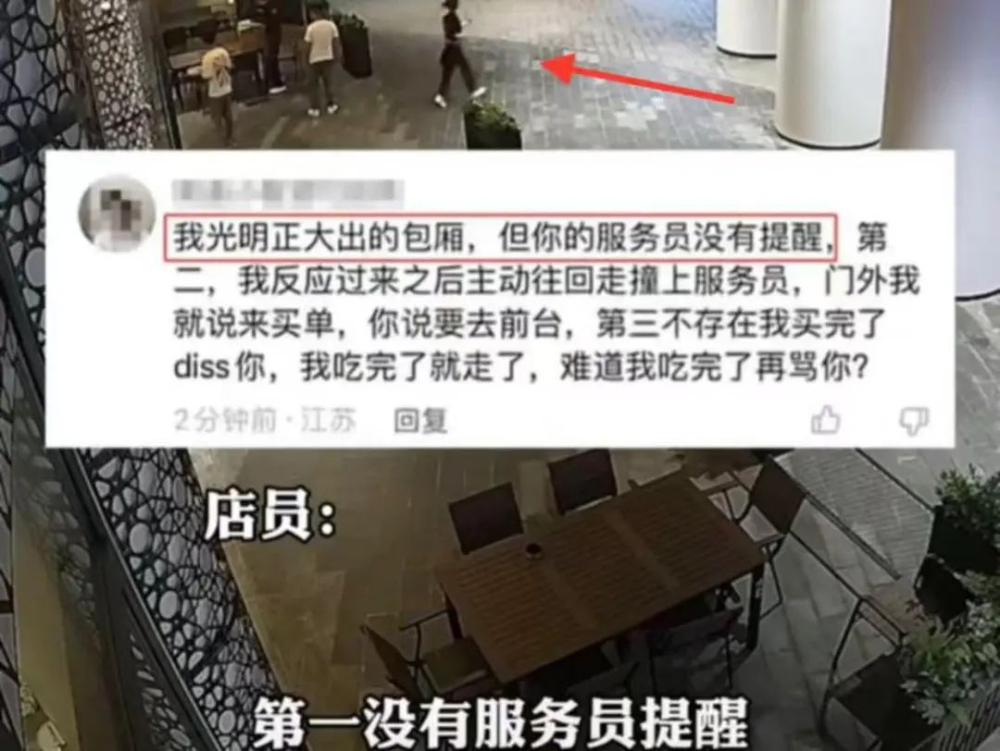
In response to this, on July 22 the restaurant that was reviewed exposed a surveillance video to the media, showing that the blogger and his two companions walked out of a private room and headed straight out the door toward the elevator, after which a restaurant waiter immediately ran out to bring the man back to settle the bill. A witness in the video stated that the man had asked his two companions whether the bill was paid, and after getting a negative answer, quickly left.
After being called back by the waiter, the man said that no one had reminded him to pay, that he had simply forgotten, and that he had walked out openly and had no intention of skipping the bill. To this explanation, the restaurant said that paying after a meal is only natural and needs no reminder. The surveillance video then sparked heated discussion among netizens.
Due to the strong reaction, the man immediately deleted his original food-exploration video on July 22, and the next day posted a new video saying that he was the blogger who had skipped the bill and been exposed online, and that he was very sorry for occupying public resources over this matter. As for forgetting to pay, he had already contacted the shop's person in charge through the local police to mediate the matter, and the two sides had cleared up the misunderstanding through communication at the police station.
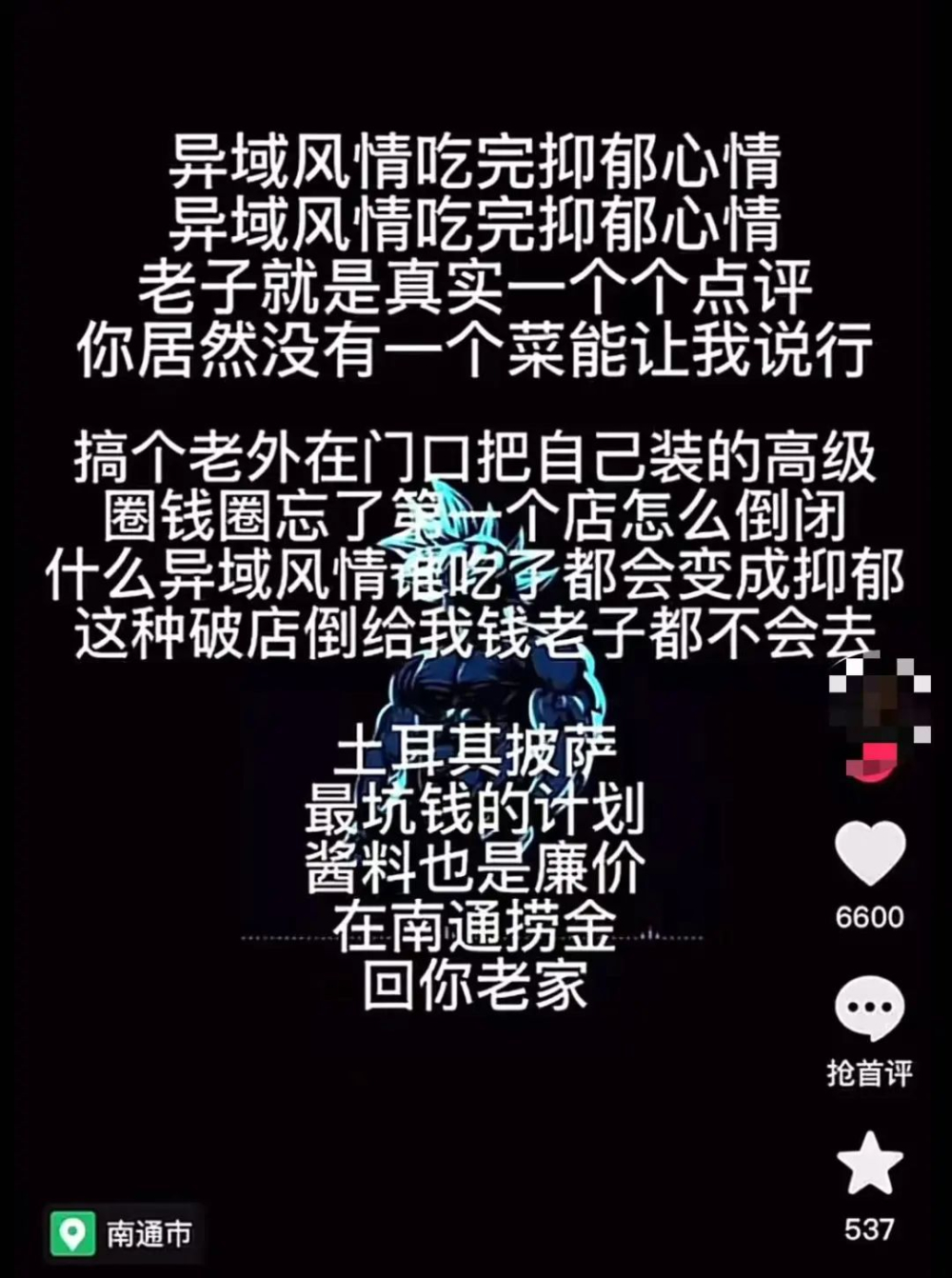
Regarding the dishes, he said it was merely his personal taste, and he also admitted that his review was targeted and somewhat extreme. As a blogger in the age of traffic, he apologized to the merchant for his inappropriate words, and was very sorry for the impact on the merchant. He then wrote "The innocent will clear themselves" on his profile picture.
In this internet age, many consumers like to use "food-exploration guides" and "food-exploration videos" on social platforms to "plant seeds" for or "avoid pitfalls" with certain merchants, which has made food-exploration blogger a very popular "profession." As food-exploration bloggers surge in number, many industries also bear more potential risks.
Originally, food-exploration bloggers and merchants were in a "mutually beneficial" relationship, but at some unknown point, chaos began to erupt frequently, with more and more food-exploration bloggers drifting into the gray zone. On one hand, they take money for fake promotion; on the other, they flaunt their "big V" status, use "helping to promote" as a pretext to demand free meals from merchants, and even charge promotion fees—or else they post "bad review" articles/videos.
Some influencers do not appear as food explorers; after not consuming anything, or consuming just one product, they occupy store space for long periods taking photos, harming other consumers' experience. If the merchant stops or refuses them, they get threatened with "writing a bad review."
Previously, Coffee Workshop reported on a Shanghai coffee shop that attracted many influencers and e-commerce models to take photos because its decor matched modern consumers' pursuit of minimalism. These people often consumed just one cup of coffee yet occupied public space for most of the day, even using the restroom to change clothes and touch up their makeup, seriously affecting other consumers' in-store experience.
As such incidents intensified, the coffee shop's owner finally could not hold back and posted "warning signs" in every corner of the shop: "I've said it—don't change clothes here for Taobao shoots, but you still shoot. 26 yuan for an iced Americano and you can shoot for half a day. Other customers and we are all annoyed to death by you. We've talked until our mouths went dry, and you just don't listen! If you want to shoot for Taobao, add the owner on WeChat and pay to shoot, okay? Pay first and then come shoot, okay?"
This situation is becoming more and more serious in the food and beverage industry. These days the restaurant business is tough, and many newly opened restaurants and cafés regularly use "influencer food exploration" as a marketing method: according to the store's needs at different times, they invite bloggers with a certain fan traffic on social platforms to promote the brand's products/events, and release positive food-exploration content on social platforms in batches and by time slots to achieve traffic diversion.
Such traffic diversion attracts not only ordinary consumers; once a merchant has some traffic, many influencers with "bad intentions" will show up and do things that harm the merchant's reputation.
As a commercial activity, food exploration and merchant promotion have their market value, and charging fees is itself reasonable—but the premise should be that the information is truthful and both parties act voluntarily. The current situation is not just a matter of personal character; some merchants and platforms are also hard to absolve of blame.
Merchants' "connivance" and "compromise" have also made this group more brazen. Joining hands with bloggers/influencers to exaggerate the real product, then further splitting the profits once gains are made, strengthens this group's nerve for exaggeration; when facing "threats," merchants choose to compromise for fear that the individual's words will affect the brand's reputation.
Although merchants are often in the victim's position, if everyone could call the police and preserve evidence when threatened, or refrain from colluding to deceive consumers, these people could be reined in.

Platforms have also failed to reasonably constrain or supervise their users. Turning a "blind eye" to food-exploration/influencer users suspected of hype, false promotion, malicious defamation of others, and other unreasonable behavior is an important factor in making influencers/food-exploration bloggers brazen.
As consumers, when using relevant platforms, if we find users engaging in the above behavior, we can report them promptly. As merchants, we should maintain the most basic integrity in promotion and publicity, and when necessary contact the police to intervene and investigate. As platforms, we should strengthen and establish reasonable and effective mechanisms and rules to constrain such users.
Now more and more young people are joining the food-exploration/blogger industry. As practitioners in the information media field, integrity and morality are very important and fundamental matters. Some "clever little tricks" may bring profit once, but they are not a way to gain benefits long term. Once too many people do such things, the entire industry will one day disappear, losing the trust of both consumers and merchants.
Image source: Douyin and Weibo screenshots
For professional coffee knowledge exchange and more coffee bean information, please follow Coffee Workshop (WeChat public account: cafe_style)
For more specialty coffee beans, please add the private WeChat of Front Street Coffee (FrontStreet Coffee), WeChat ID: qjcoffeex
The above content is compiled by CoffeeHunters, a coffee news website.


