







What Does the Geisha Coffee Trademark Fight Mean for the Trade?
A company has registered trademarks including "Red Label Geisha" and "Champion Geisha" and has tried to claim "Geisha Coffee" as well, raising concern that a generic variety name could be privatized. Geisha coffee beans trace back to the Kafa forest around Geisha Mountain in Ethiopia, collected in 1931 and sent to Kenya the next year.
The variety reached Uganda and Tanzania in 1936, Costa Rica in 1953, and Panama in the 1970s through Francisco Serracín of Hacienda Don Pachi. Hacienda La Esmeralda owner Daniel has said the familiar "windbreak forest" discovery story is unfounded; the variety was confirmed only in 2003 after years of testing, two weeks before that year's BOP competition. Registration of common names could restrict how traders and roasters label lots.
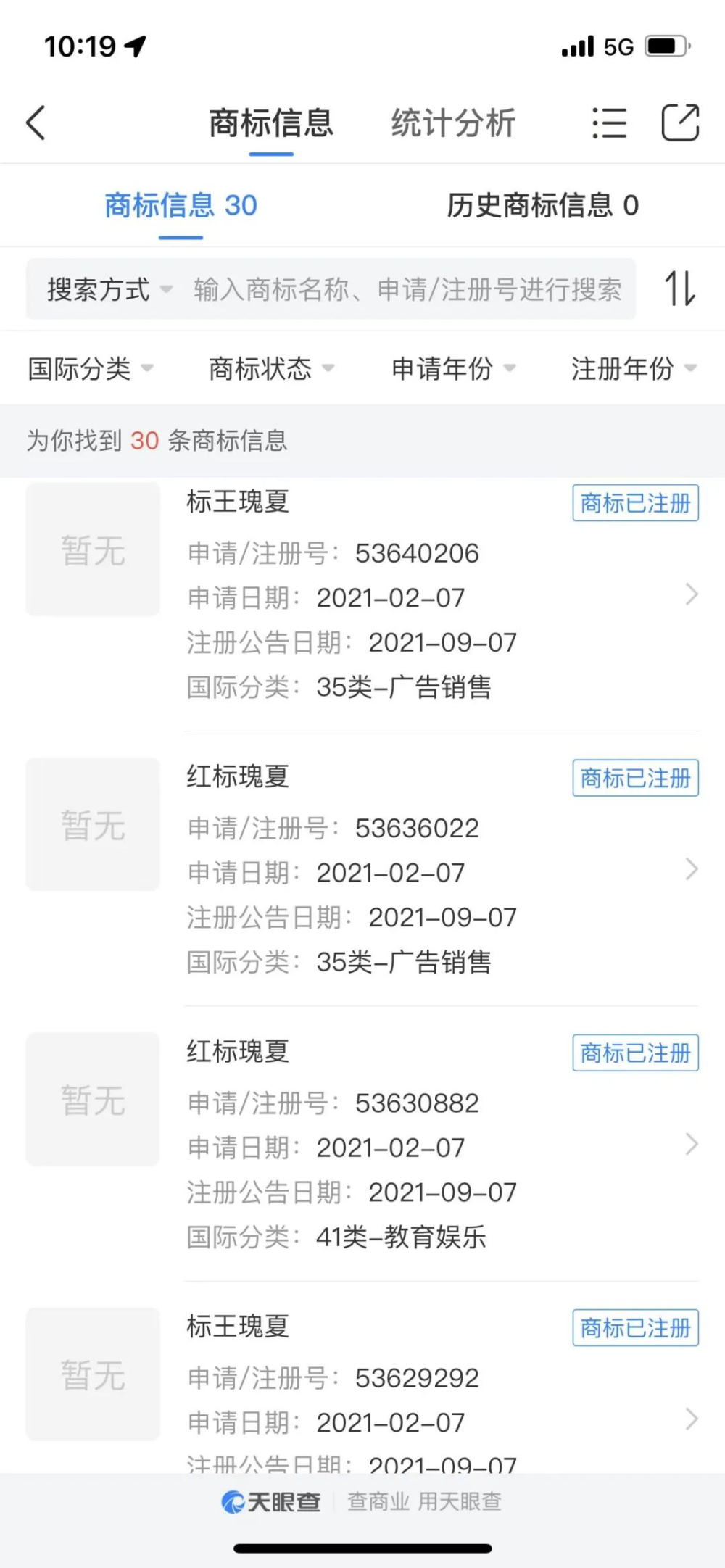
In recent years, Geisha coffee has continued to rise in popularity within China's specialty coffee circles, but recently a company successfully registered trademarks such as "Red Label Geisha" and "Champion Geisha," and attempted to also claim "Geisha Coffee," sparking industry concerns about the privatization of generic names. This article traces Geisha's journey from the forests of Ethiopia to Hacienda La Esmeralda in Panama, explains the origins of the grading system of red, green, and blue labels, as well as the meaning of "Champion Geisha" in the BOP auction, and discusses the risks that registering generic names as trademarks may bring to coffee professionals—a topic worthy of attention for every coffee lover and industry practitioner.
Geisha coffee beans originated from the Geisha Mountain Kafa forest in Ethiopia. In 1931, a British person collected coffee seeds in the forest area around Geisha Mountain in southwestern Ethiopia, and the following year sent these seeds to Kenya. Thereafter, the variety was introduced to Uganda and Tanzania in 1936, and to Costa Rica in 1953. In Panama, it was in the 1970s that Mr. Francisco Serracín of Hacienda Don Pachi brought the Geisha variety from the CATIE institution in Costa Rica to Panama and shared it with other estates for cultivation.
Geisha coffee's rise to fame is largely thanks to Daniel, the owner of Hacienda La Esmeralda. The most widely circulated account of the variety's discovery is: "In 2003, Daniel, the owner of Panama's Hacienda La Esmeralda, faintly detected a captivating floral aroma in processed coffee beans, and tracing it back, found this batch of coffee beans from the windbreak forest."
- Hacienda La Esmeralda owner Daniel sharing at a GRAND CRU event
Regarding this rumor, Daniel, the owner of Hacienda La Esmeralda, personally recounted the discovery of Geisha this year at an event held by the well-known green bean merchant Grand Cru, and clearly stated that the "windbreak forest" claim is entirely unfounded.
Daniel stated that the confirmation of the Geisha variety came after years of comparison and testing, and was finally locked in only in 2003. Two weeks before the 2003 BOP competition, while selecting competition lots on the internal cupping table, he discovered that the Geisha variety exhibited outstanding flavors of jasmine, citrus, peach, blueberry, bergamot, and sugarcane. These flavors differed from mainstream preferences in the coffee circle at the time, but Daniel still decided to enter the Geisha variety in the competition, and won first place in one fell swoop.
The variety in Hacienda La Esmeralda's winning lot was originally labeled Geisha, and after being introduced to Japan, it was transliterated as Gesha. In Japanese, Gesha sounds similar to the Japanese word げいしゃ, which in kanji is 芸者, translated into Chinese as geisha. Later, after the variety was introduced to Taiwan, local coffee professionals named Geisha "艺伎" (geisha).
In mainland China, around 2006, Mr. Yuan, the Chinese head of Coffee Lumo, introduced Geisha from Panama, and named the variety "瑰夏" through direct transliteration. For over a decade, terms such as "艺伎咖啡" (geisha coffee), "瑰夏," and "瑰夏咖啡" have become generic Chinese names for the Geisha variety and its coffee beans.
After Hacienda La Esmeralda rose to fame with the Geisha variety in 2004, it also graded the Geisha produced on the estate. Before the 2021 harvest season, Hacienda La Esmeralda divided the Geisha variety into three grades, distinguished by red, green, and blue label background colors.
In China, to help consumers more clearly remember each grade, the industry adopted red label, green label, and blue label as shorthand for the grades. And "Red Label Geisha," "Green Label Geisha," and "Blue Label Geisha" gradually became generic names representing the grades of Hacienda La Esmeralda's Geisha variety.

Starting from the 2021 harvest season, Geisha grown at 1,500 meters (i.e., the former blue label) was sold in its entirety to a green bean company, which launched a brand called "Las Rocas," with the Chinese translation "Volcanic Rock Geisha."
"Esmeralda Special" corresponds to the red label color, i.e., Red Label Geisha. The Esmeralda Special series is the highest-quality Geisha coffee beans sold by Hacienda La Esmeralda, grown at specific plots at 1,600–1,800 meters, with each lot required to cup at over 90 points. Usually this series comes from the two sub-estates of Jaramillo and Cañas Verdes (Mario also has produced red label series, though this estate plot mainly serves as an exploration of commercial viability, growing many coffee varieties).
Another feature of Esmeralda Special lots is that each lot has an independent number, and all coffee beans in a lot come from a single small plot, allowing buyers to choose the lot that suits their preference for subtle flavors. (The buyers referred to here are those trading directly with Hacienda La Esmeralda.)
One thing to note is that each year Hacienda La Esmeralda selects a batch of Esmeralda Special from different plots to participate in the international specialty coffee green bean auction; this batch of Esmeralda Special is clearly marked as auction lots. But not all Esmeralda Special participates in the auction; the portion that does not enter the competition is non-auction lots.
Auction lots of Esmeralda Special participate in the annual Best of Panama green bean competition (BOP), competing against other coffee beans grown in Panama in a "battle of kings." Through cupping, a group of the kings of kings is selected, and then they enter the auction stage.
Once in the auction, buyers can bid continuously to purchase their desired coffee beans. The one with the highest auction price overall is called the "Champion" by Chinese coffee professionals, and if it is Geisha coffee beans that fetch the highest auction price overall, it is called "Champion Geisha" by Chinese coffee professionals.
Therefore, "Champion Geisha" has become a generic name representing the highest-priced Geisha variety in the BOP auction.
The greatest significance of trademark registration is that the trademark registrant has exclusive trademark rights protected by law, so others dare not counterfeit, otherwise they can be sued for infringement and economic compensation can be obtained. But recently, many rights-protection cases have appeared online, indicating that some merchants' products used a certain name as a registered trademark held by someone, and demands were made for the merchants to remove products and pay economic compensation.
Trademark rights protection itself is meant to safeguard the exclusive rights of trademark registrants, but now it has brought significant potential risks to various industries. Every industry has some generic names within the trade, but trademark examiners are not clear about the generic names in each industry. Therefore, even though Article 11 of China's Trademark Law stipulates that generic names cannot be registered as trademarks, it is still impossible to completely prevent the registration of trademarks for generic names that are not widely recognized by the public.
At present, the company's registration of "Red Label Geisha" and "Champion Geisha" has passed the advertising and sales trademark review.
And this company also applied to the Trademark Office for the "Geisha Coffee" trademark. The Trademark Office rejected this application; otherwise, more merchants might have fallen victim.
"Red Label Geisha" is a generic term in China for Hacienda La Esmeralda's Esmeralda Special, and is also a specific designation. If Hacienda La Esmeralda were the trademark holder, it might be more appropriate.
A generic name refers to the name of a certain good or service that is legally or customarily widely used within a certain scope. Turning "Red Label Geisha" and "Geisha Coffee," which have been sold for many years, into a trademark privately owned by a certain company—the intention is currently unclear—seems likely to bring considerable risk to cafes in the industry selling Red Label Geisha coffee beans, and is worthy of industry attention.
In the coffee industry, "Golden Mandheling" is a registered trademark of the PWN green bean company. Although it has been registered in Japan as a trademark protected by local law, for so many years no one in China has done so. Therefore, coffee professionals all know that "Golden Mandheling" is a registered trademark belonging to PWN, so no one has tried to scheme for the "Golden Mandheling" trademark, because it is a generic name.
Image source: Internet
Professional coffee knowledge exchange. For more coffee bean information, please follow Coffee Workshop (WeChat public account cafe_style)
For more specialty coffee beans, please add private WeChat Front Street Coffee (FrontStreet Coffee), WeChat ID: qjcoffeex
The above content is compiled by CoffeeHunters, a coffee news website.


