








Why Does Jersey Milk Suit Blended Coffee Beans So Well?
Jersey milk has become a common choice in specialty coffee shops because its fat, protein and lactose levels differ from ordinary fresh milk, which changes how a milk drink tastes. The article tests three milks side by side and compares their performance in a Dirty and a latte, examining whether the higher price is justified for everyday milk coffee.
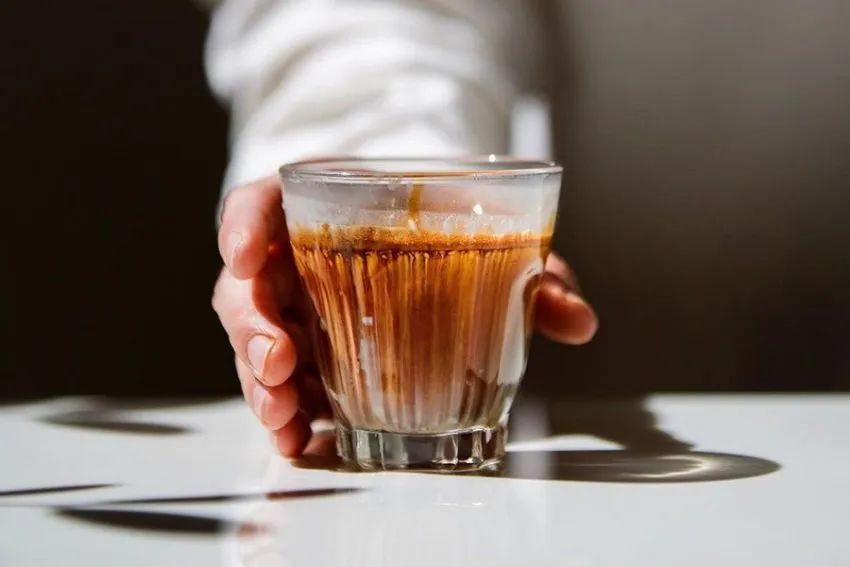
A Dirty is made by pouring espresso close-range into well-chilled milk; the density difference creates a layered collision and a golden-brown crema on the surface. Beyond blended coffee beans and barista skill, milk now plays a core role in the drink, and the milk fat and protein content shapes body, sweetness and how the coffee's own flavors come through beneath the milk.
In today's world of constantly upgrading specialty coffee, the success of a milk coffee depends not only on the beans and the barista—the choice of milk is equally crucial. From Ice Blog to Jersey milk, competition among coffee shops over milk sources is heating up. Jersey milk has been dubbed the "Hermès of milk," priced far above ordinary fresh milk, yet it is still sought after by many specialty cafés. What exactly justifies its high price? Is its mouthfeel truly superior? What kind of flavor does it bring when used to make a Dirty and a latte? In this article, through hands-on testing of three different milks—comparing fat, protein, and lactose content as well as actual drink results—we comprehensively analyze the application value of Jersey milk in coffee and discuss whether it is suitable for everyday milk coffee making.
In the specialty coffee world, what determines the quality of a cup of coffee is no longer just the grade of the coffee beans and the skill of the barista—the milk chosen by the shop also plays a key role. From the earlier Ice Blog to today's Jersey milk, competition over milk sources among cafés has quietly intensified.
As one of the indispensable ingredients in a café, milk's role has also shifted over the course of coffee culture's evolution—from an auxiliary ingredient initially used only to neutralize coffee's bitterness, it has gradually been upgraded to a core element capable of elevating the layered complexity of the entire drink.
Although more and more people today are pursuing the pure flavors of coffee, milk coffee still enjoys broad market demand. To allow consumers who love milk coffee to also taste the flavor characteristics of the coffee beans themselves beneath the milk, the Dirty—made by combining cold milk and espresso—has become a signature product in many specialty cafés.
In short, a Dirty is a drink made from cold milk and espresso. Under proper extraction by a pressurized espresso machine, the carbon dioxide and insoluble oils in the coffee grounds reach a saturated state and flow out together with the coffee liquid, forming a golden-brown crema foam on the surface.
At this point, when the espresso is poured from close range into thoroughly chilled milk, the difference in liquid density causes a layered collision effect between the coffee and the milk. When drinking, the palate experiences the impact of alternating hot and cold, and in terms of flavor, the blending of coffee and milk presents multiple, gradually shifting layers.
This approach not only preserves the flavor characteristics of the coffee beans themselves, but also allows one to taste the unique flavors produced by the combination of coffee with the milk fat and lactose in the milk, as well as the milk's own sweetness. The dual gradation of layers and mouthfeel makes the Dirty a standout among milk coffees.
It is precisely because of the popularity of the Dirty that people have raised higher demands on milk's body, lactose, and milk fat content in order to achieve a clearer layered effect. While the industry was still commonly using ice-distilled purified milk (Ice Blog) to make Dirty, some trendsetting cafés had already begun choosing Jersey milk.

Jersey milk has long been widely recognized as the "Hermès of milk," and now it has become the latest hot topic in the milk world. Why exactly has it become so popular in cafés so quickly?
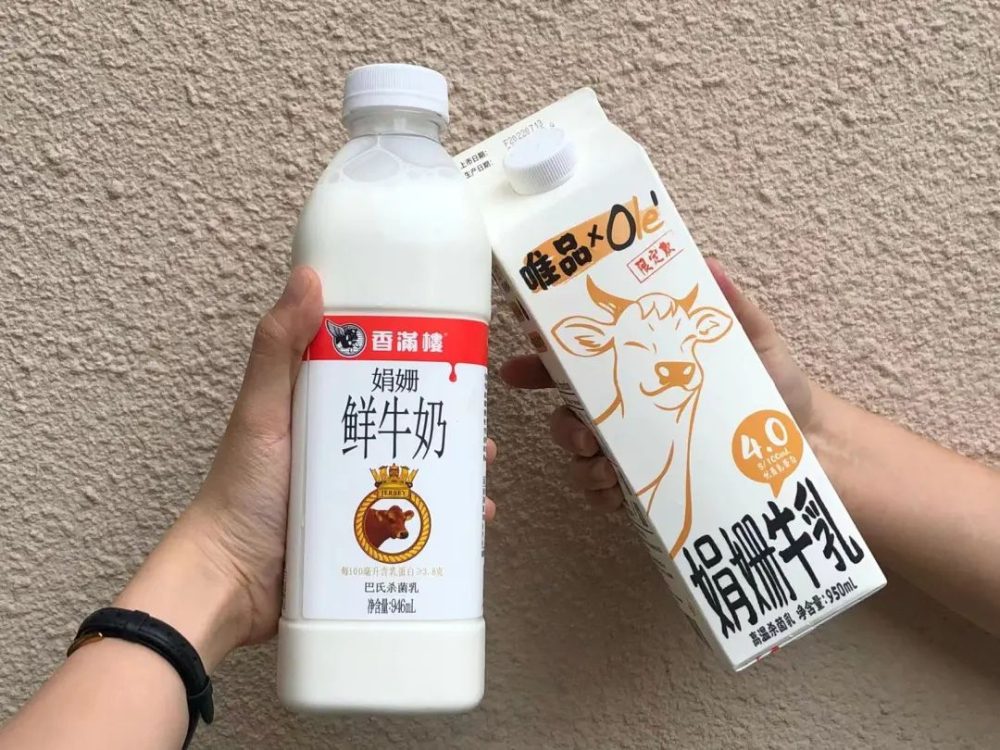
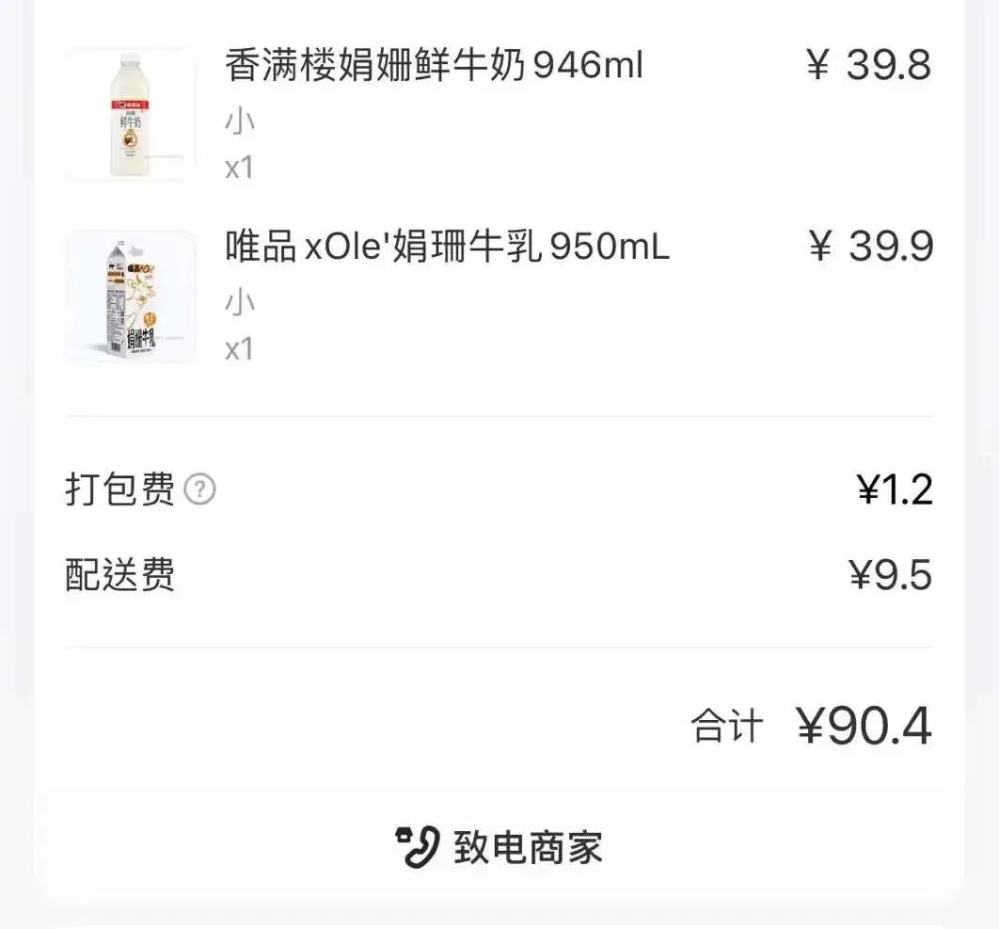
Thinking of this, the author suddenly had a whim, opened a food delivery platform, and ordered two types of Jersey milk that could be bought immediately in Guangzhou... (after placing the order, I couldn't help but feel a pang of anxiety)
I think one important factor in its popularity is the price (I really did spend a fortune). Just as the value of luxury goods often stems from the story behind them, the reason Jersey milk is expensive is largely related to its legendary background.
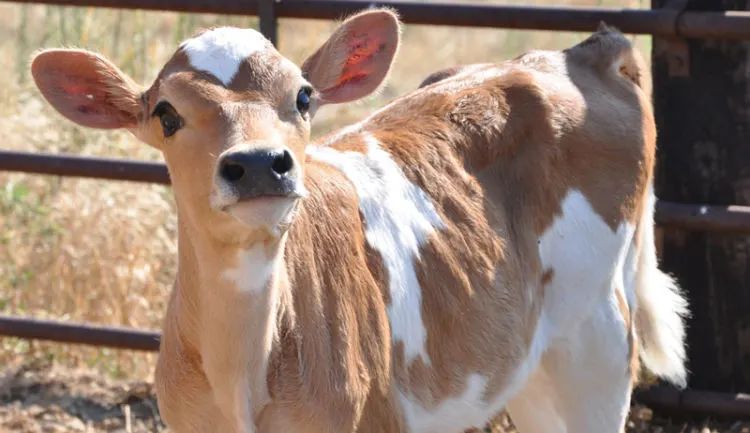
Jersey milk, as the name suggests, comes from Jersey cattle, and the hometown of Jersey cattle is the place everyone is both familiar with and unfamiliar with—Jersey, England, also known as the Island of Jersey.
The reason everyone is familiar with "Jersey" is partly because many WeChat friends are located there, and partly because of the famous horror film The Others, as well as the fact that this island is home to the "closed-breeding" aristocracy among cattle—the Jersey cow. It is no exaggeration to say that without the Jersey cow, Jersey would not be so widely known.
-Jersey cow
There are various theories about the origin of the Jersey cattle breed, and its exact origin can no longer be verified, but the breeding history of this dairy cow breed is very clear. In order to breed purebred Jersey cattle, Britain issued a decree in 1763 prohibiting other cattle breeds from entering Jersey. In 1844, the British Jersey Cattle Breed Society was established, marking the success of the breed's development. More than 200 years later, the bloodline of Jersey cattle has still not been altered by other breeds.
Compared with the source of our everyday drinking milk—Holstein cattle—which is known for its fast reproduction rate and large milk yield, Jersey cattle are exactly the opposite. They are known for slow reproduction and low but refined milk production, and therefore the milk's quality and nutritional value are higher. It is also precisely because rarity creates value that Jersey milk, whether in the past or now, is worth several times more than ordinary milk.
- Holstein cow
The taste of a milk is inseparable from its milk fat and protein content. The author selected "Bright Fresh Pasture Fresh Milk," "Weipin Jersey Milk," and Guangzhou local brand "Xiangmanlou Jersey Milk" for a milk fat content comparison: ordinary fresh milk has 3.9g of milk fat and 3.4g of protein per 100ml; Jersey milk has 4.9g of milk fat and 4.0g of protein per 100ml; while Ice Blog has 5.5g of milk fat and 6.2g of protein per 100ml.
Without purification, Jersey milk can already reach such levels of milk fat and protein content, so its mouthfeel, body, and aroma among fresh milks are beyond doubt.
Are you now thinking, isn't Ice Blog good too? Drinking milk is ultimately about getting a fresh sip. Compared with Ice Blog, which still requires the step of freeze purification, Jersey milk seems much fresher!
At the same time, Jersey milk has another special feature: its lactose content is lower than ordinary milk. Ordinary fresh milk has 5.2g of lactose per 100ml, while Jersey milk has 4.8g per 100ml, and the Ice Blog we are familiar with has 8.3g per 100ml. For those who love rich aroma and high body but worry about higher lactose, Jersey milk can satisfy everyone!
Of course, the reason many cafés are now choosing Jersey milk to make Dirty is largely that Jersey milk's milk fat content is "strong enough" to support the coffee liquid and form a good gradual layering, while its lactose content is not high, so the milky sweetness will not overly mask the coffee's overall flavor.
So, the author used an espresso blend of sun-dried Yirgacheffe Red Cherry and Honduras Sherry in a 3:7 ratio to make three Dirty coffees with different brands of milk. (The flavor characteristics of this blend lie in vanilla cream, soft berry acidity, and a nutty finish.)
The Xiangmanlou contender could express the nutty and vanilla cream aromas in the blended coffee beans, but the berry-like acidity was masked. During the gradual transition, one could feel the overall body of the coffee and the body of the milk itself, but the flavor layers were not obvious.
The Weipin contender could express berry-like acidity and vanilla cream flavors, but perhaps because this contender's lactose was higher than Xiangmanlou's, during the gradual transition one could feel the coffee's layers and the milk's sweetness. The flavor layers were obvious, but it lacked a solid mouthfeel.
As for the ordinary fresh milk contender, because its milk fat content was not high and its supporting power was weaker, the coffee's overall performance was rather thin, and the flavor layers were not strong either.
(Why is the Dirty's layering not especially obvious? Because the blended coffee beans used this time were not roasted particularly dark, and during extraction, in order to preserve the coffee's own vanilla cream flavor and berry acidity, the coffee's overall strength was not especially high either, so it did not have the strong layering we usually see in a Dirty.)
For fairness, the author also made three hot lattes with different brands of milk, and stirred them evenly to ensure the milk and coffee were fully integrated before tasting.
After heating, the Xiangmanlou contender had a relatively obvious milky barnyard odor, and after fully integrating with the coffee, the milky taste was too prominent and covered most of the coffee's own flavor.
After heating, the Weipin contender's milk sweetness became more obvious, and after fully integrating with the coffee, one could drink sweet coffee without adding sugar, but the milky barnyard odor was still relatively obvious, and one had to taste carefully to detect the coffee's own flavor.
Although the ordinary fresh milk contender was unremarkable after heating, after fully integrating with the coffee it did not steal the spotlight from the coffee's own flavor, so when drinking it there were aromas of nutty vanilla cream and a slight berry sweet-acidity.
If drinking Jersey milk on its own, the mouthfeel and richness are truly great! Xiangmanlou's Jersey milk has a more solid overall mouthfeel, and the milky aroma is also more obvious. Weipin's Jersey milk, on the other hand, has a smoother overall mouthfeel, and its milky sweetness is more prominent. (This may be the difference between northern and southern cows.) Ordinary fresh milk is relatively balanced overall, with no particularly outstanding mouthfeel or flavor.
Jersey milk is delicious! But it is not universally compatible... Perhaps paired with a certain kind of coffee, it can highlight its own distinctive flavor while also producing another unique flavor after integrating with Jersey milk.
Is it special? Special... expensive! If you are just buying it for everyday drinking, treating yourself occasionally is still a good choice, but I really do not recommend using it to make milk coffee—I worry that if you cannot find a coffee that pairs perfectly with Jersey milk, you will be disappointed...
"Will you continue doing reviews of other Jersey milks?"
"No, it's just too expensive!"
Some image sources: Internet
For more coffee bean information, please follow Coffee Workshop (WeChat public account cafe_style) For professional coffee knowledge exchange, please add WeChat ID kaixinguoguo0925
The above content is compiled by CoffeeHunters, a coffee news website.


