







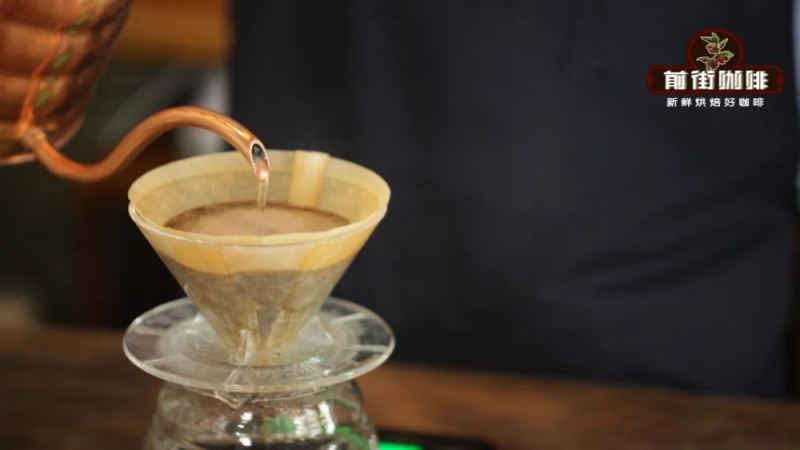
How Many Types of Coffee Trees Brew Well With Split Pouring?
Split pouring after the bloom extends total extraction time by more than ten seconds compared with a single pour, which releases more coffee compounds and builds stronger layering. Sour compounds dissolve first, sweet compounds follow and accelerate, and bitter compounds come last, so dividing the pour into two or three stages gives more control over the balance in the cup.
More splits are not automatically better. Two to three pours are the common daily approach because they stay flexible and make the ideal extraction window easier to hit. Split pouring also improves flushing efficiency, since each stage agitates the bed. When choosing how many types of coffee trees to brew, beans with bright acidity or dense structure tend to benefit most from the extra control.
In pour-over coffee, the pouring method after blooming directly affects the final flavor. Is it a "one-pour" where all the water is poured at once, or is it divided into two or more pours? These two approaches differ significantly in extraction time, flushing efficiency, and controllability. Split pouring can extend the extraction window, making the release rhythm of sour, sweet, and bitter compounds more controllable, thereby enhancing the coffee's layering. But more splits aren't always better; in daily brewing, two to three pours are most common, as they allow flexible adjustment and make it easier to hit the ideal extraction time. This article will compare in detail the differences between one-pour and split pouring, and explain what kind of coffee beans are better suited for split extraction.
What is split pouring?
When brewing coffee, performing a bloom is already widely accepted. So when discussing split pouring, we mainly look at whether there is a pause in the pouring process after the bloom ends. If all the water is poured at once after blooming, that is the "one-pour" method with no splits, and many people prefer this technique.
As long as the pouring after blooming is divided into two or more stages, no matter how many stages or how much water each stage uses, it counts as split pouring.
- Split pouring can extend extraction time
The most intuitive effect of split pouring is that the total extraction time will be more than ten seconds longer than without splitting. Front Street Coffee has also previously explained that the dissolution rates of the three types of compounds in coffee—sour, sweet, and bitter—differ across different time periods. At first, sour compounds release relatively quickly, then the dissolution rate gradually levels off. Sweet compounds start releasing a bit more slowly than sour ones, then gradually accelerate and stabilize. Bitter compounds dissolve relatively slowly at first, and gradually speed up over time. When extraction time is extended, it means more coffee compounds are released, so the flavor is naturally richer and the layering is stronger. (Sweet and bitter compounds can enhance the coffee's layering. We usually perceive coffee as bitter because bitter compounds are over-extracted, and the balance among sour, sweet, and bitter is lost.)
- Split pouring can improve flushing efficiency
If you want to extend extraction time, grinding the coffee finer can also achieve an increase in total time. But doing so cannot specifically improve the extraction rate during a particular time period. Just like brewing coffee with a French press, steeping for three or four minutes won't make it bitter. Pour-over extraction time is usually maintained at around 2 minutes, because pouring itself has a flushing and stirring effect, which can make the coffee grounds tumble and thus improve extraction efficiency.
If the pouring after blooming is not split, the flushing effect is concentrated only between 30 seconds and 80 seconds. If divided into two stages, the flushing effect appears in two intervals: 30 seconds to 55 seconds, and 70 seconds to 95 seconds.
- Split pouring offers greater controllability
For beginners, if their water control skills are not yet proficient, split pouring is the simplest and most compatible method. For example, if we regard 2 minutes as a reasonable extraction time during brewing, and the first stage of pouring takes longer than planned, we can increase the flow rate for the later pours.
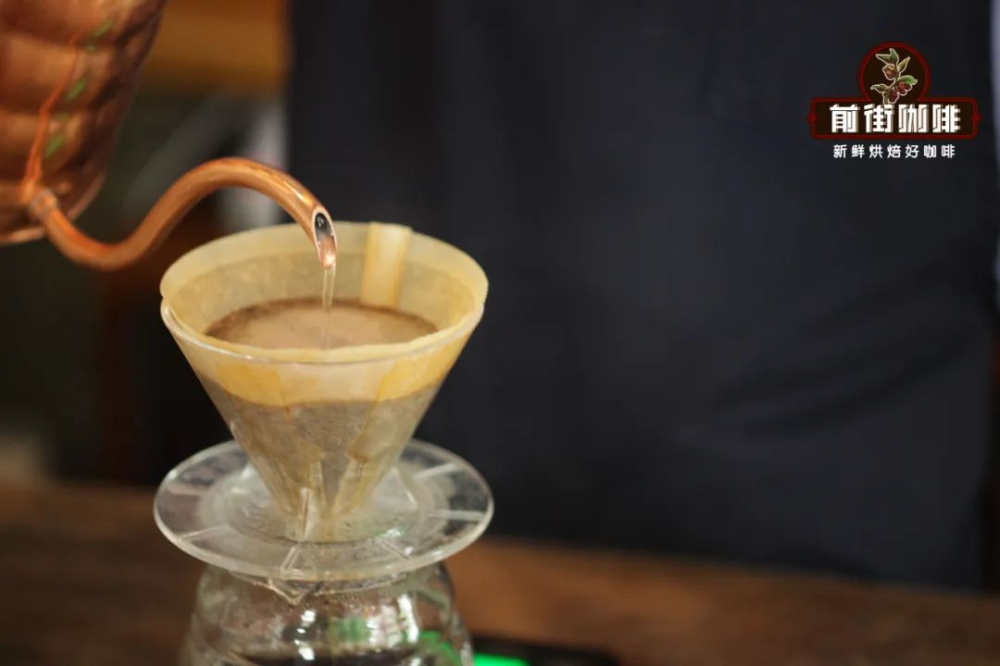
If you find that the water drains too fast earlier on, the subsequent pours need to use a slow, small stream...
But without splitting, it is difficult to spot problems in time during brewing, and even if you do, it is hard to make remedies.
So how many stages is reasonable?
In daily brewing, dividing into two or three stages is most common. Two to three pours make it easier to hit a reasonable extraction time, and also allow corresponding pouring adjustments based on different coffee beans, reducing errors in extraction time.
Of course, in recent years we have also seen world-class competitors use 4 pours (5 stages counting the bloom). One purpose of increasing the number of stages is to maximize the extraction of coffee flavor compounds and showcase richer flavors and layering. However, if your coffee beans are not of good enough quality and your grind setting is not precise, it is also easy to bring out unpleasant bitter and muddy flavors.
As for splitting into even more stages, Front Street Coffee does not really recommend it. Because the more stages there are, the less water each stage uses, and there won't be enough water to open up the coffee bed, which instead affects subsequent extraction.
The above content is compiled by CoffeeHunters, a coffee news website.


