







Why do golden mandheling coffee beans vary in color?
Uneven color in a bag of roasted coffee is normal, because coffee is an agricultural product rather than an assembly-line item. Green bean grading, honey processing, and anaerobic fermentation all affect how a bean looks after roasting, and size differences within a lot do not by themselves indicate poor quality.
Ethiopian green beans are graded on defect rate, not bean size, so a lot can hold both very large and very small beans. The distinction between white-eyed beans and genuine defects matters when judging a roast, and a dark-roasted golden mandheling that has gone through three rounds of hand sorting at 18 mesh or above is a useful reference point.
You buy a bag of coffee beans, open it up, and find the colors are uneven. Many people's first reaction is that the roast went wrong. But coffee beans are an agricultural product, so it's impossible for every single bean to look identical. This article explains, from the perspectives of green bean grading, honey processing, and anaerobic fermentation, why light-roasted coffee beans vary in color. It also clarifies the difference between white-eyed beans and normal beans, and points out several appearance traits that are often mistaken for defective beans. At the end, it uses the examples of Front Street Coffee's Sherry and Warm Sun blends to show how roast level affects bean surface color and flavor performance.
Have any of you ever run into this situation: you just get a bag of new beans, tear open the bag excitedly, and find that the beans inside vary in color, some lighter and some darker. At that point, it's hard not to wonder: "Did I waste my money?" "This shop's quality control is way too inconsistent." "The roasting level probably isn't very good."
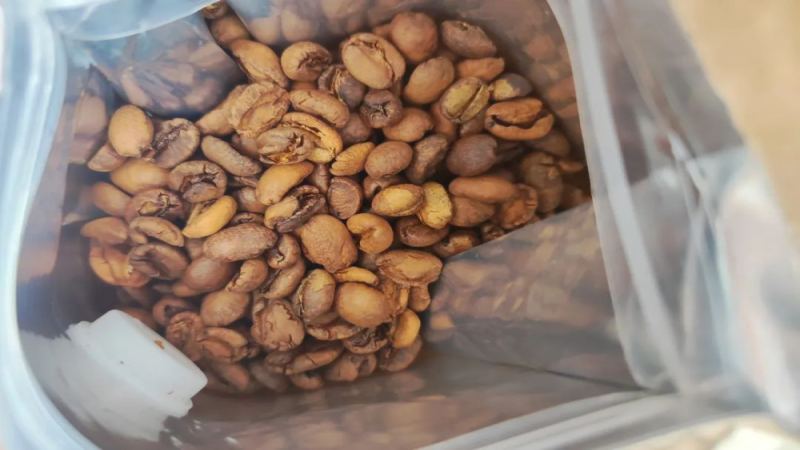
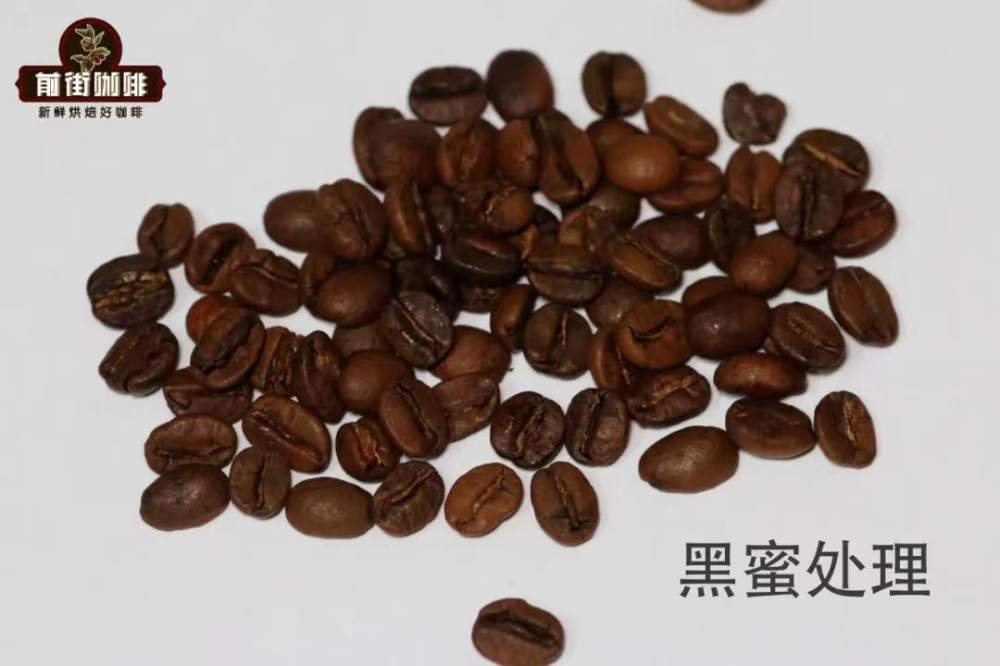
In many people's eyes, a good bag of beans should be plump and uniform in size, and after roasting, the color should be neatly consistent as well. Like the picture below⬇️
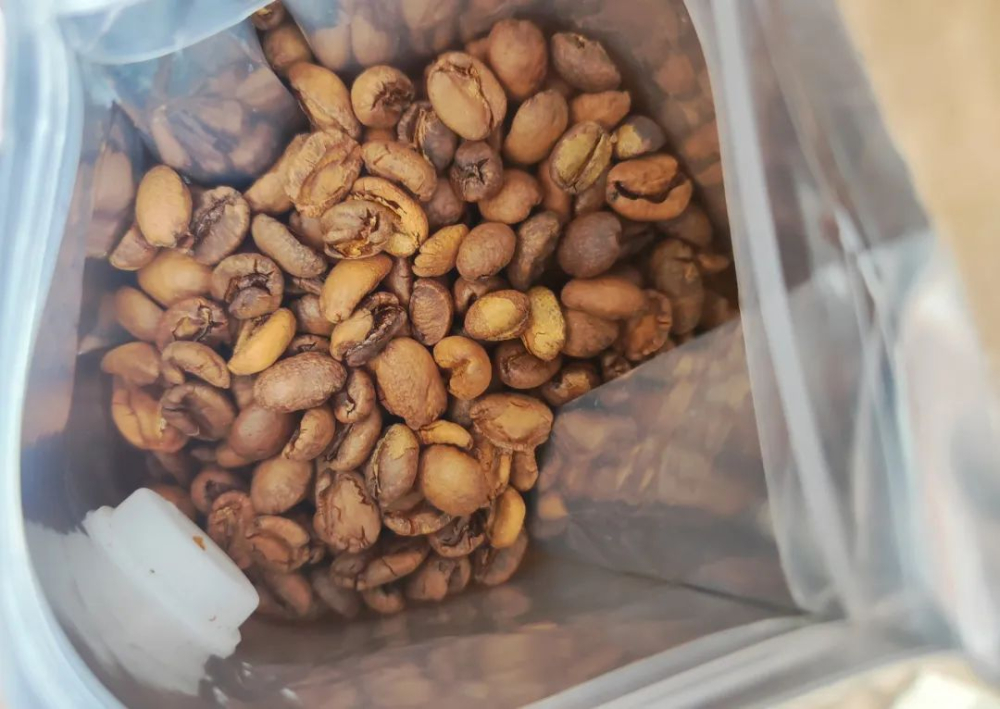
The picture shows Golden Mandheling, which has undergone three rounds of hand sorting, uses beans of 18 mesh or above, and is dark roasted. Here, one thing needs to be made clear first: coffee beans are an agricultural product, so by nature it is impossible for every single bean to look exactly the same as products on an industrial assembly line. Just as friends often report that the beans they buy vary in size, sometimes quite dramatically—in this case, they most likely bought Ethiopian coffee beans. Ethiopia grades green beans based on defect rate. The fewer the defects, the higher the grade, and bean size is not part of the grading standard. Therefore, it is normal for Ethiopian beans to include both very large and very small beans.
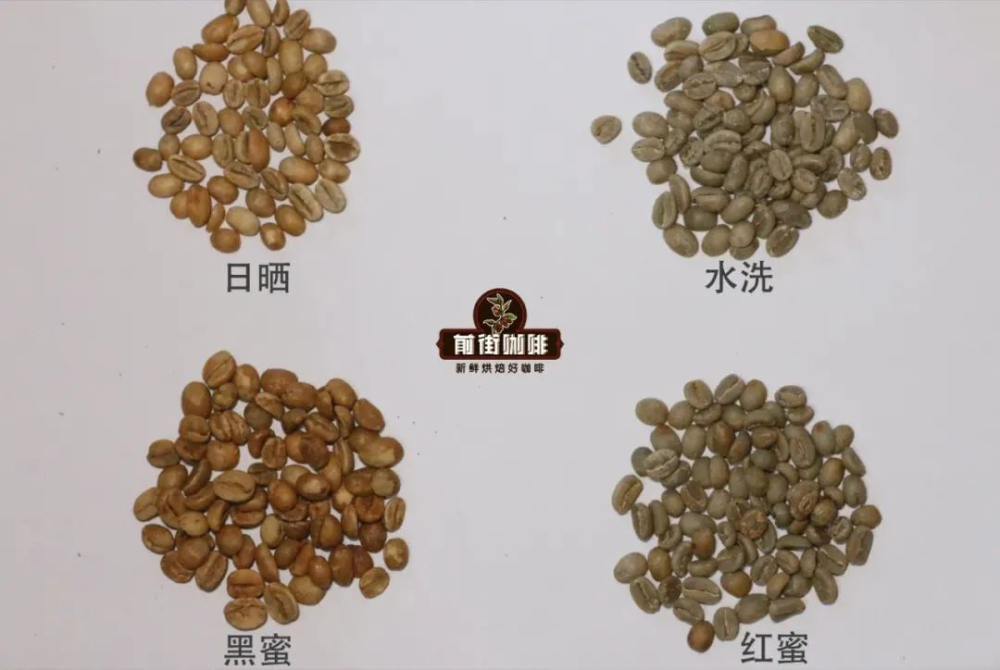
Some friends also ask when buying beans, "What grade is this bean, G1 or G2?" "Is it really G1?" In fact, so-called grades are a concept at the green bean level, and their main purpose is to make it easier for green bean traders to negotiate prices. Take Ethiopian beans as an example: whether G1 or G2, after multiple rounds of sorting and entering the end market, the quality is actually already very close. Moreover, if lower-grade green beans are chosen for roasting, it means more effort and time must be invested in removing defective beans, so roasters often prefer to buy higher-grade beans directly (sorting beans is truly tormenting work). And the quality gap and price gap between higher- and lower-grade green beans are not as exaggerated as everyone imagines. After roasting, if the beans are uneven in color and clearly divided into light and dark, some people will conclude that something went wrong with the roast. This kind of obvious color variation mostly appears in Costa Rican coffee beans. It is not that Costa Rican beans are poor in quality, nor that they are especially difficult to roast, but because Costa Rican coffee beans commonly use honey processing. Honey processing sits between natural and washed processing: first the fruit skin and part of the mucilage are removed, then the coffee beans with mucilage still attached are placed on drying beds to dry. The sugars in the mucilage remain on the bean surface as the water evaporates. So even at the green bean stage, the surface color of honey-processed beans already varies from light to dark, and the more mucilage remains, the more obvious the color difference.
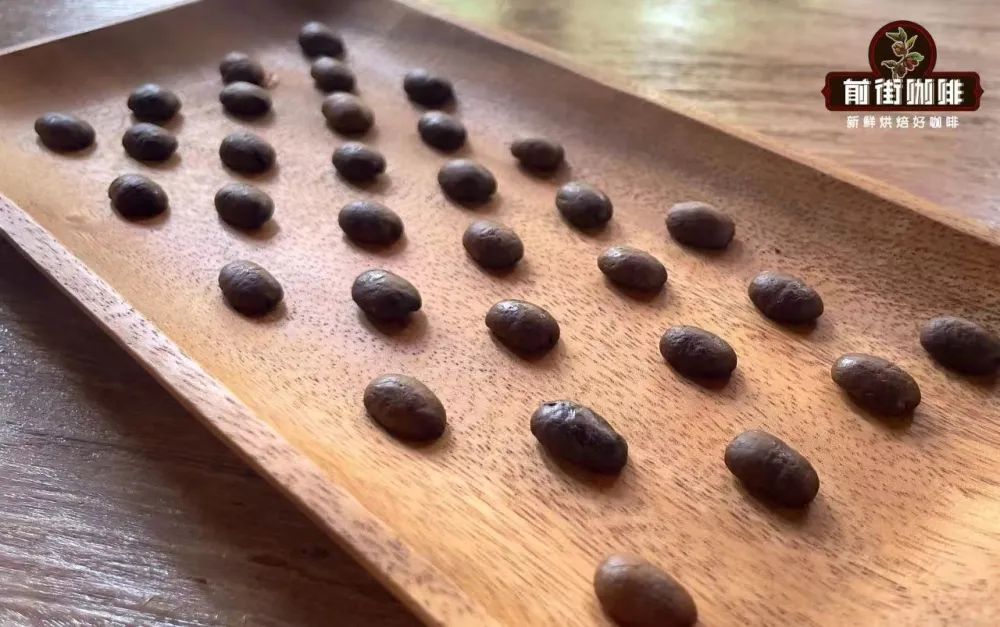
During roasting, beans with more sugar on the surface undergo a stronger caramelization reaction and thus become darker; beans with less surface sugar appear lighter. One dark and one light set each other off, making the color difference especially striking.
In fact, as long as the beans are roasted a bit darker, the color will tend to become more uniform, but the cost is that the flavor will lean bitter. For example, the Sherry coffee beans used by Front Street Coffee for pour-over and the Sherry used in the espresso Warm Sun blend differ noticeably in roast level. The slightly lighter-roasted pour-over Sherry has a greater bean surface color difference than the slightly darker-roasted Warm Sun Sherry. In terms of visual comfort, Warm Sun Sherry is easier on the eyes; in terms of pour-over flavor, pour-over Sherry tastes better.
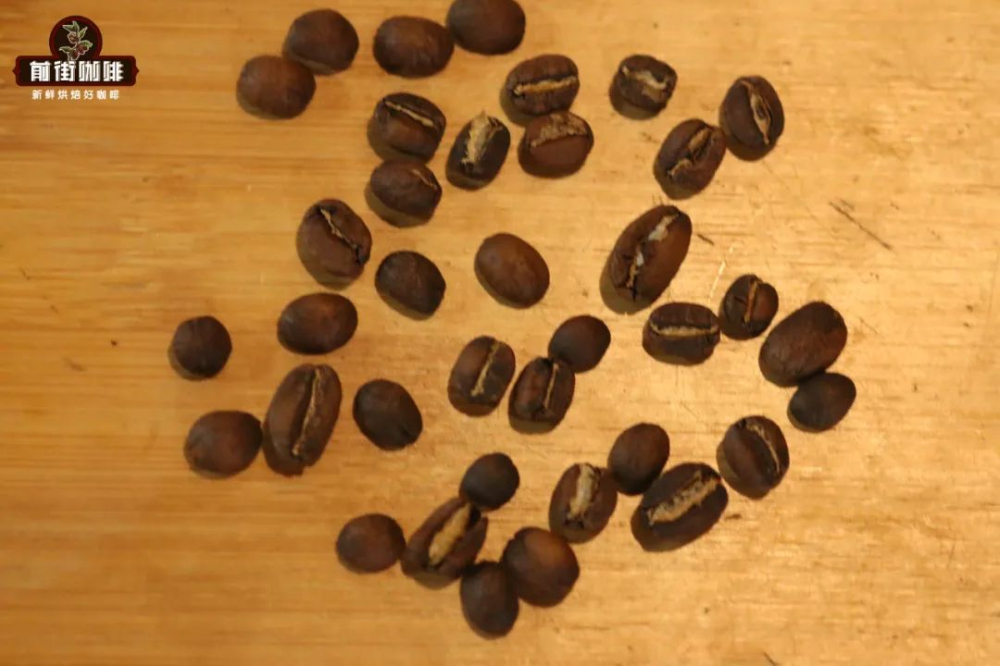
It is not only Costa Rican honey-processed beans that are like this. Some coffee beans with a high degree of anaerobic fermentation also show very obvious color differences after roasting, but this is neither a roasting mistake nor a defective bean, and it has no effect on coffee flavor. It should be specially noted here that when Front Street Coffee previously shared knowledge about defective beans, it mentioned a type of defective bean that is hard to notice at the green bean stage but becomes especially light in color after roasting, called a white-eyed bean. Many people probably see beans with light and dark colors and hastily treat the light-colored beans as white-eyed beans.
This judgment is inaccurate. White-eyed beans are made from unripe coffee cherries. After peeling, the green beans are very hard to distinguish, but after roasting their color change is very obvious, appearing light brown, and they smell like roasted melon seeds, undercooked grain, and greenness. White-eyed beans are generally more common in mechanized harvesting regions such as Brazil; they rarely appear in coffee beans that are hand-picked and consistently processed from all-red cherries (there may be only 1 to 2 in 3 kilograms of green beans). So if you find a large number of very light-colored beans, you can basically rest assured that they are definitely not white-eyed beans. ps: Precisely because there are more white-eyed beans in Brazilian beans, a lot of time must be spent after roasting picking out these defective beans, so when you open a bag of Brazilian coffee beans and see a neat, uniform color, that is the result of the roaster's strict quality control.
In addition to the situations above, there are also some coffee beans that are easily mistaken for defective beans or roasting accidents... The first type: obvious wrinkled stripes and many dark spots on the bean body. This kind of bean appearance usually appears in washed high-altitude light-roasted coffee beans. High-altitude beans are dense, and during roasting, water evaporation causes them to contract and wrinkle. Also, because of the light roast, the beans are released before they have fully expanded. Although such beans look wrinkled and not very attractive, you can be 100 percent sure they are not defective beans, and their flavor acidity is very pleasant.
The second type: split bean body. Some coffee beans burst open and look very incomplete, making them easy to mistake for defective beans. In fact, these are also normal beans. Again, it is because of high density: during roasting they absorb and store a lot of heat, and when first crack is reached, the cracking is violent enough to blow the beans open. Although the appearance is not attractive, it has no negative effect on coffee flavor. Instead, their presence makes the coffee taste even better.
The third type: distinctive appearance. Some coffee beans stand out sharply because they look different from the other beans, and at this point many people think that looking different will definitely affect the flavor. In fact, these are not defective beans either; they just have a more distinctive shape. Of course, if it bothers you, you can also treat it as a defective bean and remove it.
The above content is compiled by CoffeeHunters, a coffee news website.


