







Why does the Nayuki fine matter beyond the coffee scope?
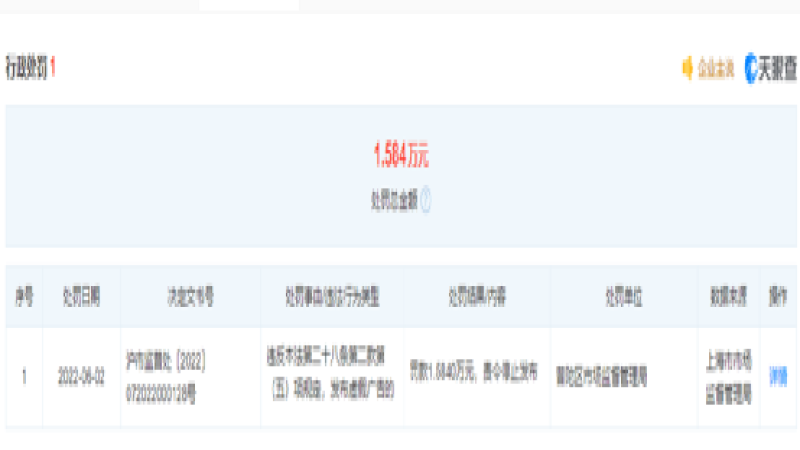
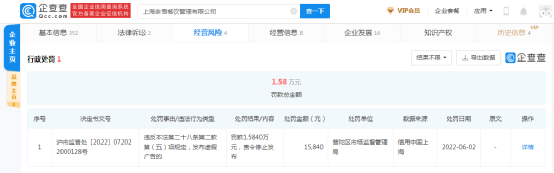
Nayuki was fined about 15,800 yuan by the Shanghai Putuo District Market Supervision Administration over advertising for its Domineering Black Mulberry drink, which used the phrase wild sweetheart. Investigators found the mulberries came from a Nanjing supplier and were planted and picked by local farmers, not wild.
The fine sits outside the coffee scope but speaks to the same drink market, where brands lean on culture, art, and social marketing to reach younger consumers. It is not Nayuki's first controversy; stores have faced food safety penalties since listing. The case highlights how closely the new tea and coffee brands dali segment is watched on marketing claims.
Nayuki received a fine over a false advertisement about mulberry ingredients, drawing attention to its brand marketing methods. This is not the first time Nayuki has been embroiled in controversy; since its listing, multiple stores have been exposed or penalized for food safety issues. Meanwhile, Nayuki has been trying to use culture, art elements, and social marketing to get closer to young consumers. From high-priced tea drinks to loss-making financial reports, to closing its largest store and establishing a new company, Nayuki is searching for a new path to survival. This article reviews the course of events, the record of past fines, and the brand's multiple challenges in marketing and operations, and explores the core of competition in the new tea beverage industry.
Nayuki once expressed this vision: to make good tea accessible to more people in a simple way that fits contemporary daily life, and to promote Chinese tea culture internationally. Driven by this idea, Nayuki continuously incorporates cultural and artistic themes into its tea products and then delivers them to consumers.
However, recently, Nayuki once again entered the public eye because of a fine. Unlike before, this time the problem was not food safety, but false advertising content.
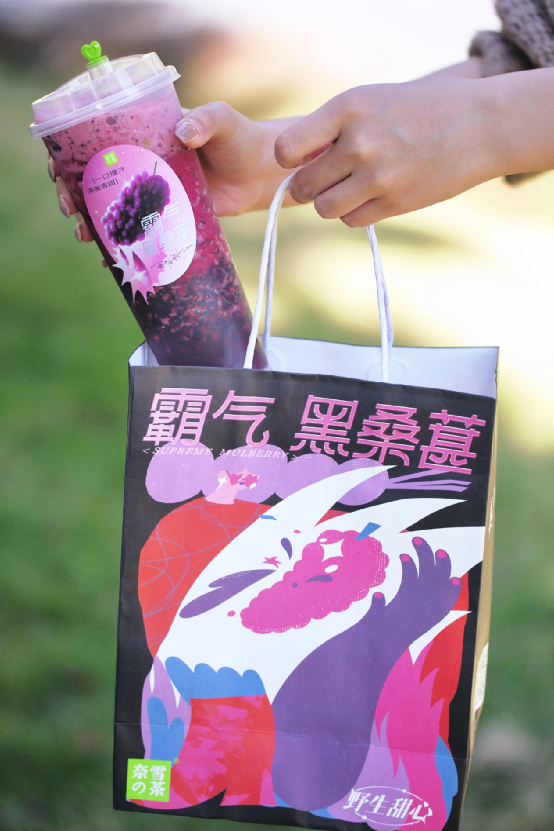
In 2022, Nayuki launched its first fresh fruit tea of the year, "Domineering Black Mulberry," and the advertisement specially marked the four words "wild sweetheart," intending to imply that the mulberries used in the drink came from the wild. The related advertisements appeared in three forms: an image and text display on electronic screens reading "Domineering Black Mulberry, Wild Sweetheart, burst of juice in one bite, mouthful of fresh sweetness"; a menu board printed with the pattern "Domineering Black Mulberry, Wild Sweetheart"; and the same words printed on the takeaway bags included with meals.
According to an investigation by market regulatory authorities, the mulberries used in this drink actually came from Nanjing Kangyuan Agricultural Technology Co., Ltd. and were planted and picked by local farmers, not the wild ingredients claimed in the advertisement. Because the promotional content did not match the facts, the Shanghai Putuo District Market Supervision Administration ordered Nayuki to immediately stop the illegal act and imposed a fine of about 15,800 yuan.
According to media reports, the "Domineering Black Mulberry" involved had already been removed from shelves on March 31, 2022, and "Domineering Cheese Black Mulberry" was removed at the same time.
Zhu Danpeng, a Chinese food industry analyst, said that the false advertising issue involved in Nayuki's case is not uncommon in the domestic consumer market, but this incident will undoubtedly damage Nayuki's brand reputation once again.
Since its listing in June 2021, Nayuki's Tea has repeatedly had negative incidents and has become a frequent presence on Weibo's hot search list.
In August 2021, two Nayuki stores in Beijing were exposed for problems including cockroaches crawling around, spoiled fruit, uncleaned rags, and false label information. In October of the same year, a Nayuki store in Shanghai was fined 50,000 yuan for producing and selling food and food additives with false production dates, shelf lives, or beyond their shelf lives. In May 2022, another Nayuki store in Tianjin was fined 5,000 yuan for using expired milk.
At the end of May 2022, a woman in Shanghai bought bread that was "baked relatively soft" on a food delivery platform, sparking discussion among many netizens. Some netizens believed that Nayuki's product quality was no longer what it used to be, while others questioned why Nayuki frequently appeared on hot searches.
Less than a month after the last time it appeared on Weibo's hot search and was fined, Nayuki's Tea received another fine.
As a well-known brand in the new tea beverage sector, Nayuki has both strength and industry influence, so it naturally attracts much attention. Its price per cup is not low, yet it has repeatedly experienced mishaps. In the increasingly competitive new tea beverage track, expanding and retaining consumer groups is not an easy task.
Nayuki has captured young people's expectations for a better life, injecting elements of beauty, romance, and health into its products, and then selling them to young people.
The transparent cup body allows the natural color, aroma, and taste of fruit tea to be presented directly to consumers. Product illustrations incorporate various cultural and artistic themes into the tea drinks, conveying the feeling that "holding a cup of Nayuki in hand lets you enjoy a beautiful and peaceful time." Nayuki has also carried out collaborations with the cultural and art worlds: launching a magazine in collaboration with BranD and cooperating with the Picasso & Dali authentic works exhibition.
Recently, Nayuki has used homophone wordplay for brand marketing, once again integrating into young people's lives and hitting their points of interest. By changing avatars, it increases consumer attention, and by using memes it gets closer to young people. Among these, the peach-themed avatars happened to align with the mentality of many people who feel "emo" and are "lying flat."
The marketing tactic of "changing avatars" was quickly noticed by Mixue Bingcheng, another tea beverage giant. Mixue Bingcheng changed its Snow King avatar on food delivery platforms to a black-themed one, triggering various guesses from netizens: some said Zhengzhou's temperature was so high that Snow King got tanned, while others thought Mixue Bingcheng was about to launch a new mulberry product.
Nayuki has indeed achieved a lot in some respects, but its financial report shows that its 2021 net profit line was a loss of 4.526 billion yuan.
Coffee Workshop reported on May 24 that Nayuki had closed its largest store nationwide, Nayuki Dream Factory, replacing it with the upgraded "Nayuki Life," which enters consumers' daily lives from multiple dimensions.
On June 17, Nayuki established Shenzhen Nayuki Tea Technology Co., Ltd., whose business scope covers catering management, internet sales, sales of agricultural and sideline products, retail of fresh fruit, production of tea products, and more. Nowadays in the catering industry, it is very common for restaurants to sell drinks and for milk tea shops to sell food; drinks unavailable in milk tea shops can even be found in restaurants.
Store operations solve the brand's survival problem. Zhu Danpeng, a Chinese food industry analyst, pointed out that the core competitiveness of future catering enterprises lies in the completeness of the supply chain, and healthy store operations can support the completeness of the entire supply chain, thereby making the enterprise's overall strength, risk resistance, and overall efficiency higher and costs lower.
Image source: Internet
For more coffee bean information, please follow Coffee Workshop (WeChat public account: cafe_style) For professional coffee knowledge exchange, please add WeChat ID: kaixinguoguo0925
The above content is compiled by CoffeeHunters, a coffee news website.


