








Can clay coffee pot types really cut bitterness?
A teapot-shaped brewer sold under Amazon Japan uses unglazed Tokoname-yaki clay, and that porous body absorbs some of the compounds behind coffee's bitter taste. Bitterness in coffee comes mainly from chlorogenic acid lactones and phenylindanes, which the clay can take up. The only extra part is a dense filter at the spout to hold back grounds.
Brewing works by immersion: add coffee and hot water, wait two to three minutes, then pour. Water temperature and the coffee-to-water ratio control the result, and cleanup is a quick rinse with hot water. The unglazed surface, fired from iron-rich clay, keeps its water-absorbing structure, which is why the pot softens harsh notes rather than adding flavor.
Many coffee enthusiasts buy all the equipment only to find cleaning a hassle, and the gear gradually gathers dust. A company under Amazon Japan has launched a product that looks like a teapot but is actually a coffee brewer, with an extremely simple structure—just a high-density filter added at the spout. Its body uses the thousand-year-old Tokoname-yaki technique, fired unglazed from iron-rich clay, retaining its porous, water-absorbing nature, which can absorb the components in coffee that cause off-flavors. The bitterness of coffee mainly comes from chlorogenic acid lactones and phenylindanes, and the teapot's structure can effectively reduce these unpleasant flavors. Using immersion extraction, by controlling water temperature and the coffee-to-water ratio, you can get a clean, full-bodied cup in 2-3 minutes. This article explains its principles and key operating points in detail.
But hey, I get it! Although many people have all the equipment set up, actually making a cup of coffee is still a bit complicated, and it can feel annoying. Or they're full of enthusiasm when brewing, but once it's time to clean up, they get lazy, and the equipment just sits in a corner gathering dust.
The people who develop coffee gear clearly understand this pain point too, so they started thinking about whether there could be a tool with fewer parts designed specifically for brewing coffee. Recently, a company under Amazon Japan launched a product that at first glance looks like a teapot but is actually used to brew coffee. Its construction is very simple—just a layer of relatively high-density filter added at the spout to prevent coffee grounds from escaping with the water, and cleaning it just takes a quick rinse with hot water.
Although the appearance isn't complex, the body material itself has the function of reducing coffee's bitterness. The body uses a thousand-year-old pottery technique called "Tokoname-yaki," also known as Japanese purple clay. This craft uses clay with a relatively high iron content, is fired without glaze, and then polished after firing, giving the surface a smooth, lustrous texture. Because it is not glazed, the pottery's inherently porous and water-absorbing characteristics are preserved, allowing it to effectively absorb the substances in coffee that bring off-flavors. At the same time, there are no sharp angles inside the pot—it forms a complete arc—which helps reduce the buildup of off-flavor components and lets the material better capture the undesirable flavors in coffee.

Most of coffee's bitterness is caused by two types of compounds: chlorogenic acid lactones and phenylindanes. Both are produced during roasting as chlorogenic acid breaks down. Light to medium roasts show bitterness because of their higher content of chlorogenic acid lactones. As roasting time lengthens and the degree deepens, benzene compounds in the beans increase, and the more phenylindanes there are, the sharper and more lingering the bitterness. This teapot's own structure happens to effectively absorb these unpleasant components. In addition, because it uses immersion to extract the coffee, as long as you control the water temperature (90-91°C for light roasts, 88-89°C for dark roasts) and a suitable coffee-to-water ratio (if you're unsure how much to use, you can start with a 1:15 immersion and adjust to taste—the larger the ratio, the weaker the coffee), after soaking for 2 to 3 minutes you can get a cup of coffee with full flavor and an overall clean taste.
If coffee grounds steep too long, the bitterness intensifies, so you can't steep them for too long—when using this kind of clay pot to steep coffee, it's best not to exceed 3 minutes. When drinking, you should also pour it all out at once; you can't repeatedly re-brew it like tea leaves. Since Japan's Tokoname-yaki clay pot is called a Japanese purple clay pot, it naturally has functions similar to Chinese purple clay pots. Although the materials used differ, it can likewise reduce bitterness and retain the aroma and flavor of tea or coffee.
So! While your family isn't paying attention, find a purple clay pot with a slightly larger capacity, and pair it with a high-density filter, and secretly give it a try.
(Don't say I taught you!) After use, remember to wash and dry it, and make sure there's no coffee smell before putting it back where it was.
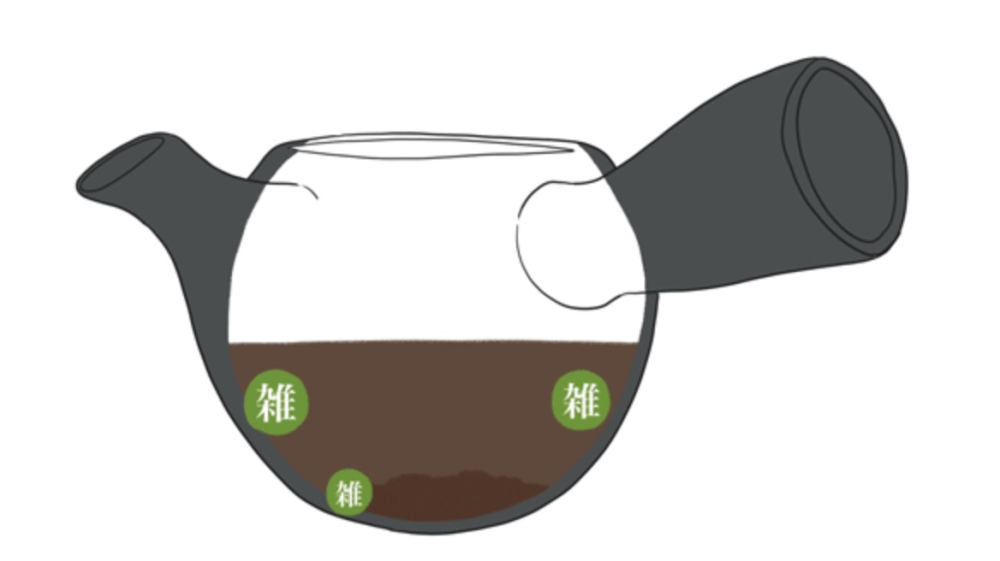
Image source: Internet
For professional coffee knowledge exchange and more coffee bean information, please follow Coffee Workshop (WeChat public account: cafe_style)
For more specialty coffee beans, please add the private WeChat of Front Street Coffee (FrontStreet Coffee), WeChat ID: qjcoffeex
The above content is compiled by CoffeeHunters, a coffee news website.


