







How does small-scale coffee cultivation work in Hong Kong?
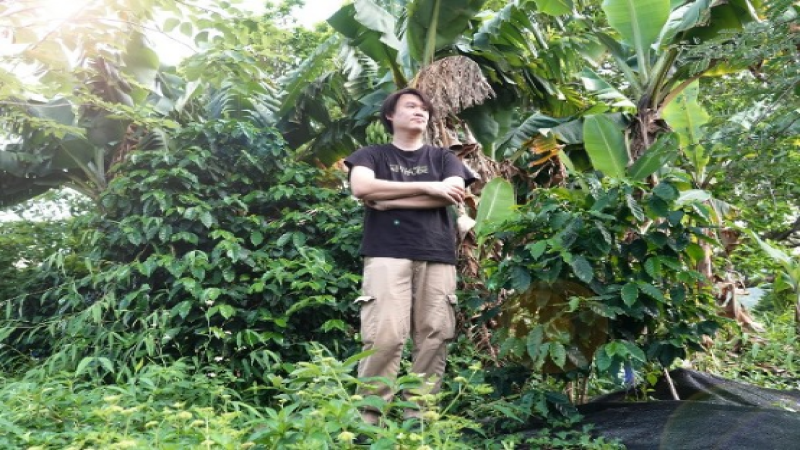
A 42-year-old Hong Kong IT professional named Mike left his job in 2019, took over a plantation and began growing Caturra coffee. He built his own monitoring gear to log temperature and humidity, and tested anaerobic fermentation with perilla leaf, coriander, beer and plum wine. The first harvest was only 3 kilograms of beans, and the second barely more.
Hong Kong sits inside the belt between the Tropic of Cancer and the Tropic of Capricorn, so coffee trees can grow there, though altitude and volume stay limited. Growers usually earn the smallest share of the coffee chain, which is why Mike focused on processing methods rather than selling raw beans, aiming at a distinct local flavor profile.
In this tiny, pricey slice of Hong Kong, a 42-year-old IT professional named Mike quit his job in 2019 to switch to growing fruits and vegetables and took over the management of a coffee plantation, attempting to cultivate Caturra coffee. Drawing on his professional expertise in IT, he designed his own monitoring equipment to record changes in temperature and humidity, focusing on researching diverse anaerobic fermentation processing methods such as perilla leaf, coriander, beer, and plum wine, exploring the possibilities of Hong Kong's local coffee flavors. Although yields are scarce and altitude is limited, this transformation path from tech worker to coffee farmer has brought new imaginative space to coffee cultivation in Hong Kong.
For young people who are not well-off, truly achieving the freedom to drink coffee whenever they want is not easy. Roasting and brewing coffee is seen by most as something stylish, but at the mention of coffee cultivation, what comes to mind is often the image of bending over and toiling hard. Nevertheless, in order to drink a cup of coffee that satisfies them, more and more young people are taking action and embarking on the path of growing coffee themselves.
Coffee is a tropical cash crop, usually distributed in the region between the Tropic of Cancer and the Tropic of Capricorn, and Hong Kong happens to fall within the so-called "Coffee Golden Growing Belt." Coffee Workshop has previously introduced that, in addition to Yunnan Province and Taiwan Province, Hong Kong now also has areas cultivating Arabica coffee in China.
According to the Hong Kong media outlet "East Net," 42-year-old IT professional Mike resolutely resigned in 2019, switched to growing fruits and vegetables, and at the same time took over caring for the coffee trees in the plantation, with a peak of 20 trees in 2020. The first year's harvest of coffee beans was only 3 kilograms, and the second year's harvest increased only slightly.
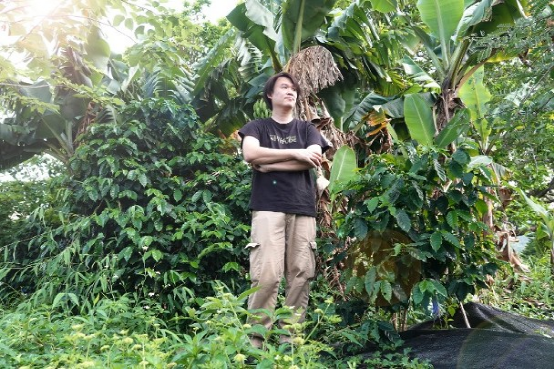
In the entire coffee trading chain, growers often receive the smallest share of the profits, sometimes even losing money, and only when coffee beans become a cup of coffee is their value truly realized.
Mike was well aware of these realities, so from the very beginning he did not focus on selling coffee beans, but instead devoted himself to studying coffee processing methods, hoping to develop a local Hong Kong coffee flavor and promote the spread of coffee culture.
In addition to the coffee beans themselves, coffee husks and coffee leaves also have economic value, and can be used not only to brew coffee, but also to make tea or cocktails.
The impression Hong Kong leaves on most people is that everything is expensive. Finding a plot suitable for growing coffee in this tiny, pricey place is not easy. In order to grow coffee well, Mike put the knowledge and skills he had accumulated in the IT industry to use, and even personally designed a device that can continuously record changes in temperature and humidity in the growing environment.
It is understood that the Caturra coffee trees in the plantation are all planted under shade by the river, and the taller surrounding trees provide natural shade for the coffee trees, so that the coffee fruit will not suffer flavor damage from excessive exposure to the sun. The fallen branches and leaves also become a natural source of nutrients for the coffee trees.
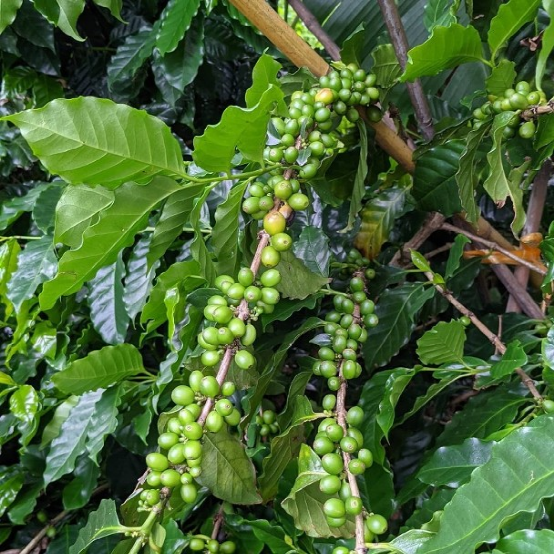
Because the number of coffee trees is small and the fruit harvest is limited, the plantation manager focused on coffee processing methods rather than yield. In addition to common natural and washed methods, various anaerobic fermentation experiments are also conducted with perilla leaves, coriander, beer, plum wine, table salt, or sea salt.
Interestingly, many people think coffee fermented with perilla leaves will have a perilla flavor, but the reality is that the coffee does not taste of perilla leaves; instead, certain special flavors are brought out even more prominently.
However, growing high-quality coffee also requires suitable altitude. According to "The Craft of Specialty Coffee," Arabica coffee beans usually need to be grown above 1,000 meters in altitude to present good flavor. Baidu Baike shows that Hong Kong's highest point, Tai Mo Shan, is only 958 meters above sea level. This Hong Kong-produced coffee is also so scarce that getting a taste is indeed not easy.
Image source: Internet
For more coffee bean information, please follow Coffee Workshop (WeChat public account cafe_style) For professional coffee knowledge exchange, please add WeChat ID kaixinguoguo0925
The above content is compiled by CoffeeHunters, a coffee news website.


