







How Did the Coffee Process Move From Spray Drying to Freeze Drying?
Freeze-dried coffee belongs to the instant category but differs from traditional spray-dried powder in how it is made. Spray drying, commercialized by Nestlé in 1937, atomizes coffee liquid into a hot chamber, where water evaporates fast and many flavor compounds are lost, leaving mostly bitterness. Freeze drying removes water at low temperature, so more aroma survives.
Instant coffee first appeared around 1901, when a team led by chemist Satori Kato turned coffee solution into powder through vacuum drying. Raw material upgrades and packaging changes have since pushed freeze-dried products away from the old image of instant coffee. The gap between spray-dried and freeze-dried versions comes down to heat exposure during the coffee process itself.
In recent years, freeze-dried coffee has become a new favorite in the coffee market, but many people are not clear about the real difference between it and traditional instant coffee. From the perspective of Front Street, this article sorts out the origin of instant coffee and its two core production processes—spray drying and freeze drying—and explains why freeze-dried coffee can better preserve flavor, as well as how it breaks away from the stereotype of instant coffee. At the same time, the article also discusses the impact of raw material upgrades and packaging innovation on the rise of freeze-dried coffee, helping readers fully understand the development of this category and the reasons behind its market popularity.
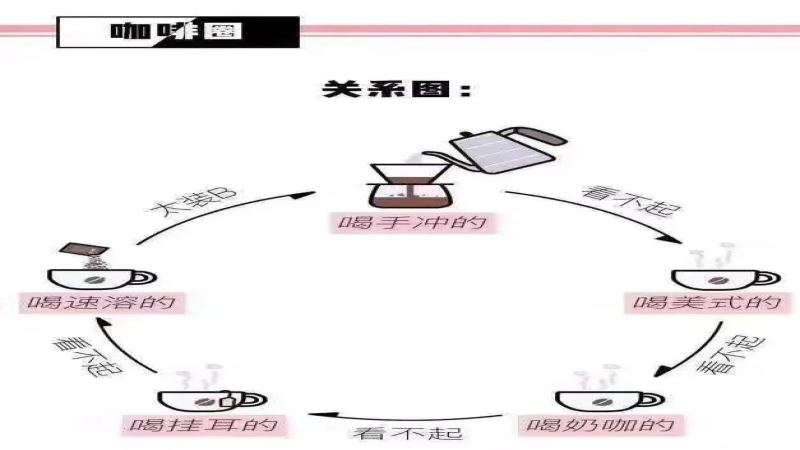
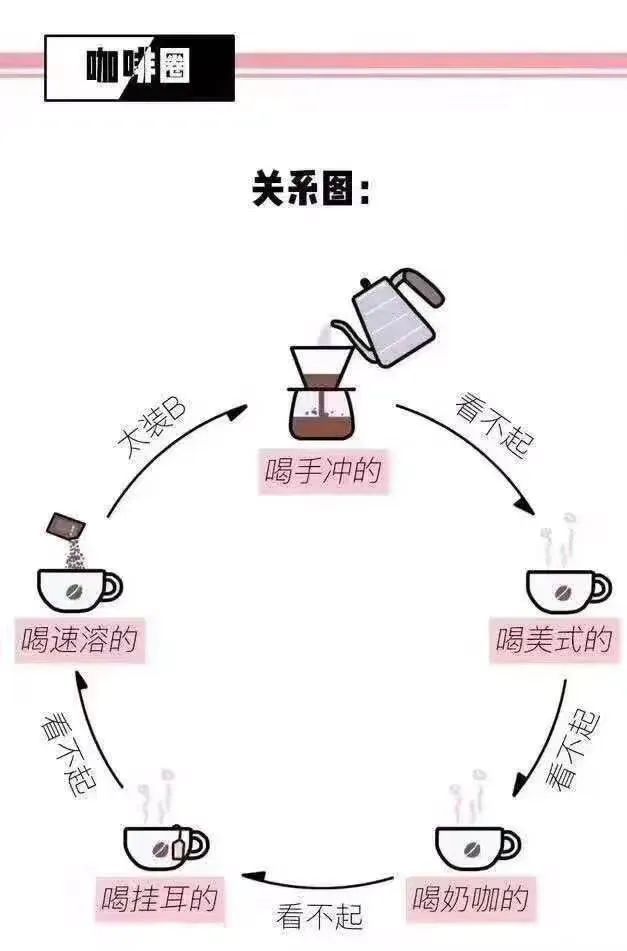
Freeze-dried coffee is not a new product. In terms of classification, it is still essentially a branch of instant coffee. Yes, that is the instant coffee often joked about by coffee enthusiasts as being at the bottom of the "contempt chain."
Front Street specifically notes here: coffee itself has no distinction between high and low, and a "contempt chain" should not exist, but in reality it does objectively exist, and we also need to view it rationally.
To understand freeze-dried coffee, we must first start with the origin and production methods of instant coffee. It is generally believed that instant coffee first officially appeared in 1901, when a team led by Japanese-American chemist Satori Kato made coffee solution into powder through vacuum drying.
By 1937, Nestlé had developed the "spray drying method" to mass-produce instant coffee, and this also became the mainstream technology for instant coffee manufacturing thereafter. This method is essentially thermal drying. The specific operation is: first extract the soluble substances from roasted coffee beans into water—in plain terms, making "coffee" on an industrial scale—then the coffee liquid is atomized through nozzles into fine droplets, enters a high-temperature drying chamber, the water rapidly evaporates, and what remains is powdered instant coffee.
This process is relatively low in cost, so it has long occupied a dominant position in instant coffee production. However, because it undergoes high-temperature treatment, a large number of flavor compounds in the coffee are destroyed, ultimately leaving only a strong bitter taste. Such products are mostly used to make "two-in-one," "three-in-one," and low-priced "instant black coffee," and their appearance is usually powdered.
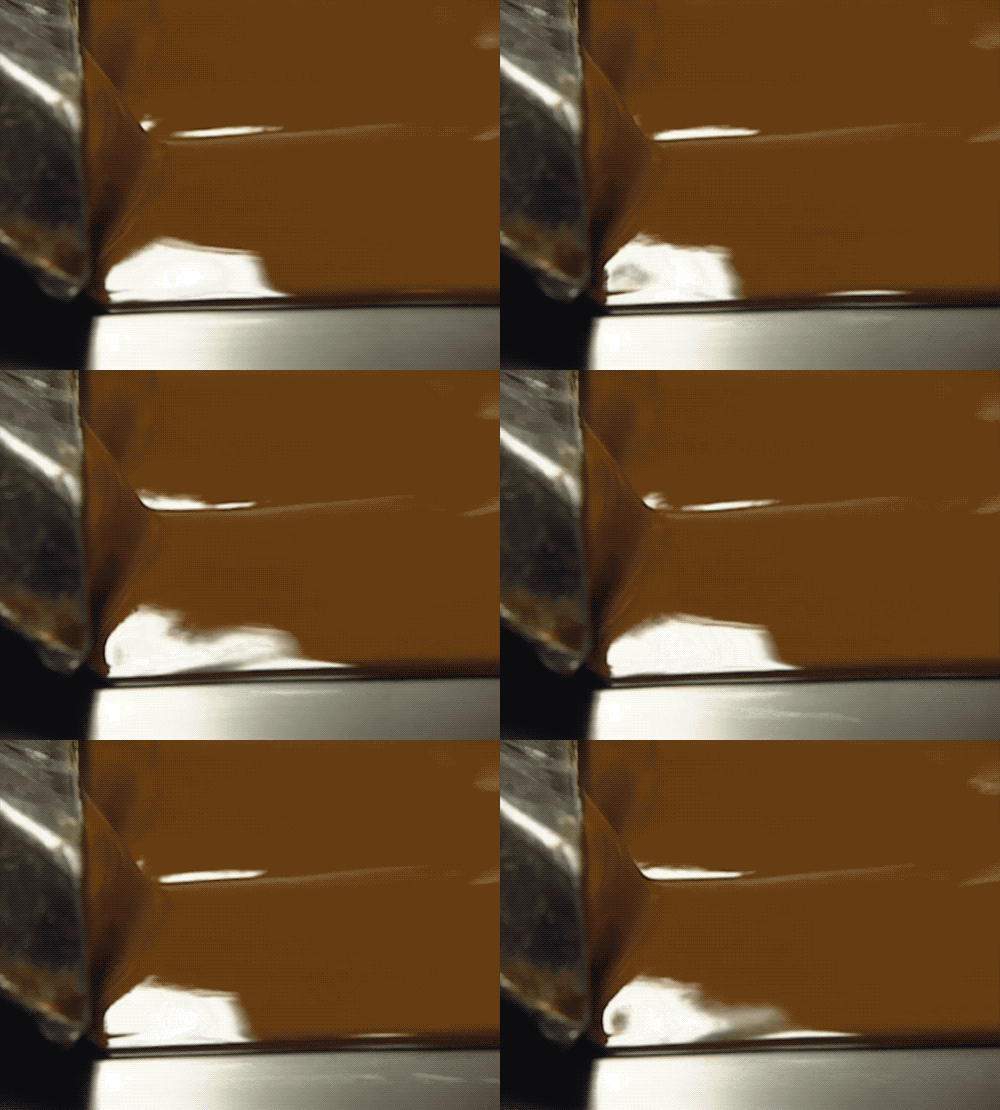
Another, more costly process is freeze drying. Although freeze-dried coffee has only become popular in the past two years, this technology has actually existed for decades. The basic process is also to extract the soluble substances in coffee with hot water, but the extraction concentration is much higher than that of daily brewing, reaching about 65% concentrate, which is more like chocolate sauce than coffee liquid in form.
Next, the concentrate is cooled at -5°C, and after it becomes paste-like, it is sent into a freezer at -40°C to -50°C. Once the coffee material is completely frozen into a hard block, it is crushed into small particles of 2 to 3 millimeters—this is exactly why freeze-dried coffee powder usually appears in small pieces.
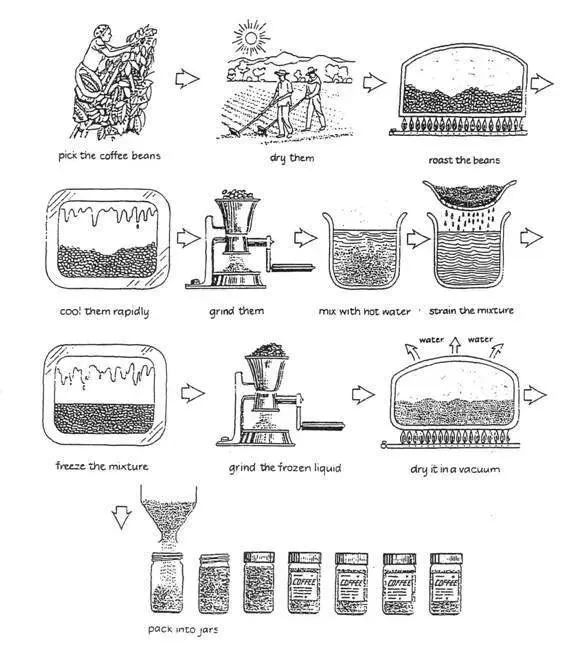
The last step is to place the particles into a vacuum drying chamber and heat them. Under vacuum conditions, water will directly sublime rather than liquefy, and after drying is completed, freeze-dried coffee is obtained.
Nestlé's freeze-dried instant coffee powder, and UCC's 114 and 117, are all made using this process. The freeze-drying method costs more, but it can more effectively preserve the original flavor of coffee, and naturally its selling price is also higher.
At this point, the answer seems clear: the reason traditional instant coffee is regarded by coffee players as the bottom of the "contempt chain" is that its raw materials and process determine its unsatisfactory taste. And the long-standing stereotype also makes it difficult for the word "instant" to be associated with being tasty. As a result, instant coffee that has put on the new coat of "freeze-dried coffee" has successfully broken out.
Today the coffee industry generally pursues flavor expression, and instant coffee is also iterating and upgrading. In the past, Robusta beans were mostly used as raw materials, but now some manufacturers emphasize the use of all Arabica beans; freeze-drying technology is also advancing. Earlier, the coffee liquid needed for freeze-drying still had to be extracted with hot water, but now cold brew freeze-dried coffee technology has emerged, which can better lock in coffee flavor.
In appearance, the particle size of 2 to 3 millimeters is no longer the only standard. Some freeze-dried coffee is processed into shiny powder crystals. In terms of packaging, many exquisite and interesting single-serve small jars have also emerged. These changes undoubtedly allow the public to distinguish freeze-dried coffee from ordinary instant coffee, and gradually shed the negative label of instant coffee.
The above content is compiled by CoffeeHunters, a coffee news website.


