







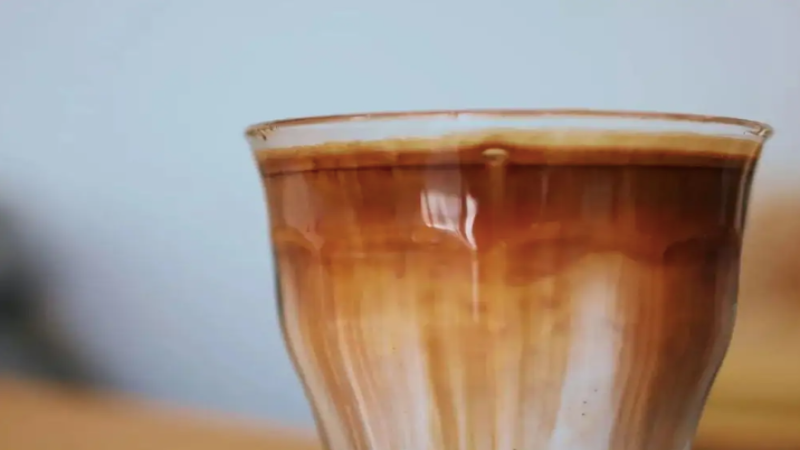
What Separates Dirty Coffee From a Standard Latte?
Dirty coffee is essentially an iced latte poured in reverse: freshly extracted espresso is dropped directly onto cold milk, creating a dark top layer over white milk in a clear glass. Home attempts often fail because the layers blend together. Five factors decide the outcome—cup shape, bean roast level, extraction distance, coffee concentration and milk texture.
Tall, narrow-rimmed glasses give the coffee liquid a smaller surface to cover and more room to sink slowly, and chilling the cup first slows the downward seep. Darker, fresher roasts release more oils and produce a richer color. Checking these points on most coffee machines and adjusting grind and pour helps the layering hold long enough to serve.
Dirty coffee, with its gradient layering effect created by the overlap of espresso and cold milk, has become a popular beverage in coffee shops in recent years, prized for both its visual appeal and its topic-generating buzz. It is essentially an iced latte with a special drinking method, but many people trying to recreate it at home often run into problems like failed layering or the coffee and milk blending together. Based on Front Street Coffee's hands-on experience, this article systematically sorts out the differences between Dirty and latte, analyzes five key factors one by one—cup selection, coffee bean roast level, extraction distance, coffee liquid concentration, and milk texture—and provides corresponding solutions to help you make a Dirty coffee with clear layers and a rich, mellow taste.
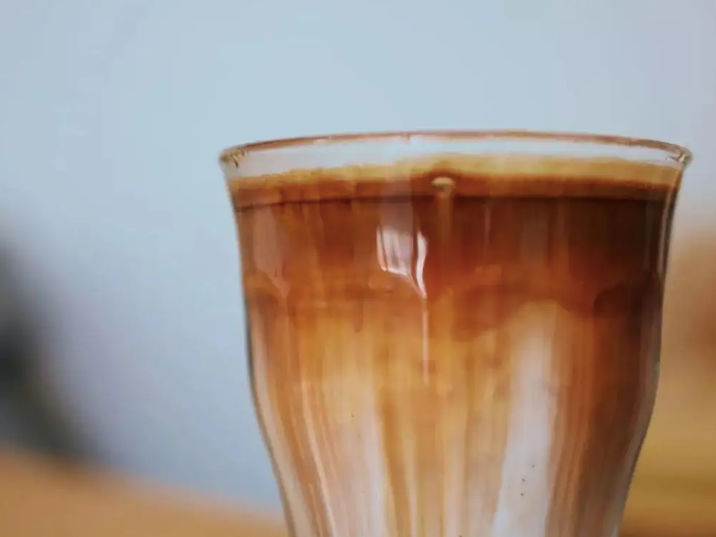
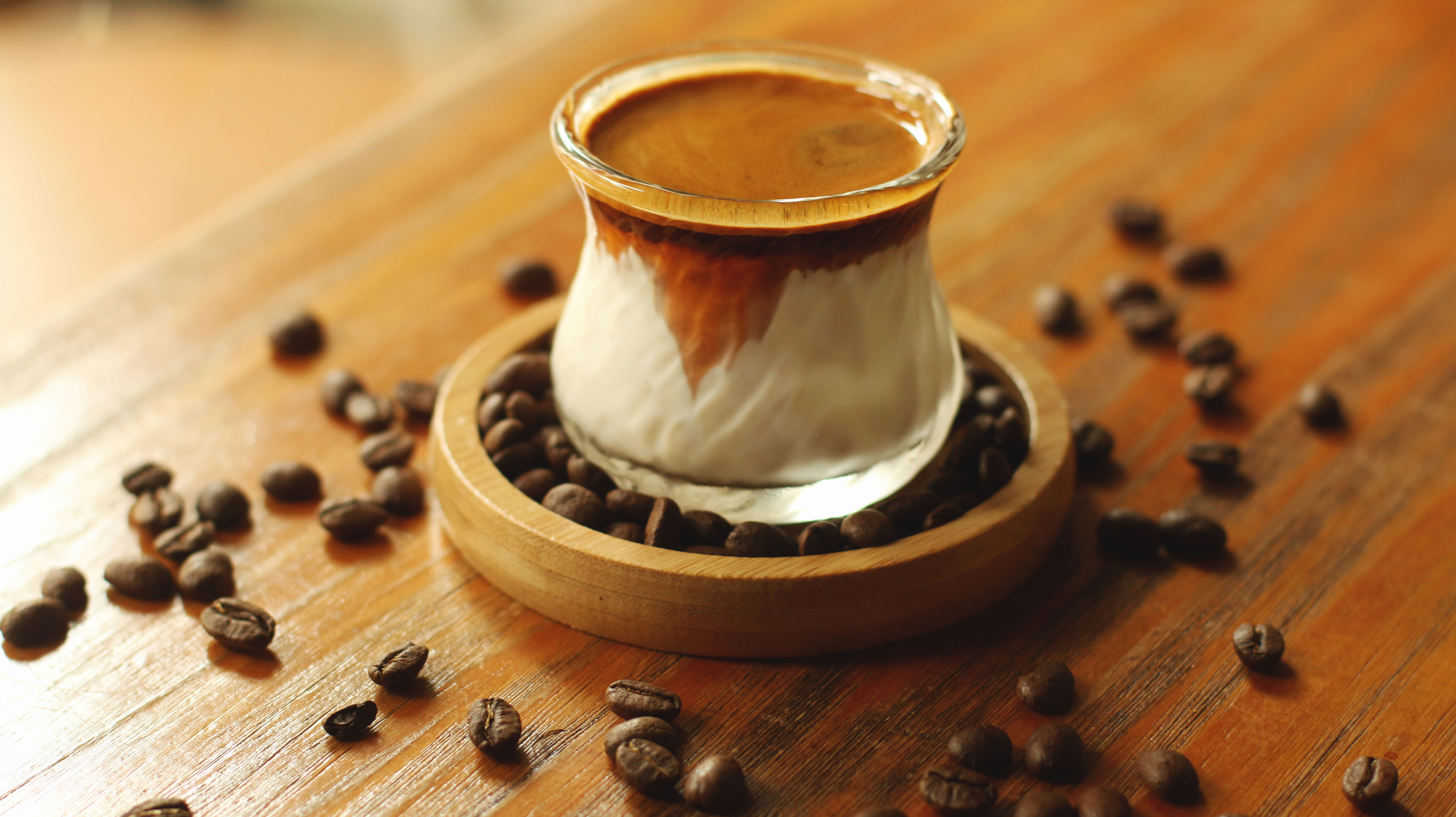
The method for making Dirty coffee is to drop freshly extracted espresso directly onto the surface of cold milk, thereby forming a clear two-layer structure. As time passes, the dark coffee liquid on top slowly seeps downward into the white milk, creating a transition from dark to light in a transparent glass, visually resembling milk that has been stained with color.
Ultimately, Dirty is just an iced latte with outstanding presentation and a distinctive drinking method, yet it is widely sought after because of its extremely high visual appeal. Many enthusiasts follow tutorials and try it themselves, only to find that the result does not show the expected layering, with the coffee and milk mixing directly together. What exactly is the reason? Front Street Coffee has sorted out the following common issues.
-Cup selection
The cup shape plays an important role in whether layering can form. Generally speaking, containers that are taller with a narrower rim make it easier to achieve a layered effect. If you choose a cup with a wide rim and a shorter body, it takes longer for the coffee liquid to cover the entire surface, and there is also not enough space left for the coffee to penetrate downward, which reduces the visual effect.
It is best to chill the cup in advance, as this not only slows down the rate at which the coffee liquid penetrates downward, but also helps maintain the flavor and mouthfeel.
-Coffee bean selection
The darker the roast level of the coffee beans and the better the freshness, the more oils are released during extraction and the richer the color of the final product; however, too dark a roast can easily bring a burnt, bitter taste. Conversely, the lighter the roast, the less oil content there is, and the resulting color is paler, making it difficult to meet the layering requirements.
Therefore, whether making a latte or a Dirty, medium-dark roasted coffee beans should be given priority. Beginners or home users can directly purchase Front Street Coffee. Front Street Classic Blend, which combines the wild aroma of Mandheling with the smooth taste of Brazilian beans, with the flavors complementing and balancing each other. Front Street Coffee. Classic Italian Blend adds Robusta to the Mamba recipe, significantly enhancing the coffee's oil performance and making the richness of espresso more prominent. It is suitable for home preparation and can be used for Dirty gradients and latte art.
If you prefer the unique flavors brought by single-origin coffee, you can choose this medium-dark roasted Front Street Coffee. Queen's Estate SOE, whose rich creamy peanut flavor is impressive, accompanied by a sugarcane-like sweetness, with a cocoa aroma in the finish. It is also suitable for making coffee with a moka pot and household coffee machines.
-Distance for receiving the coffee liquid
One of the most common problems is that the distance between the portafilter and the cup is too far. As a result, the espresso gathers into a thin, elongated stream as it flows out, with relatively strong impact force that easily pierces the surface of the milk, making it naturally difficult for it to float on top and form layers. Therefore, to create a beautiful layered effect, the portafilter needs to be as close to the rim of the cup as possible; the closer to the liquid surface, the better the result.
If machine structure makes it impossible to receive the coffee liquid directly into the cup, you can first use a small cup to hold the freshly extracted espresso, then take a small spoon and place it just above the surface of the milk as a buffer. Be sure to keep the concave side of the spoon facing up, slowly pour the coffee liquid into the spoon, and the coffee liquid overflowing from the edge of the spoon will float on the surface of the milk.
-Coffee liquid concentration is insufficient
Many friends ask Front Street Coffee whether a moka pot can achieve the effect of an espresso machine. Unfortunately, the coffee liquid brewed by a moka pot still has an obvious gap in concentration compared with a coffee machine, and in terms of oils, it cannot even be mentioned in the same breath. Therefore, coffee brewed with a moka pot is not suitable as the coffee base for a Dirty.

It is generally believed that espresso with rich and fine oils produces a better layered effect when making a Dirty. The coffee liquid seeps into the milk more slowly, allowing ample time for photos.
-The milk is too thin
For milk, you can choose a type with a rich texture and strong milky aroma. Milk that is too thin cannot support the coffee liquid; as soon as the two come into contact, they blend together. Not only does it look cloudy and unclear, but it also lacks the richness you taste in a shop when drinking it.
Taking Front Street Coffee's production experience as an example, several common milk brands on the market, such as Vitasoy, Wei Chuan, and Bright Fresh Pasture, are all good choices. Of course, if time permits, you can also make your own purified milk as a base, which is the ice bock commonly seen in coffee shops. Front Street Coffee has previously covered the production steps in detail in another article. A Dirty made with purified milk is more likely to form a stable layering, can be enjoyed for a longer time, and also carries the unique flavor of salty cheese.
Of course, some friends will also use the method of "ice bock + fresh milk" to blend milk with a moderate concentration, which is likewise a method worth trying.
The above content is compiled by CoffeeHunters, a coffee news website.


