








Is a Barista Job Really Just Making Coffee?
A barista job is not mainly brewing. Survey data cited in the article shows roughly 41.5 percent of people enter the trade hoping to open a café, yet daily work is dominated by service and cleaning rather than pulling shots. Job ads promising no experience required and paid training draw many newcomers, who are often surprised by how few cups they actually make.
Building real coffee roaster and barista skills takes a learning path that starts with customer service, not technique. Because the role is essentially a service position, the same standard applies at every skill level, and low pay plus customer friction are common reasons newcomers consider leaving. The article recommends assessing the hiring situation and career development options before committing.
Many people are drawn to the artistic vibe of a barista crafting coffee at the bar and the leisurely atmosphere of a coffee shop, placing this profession on their ideal career list. However, the reality of a barista's job goes far beyond making coffee—it also involves a great deal of service and cleaning duties. Based on survey data, this article analyzes the current hiring situation for barista positions, daily work content, skill learning paths, and future career development directions, helping those interested in entering the field rationally assess whether this job suits them, and retains relevant resource recommendations from Front Street Coffee.
From the past to the present, the image of a barista focused on brewing at the bar, combined with the lazy, relaxed atmosphere of a café, has made many young people view "barista" as a dream career option.
Compared to many positions that require a professional technical background, the barista trade seems to have a much lower threshold. As the number of cafés continues to rise, job postings often feature several eye-catching labels: no experience required, paid training, broad room for promotion.
These conditions do sound appealing. As a result, many young people who have just entered society or hit setbacks in the workplace unhesitatingly lock their career direction onto becoming a barista, dreaming of one day owning their own coffee shop. This idea is not unfounded.
A previous survey showed that about 41.5% of people chose to become baristas because they want to open a café. In other words, many hope to first master some skills in a shop and then open their own. For this reason, as soon as they see phrases like "no experience required" or "free training," they throw themselves into the industry without a second thought.
But the reality is that many people become confused not long after entering the field, and even start thinking about leaving. "Isn't a barista supposed to make coffee? How come the thing I do most every day isn't washing and scrubbing but cleaning? I barely make a few cups of coffee, the pay is low, and I still have to take grief!"
That's right—a barista's job is absolutely not just making coffee. In essence, it is a service role, and that doesn't change because you make coffee. No matter what technical level you're at, serving customers is the most basic requirement. Even if you're not applying to be a barista but opening your own shop, service must still come first. Without service, nothing else matters.
Cleaning is the same—it's an indispensable part of a coffee shop's daily operations. Every employee has to take part, and it's not aimed at newcomers. Since it's not aimed at newcomers, why do newcomers still spend most of their day cleaning? Because their coffee skills haven't yet reached the standard for output, and cleaning is a task a novice can complete independently during work hours. Hiring is about getting people to work, not paying people to come learn how to make coffee. Even if there is training, it can't happen anytime and anywhere.
Although cleaning work is repetitive and dull, it is a good opportunity to hone patience and can also test your work attitude. Making coffee is like cleaning—it looks simple, but repeating the same thing for a long time will also wear away your patience.
Making coffee with consistent quality is not something you learn overnight. Without patience, you can break down at any moment. For example, steaming a qualified pitcher of milk foam, or steadily pouring water in circles, becomes a hurdle for many coffee novices. To learn to make coffee, you need at least to understand basic information about coffee beans, understand the extraction process from its principles, and master milk foam steaming techniques—not just imitate. Learning and understanding the fundamentals is very important!

If you want to hold your own at the bar, you must understand the products themselves. Besides being able to make them, you also need to be able to recommend them to customers. At this point, what's needed is not only service awareness and output ability, but also sufficient knowledge of coffee to recommend suitable products based on customer needs.
To become a qualified barista, passion alone is far from enough. You also need to calm down and study coffee knowledge in depth, not just brewing techniques. This job requires both heart and brain. What a barista needs to think about is not only how to make a good cup of coffee, but also how to help more people understand coffee and fall in love with it, as well as their own future career planning.
After working for a few years, many baristas begin to feel lost and anxious, because they didn't plan for their future before entering the industry. More people choose to become baristas simply because of a momentary passion, interest, or because they want an easy job, or as a transitional phase. In fact, there are many career development paths for baristas—"barista" is just a general term for practitioners in the coffee industry.
Baristas can transition into coffee roasters, coffee trainers, coffee competition judges, coffee growers, bean hunters, and so on. Do these seem far away for novices? Not at all. They feel far away because your passion isn't deep enough and your efforts are pointed in the wrong direction.
All successful people were once novices. Their success is inseparable from their love, dedication, and effort for this job. Love isn't just talk—true love will drive you to give and pursue. So before deciding to become a barista, it's advisable to think clearly about your future. Besides considering opening a coffee shop, also consider what else you can do if you don't open one.
Regarding salary, taking first-tier cities as an example, affected by coffee shop size, work intensity, and applicant experience, the pay for novices and ordinary baristas is generally around 3,000 to 5,500 yuan. Although the maximum can exceed 5,000, the premise is having basic coffee knowledge and being able to produce a relatively high-quality cup of coffee. For baristas with absolutely zero foundation, the starting salary is usually only between 3,000 and 4,000.
How do those high-paid baristas do it? Behind it requires a great deal of effort and money, plus a long time accumulating experience—it's by no means as easy as it looks on the surface. When we see others succeed, we should learn from their efforts, not just make superficial comparisons. No job is as simple and easy as imagined. If there is one, the reward must match the effort. Since you chose a job with less effort, the reward naturally cannot be as generous as you wish.
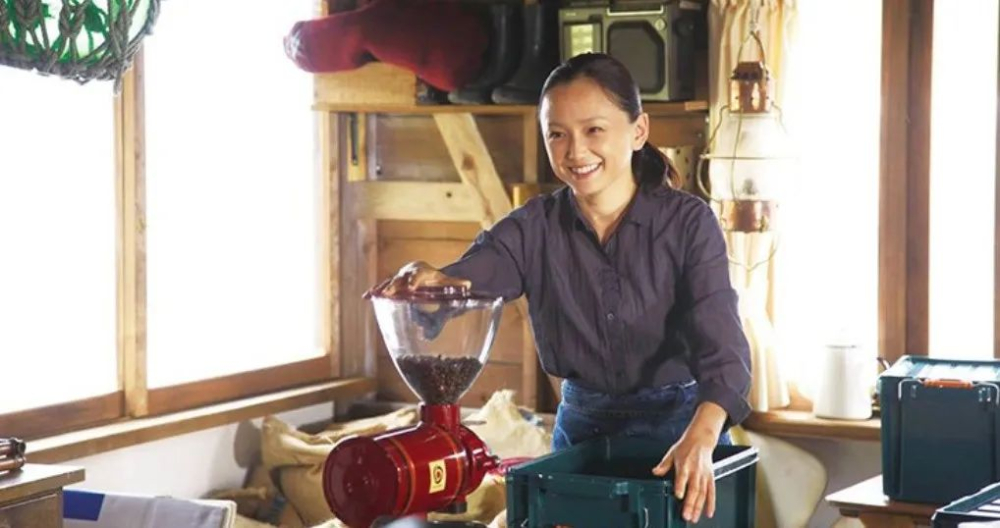
Is being a barista ultimately worth it? There's no "worth it or not"—only "suitable or not." Who knows whether this career might last a lifetime? Passion can get you into the coffee industry, and persistence and effort can take you further in it. Even if you later feel it's not suitable, there's no need to regret it, because it is an experience worth cherishing. Even if things don't turn out as you wished, this experience will always prove valuable in your next job.
Image source: Internet
Professional coffee knowledge exchange. For more coffee bean information, please follow Coffee Workshop (WeChat public account: cafe_style)
For more specialty coffee beans, please add the private WeChat of Front Street Coffee (FrontStreet Coffee), WeChat ID: kaixinguoguo0925
The above content is compiled by CoffeeHunters, a coffee news website.


