







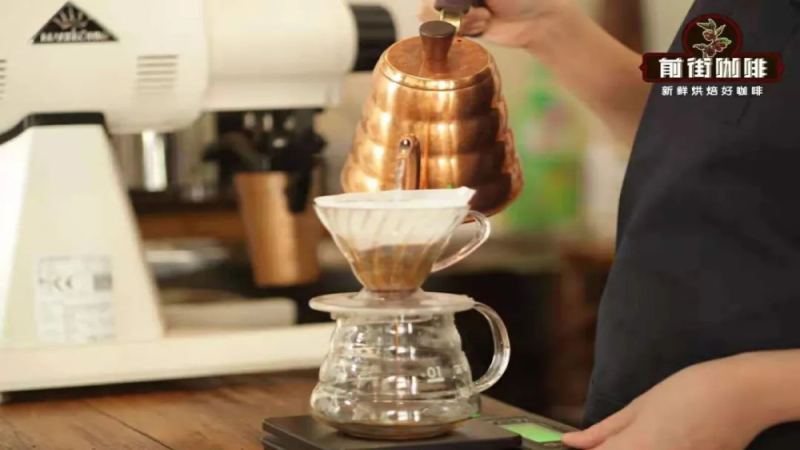
How do pour technique and coffee particles shape coffee extraction?
Pour-over flavor depends on four parameters working together: coffee-to-water ratio, grind size, water temperature, and pouring technique. Change one and the cup changes. A typical ratio sits between 1:15 and 1:16, light roasts brew at 90-93C and dark roasts at 86-89C, and blooming usually comes first before staged pours.
Hario's Infinite Dripper claims no blooming is needed, just a single pour; testing produced a very clean cup with relatively low extraction. Grind and coffee particles matter here, since a finer bed slows flow and raises extraction. The cross stirring method from Taiwan barista Amis offers another route, and the article also details brewing 24 grams with 88C water in a Kono dripper.
The flavor expression of pour-over coffee depends on the coordinated interplay of four core parameters: coffee-to-water ratio, grind size, water temperature, and pouring technique. Changing any one of them will affect the final taste. Conventional pour-over usually involves blooming first followed by staged pouring, but there are also some seemingly unconventional approaches—for example, the Hario Infinite Dripper claims to require no blooming and just a single pour. After testing it, Front Street Coffee obtained a coffee with extremely high cleanliness but relatively low extraction. In addition to covering common techniques like the single-pour and three-pour methods, this article will also share Front Street Coffee's complete process of brewing medium-dark roasted beans with a Kono dripper using 24 grams of coffee and 88°C water, and introduce the cross stirring method of Taiwan's "Crazy Barista" Amis, to help you understand the logic behind these alternative brewing approaches.
Do you remember the brewing parameters that affect coffee flavor, which Front Street Coffee shared before? Coffee-to-water ratio, grind size, water temperature, and technique—these four must work together and coordinate with each other to bring out the coffee's flavor. Change just one of them, and the final taste in your cup will change accordingly. It truly is a case of one move affecting the whole.
Taking common pour-over methods as an example, the coffee-to-water ratio usually falls between 1:15 and 1:16; the grind size is slightly finer than cupping grind, which is what people often call a 75-80% passing rate on a No. 20 sieve; for water temperature, light roasts are controlled at 90-93°C, while dark roasts use 86-89°C; for technique, there are options like the single-pour, three-pour, and three-stage methods, all of which share the common point that blooming must come first before pouring.
These proven, mature data can indeed make it easier for everyone to brew delicious coffee. However, this does not mean that other parameter combinations cannot produce distinctive flavors.
In the pour-over process, the blooming stage is almost taken as a given. Yet a dripper called "Infinite" launched by Hario claims in its manual that no blooming is needed—just pour all the water in one go, and you can get delicious coffee. The first time you hear this, doesn't it sound incredible, even a bit absurd?
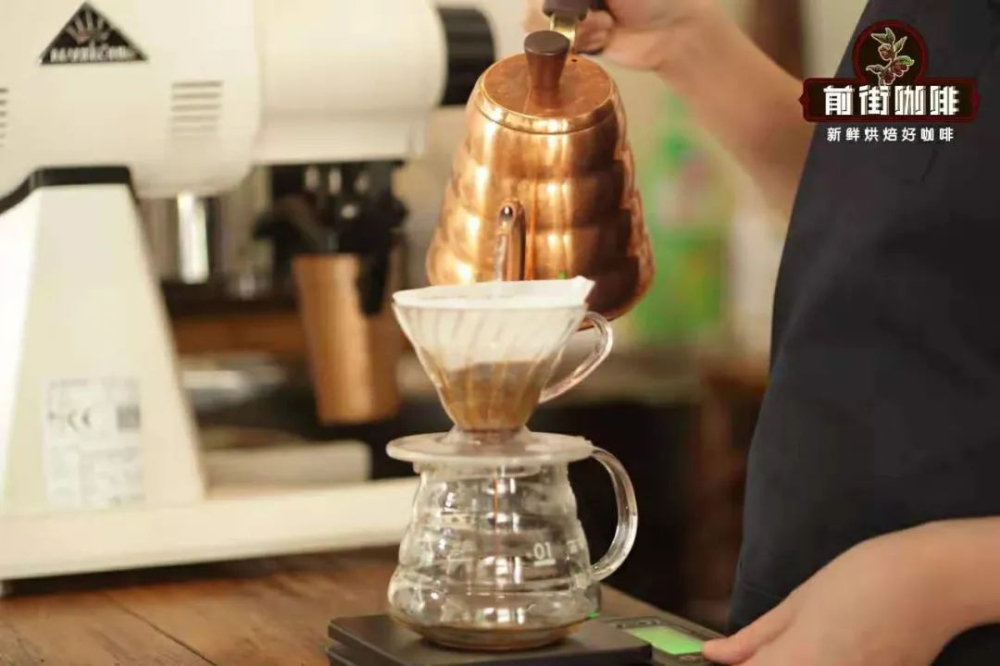
Front Street Coffee used 15 grams of coffee, a 1:15 coffee-to-water ratio, a grind size with an 80% passing rate on a No. 20 sieve, and a water temperature of 91°C to brew Ethiopia's Arsi (light roast). A single-pour was used, completing the pour in 42 seconds, and the coffee finished dripping in 2.5 minutes. The final result was a cup with 1.19% concentration and 15.66% extraction.
Judging from the data, the concentration is in a suitable range, while the extraction rate is on the low side (18-22% was previously considered ideal). From the perspective of flavor tasting, this cup of coffee has very high overall cleanliness—extremely clean—with faint floral and fruity notes. Compared with general brewing methods, the flavor layers are less rich, but overall it is very pleasant to drink.
From this, it seems that skipping the bloom does make it harder to extract coffee compounds, but that does not mean it tastes bad. For example, with medium-dark roasted coffee beans, once the extraction rate rises, the aroma and flavor also improve—though the bitterness becomes more pronounced.
Front Street Coffee will share another approach, also using no blooming and low extraction to present a clean, balanced, smooth, and comfortable taste. Of course, this method suits medium-dark roasted coffee beans. Based on testing so far, it works better with medium-roast beans, such as traditional washed Colombian beans, traditional honey-processed Costa Rican beans, and Papua New Guinea coffee beans. Their common trait is low acidity and low bitterness.
Front Street Coffee used a Kono dripper. The advantage of this dripper is that it makes it easier to brew a rich, aromatic cup. The dose was 24 grams, mainly to match the dripper; the grind size used a 70% passing rate on a No. 20 sieve, the water temperature was 88°C, and the ratio used was a coffee-to-liquid ratio, with 24 grams of coffee producing 240 milliliters of coffee liquid.
Brewing method: In the first stage, pour directly in a circular motion, raising the liquid level to the top of the dripper, using a strong flow. At this point, the surface of the liquid is still large coffee particles, with no obvious foam. The characteristic of the Kono dripper is that the higher the liquid level, the more pronounced the "siphon" effect.
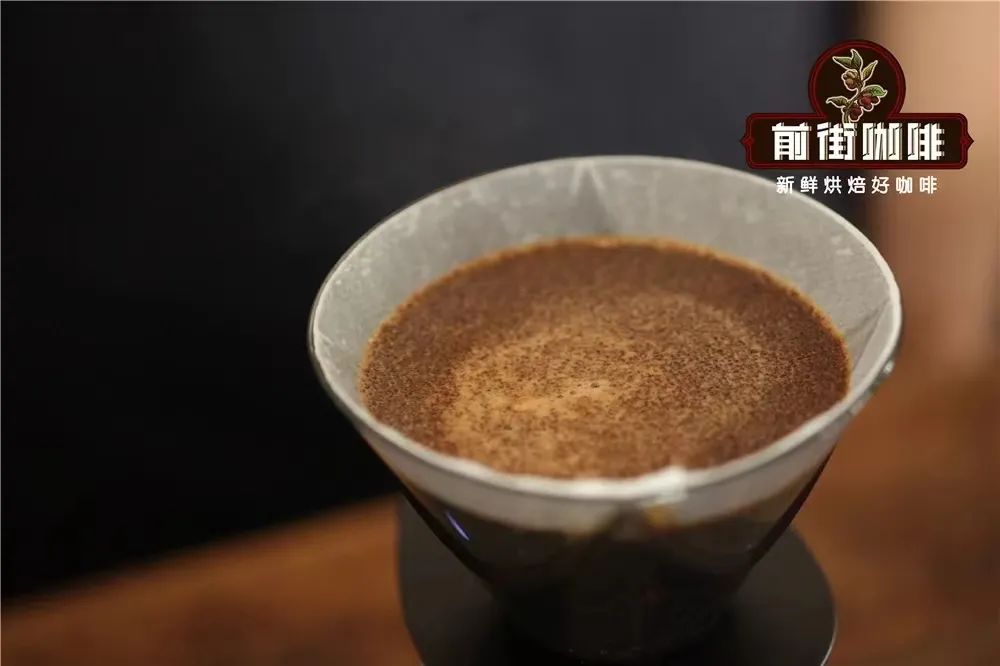
When the liquid level drops and forms a bowl shape, begin the second stage of pouring, again using a strong flow to raise the liquid level back to its original height. At this point, the surface is golden-yellow foam. When the liquid level drops and forms a bowl shape again, begin the third stage of pouring, again using a strong flow to raise the liquid level back to its original height; at this point, the surface is pale white foam. As soon as you observe that the lower server has reached 240 milliliters, you can remove the dripper.
After measurement, the coffee concentration was 1.3%, a moderate and pleasant concentration. The calculated extraction rate was 13.57%, which is a very low extraction rate. According to the Golden Cup standard, this is squarely severe under-extraction. But don't rush to judge—through tasting, the coffee performed very smoothly, with moderate concentration, a very clean mouthfeel, and an obvious caramel flavor.
Of course, there are also many advanced enthusiasts who take coffee to extraordinary levels. For example, in Taiwan there is a man known as the "Crazy Barista," Amis. His cross stirring method, as well as some of the brewing logic in his shaken iced coffee, have certain reference value. If you're interested, you can look him up.
Some brewing methods that seem "heretical" may not conform to common sense, but how can you know they won't work if you don't try them? Finally, it must be repeated: even if something is "heretical," there is still brewing logic behind it—it is not random brewing out of thin air. This distinction must be made clear.
The above content is compiled by CoffeeHunters, a coffee news website.


