







Can Chinese Breakfast and Coffee Pairings Become a Cafe Trend?
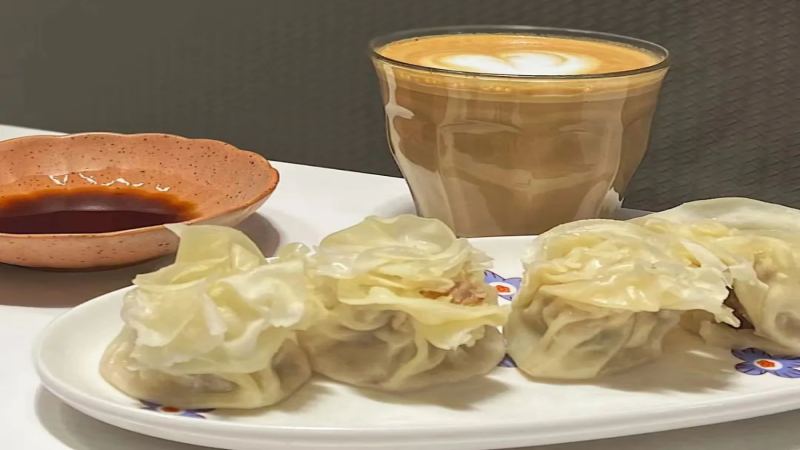
Coffee shops in Shanghai, Hangzhou, Chengdu, and Guangzhou have started selling jianbing guozi alongside pour-over, while rice noodle roll shops now offer coffee. Shanghai led the way, with one shop drawing waits of more than an hour and selling out of ingredients around noon. Siu mai with Ethiopian pour-over is one pairing customers describe as cutting the grease.
Consumers disagree about the results: some call it ordinary, others question whether it is attention-seeking or overpriced. The shift reflects looser ideas about when and where coffee belongs, moving it toward daily routine like soy milk or tea drinks. Whether the model lasts depends on steady demand rather than photo-driven visits, whichever coffee farm supplies the beans.
Coffee is becoming increasingly popular in China, and the scenarios for drinking it and the ways it is paired are being redefined. From siu mai with Ethiopian pour-over to coffee being sold in rice noodle roll shops, and coffee shops in Shanghai, Hangzhou, Chengdu, Guangzhou and other places launching jianbing guozi, the combination of Chinese breakfast and coffee has sparked queues for photo-worthy visits and heated discussion. Some find it ordinary, while others question whether it is just attention-seeking and overpriced, but undeniably, this attempt to break fixed impressions is bringing coffee closer to ordinary people's lives. This article will sort out the consumer psychology, dietary changes and market logic behind this phenomenon, and explore whether it will become a new trend for coffee shops.
"What did you eat for breakfast today?"
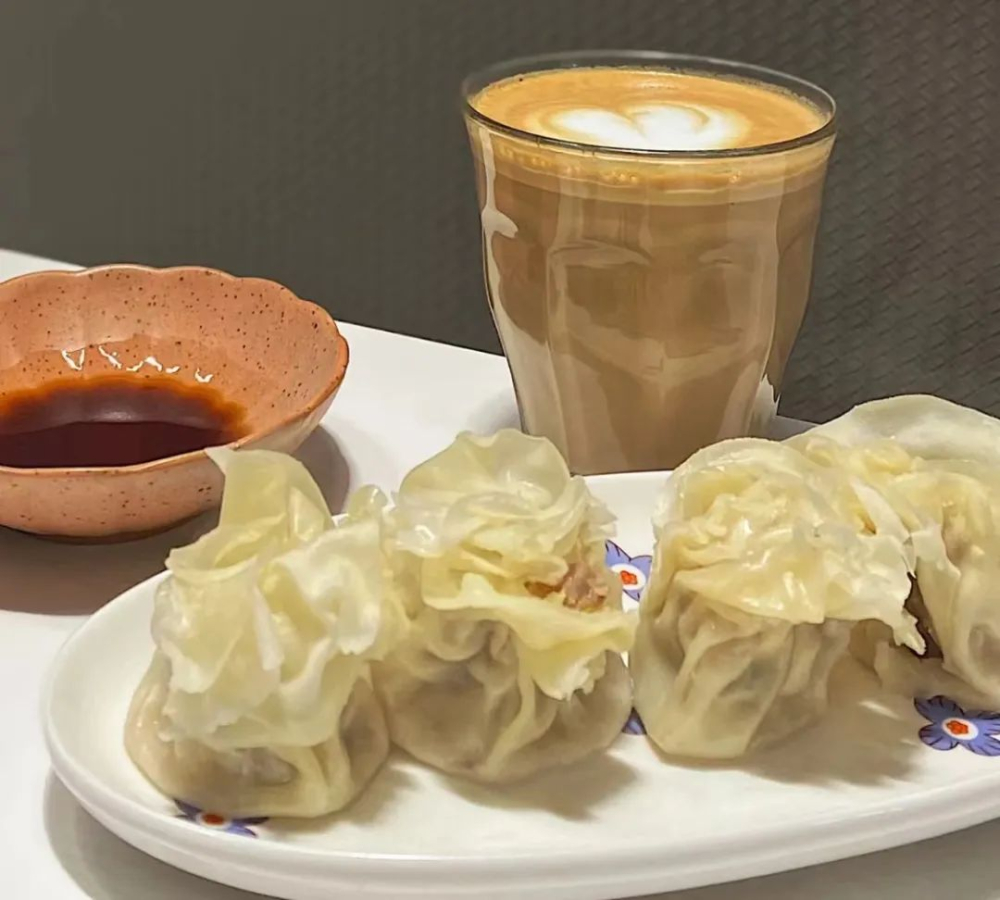
"A few siu mai, plus a cup of Ethiopian pour-over~"
"Doesn't that combination feel weird?"
"Not at all! After eating siu mai your mouth feels a little oily, and a cup of bright, acidic pour-over is just right to cut the grease—a perfect match!"
Nowadays, drinking coffee in the morning no longer has to come with a sandwich or croissant, and drinking coffee in the afternoon does not always have to be tied to cake or dessert. Coffee is becoming more and more common in China, and people's understanding of it is gradually loosening—there is no need to stick to a specific time, a specific occasion or a fixed pairing. Like soy milk or tea drinks, it is slowly becoming part of ordinary people's daily lives.
- Yuuna_语星辰
Not only are the boundaries of where consumers drink coffee expanding, but the places that sell coffee are also starting to "break the rules." Coffee can be bought in rice noodle roll shops, while coffee shops are selling jianbing guozi. The pairing of Chinese breakfast and coffee is quietly becoming popular in multiple cities.
A few months ago, a coffee shop in Shanghai began offering jianbing guozi. Once this seemingly unrelated combination was launched, it immediately attracted a lot of attention from netizens. According to feedback from people who went to check it out, waiting in line for more than an hour is common in order to eat this shop's jianbing guozi, and because the shop prepares a limited amount of ingredients every day, it sells out around noon.
- Fayeating
Since Shanghai took the lead, some coffee shops in Hangzhou, Chengdu, Guangzhou and other cities have also followed suit and started selling jianbing guozi. It must be said that this kind of combination can bring a wave of traffic wherever it appears. Although buying the whole set is not exactly a bargain—it costs a few yuan more than buying a jianbing guozi and a cup of coffee separately—it has indeed firmly captured the hearts of young consumers.
- 吃货大J
"Isn't this just how I usually eat? I often pair them this way!" "It's expensive, not worth it." "A Chinese-Western fusion, quite cute!" "I knew it was expensive, but I still went." People have different views on this kind of combination. Perhaps what people are really curious about is not the taste of jianbing guozi with coffee, but the very fact that a coffee shop is selling jianbing guozi.
For some people, this may be utterly ordinary; but for many friends who have not yet come into contact with coffee or have just started, this pairing is somewhat striking. Because in many people's impressions, coffee is always placed together with Western food, and this Chinese-Western mix seems quite fresh—it both breaks fixed perceptions and gives them a reason to try a groundbreaking combination.
- siewen
The reason jianbing with coffee can attract so many people to queue up and check in is not only curiosity-seeking psychology, but also related to the constantly changing consumption habits and eating habits of modern young people. More and more people are willing to step outside traditional or fixed pairing frameworks.
The practice of pairing coffee with Chinese breakfast first appeared in overseas Chinatowns: it both satisfies the traditional dietary needs of Chinese people and caters to everyone's craving for caffeine. Whether it is a sandwich with coffee or meat buns with coffee, the essence is the same—fill your stomach, then start the new day full of energy.
- CHEN-
"Isn't this just attention-seeking? It's messing up the coffee market." In the face of this pairing, it is normal for doubts to arise. But the rapid development and popularization of coffee culture is precisely meant to make coffee an everyday drink. Through pairing Chinese breakfast with coffee, letting more people regard coffee as something ordinary, is not necessarily a bad thing.
With this kind of "attention-seeking" approach, the owner can make money, and consumers also get another chance to feel coffee's everyday nature and gradually let go of their "prejudice" toward coffee. That is quite good. After all, coffee shops are not forcing anyone to accept this pairing, nor are they saying it represents the correct answer. As long as the people who consume it can accept it, that is enough.
So whether this kind of combination actually works and whether the pricing is reasonable is actually not that important. As long as some people are willing to accept it and some people respect its existence, the first step toward success has already been taken.
As for whether it will become a new round of trend for coffee shops? Nothing is absolute, but acceptance always takes time. Someone has to take this step first, giving themselves a little bit of strength, making coffee a drink for the masses, and allowing more and more people to accept coffee.
Through different channels and methods, tell people that coffee is not "picky about people." It is just this ordinary, this everyday.
Image source: Xiaohongshu
For professional coffee knowledge exchange and more coffee bean information, please follow Coffee Workshop (WeChat public account: cafe_style)
For more specialty coffee beans, please add the private WeChat account Front Street Coffee (FrontStreet Coffee), WeChat ID: kaixinguoguo0925
The above content is compiled by CoffeeHunters, a coffee news website.


