







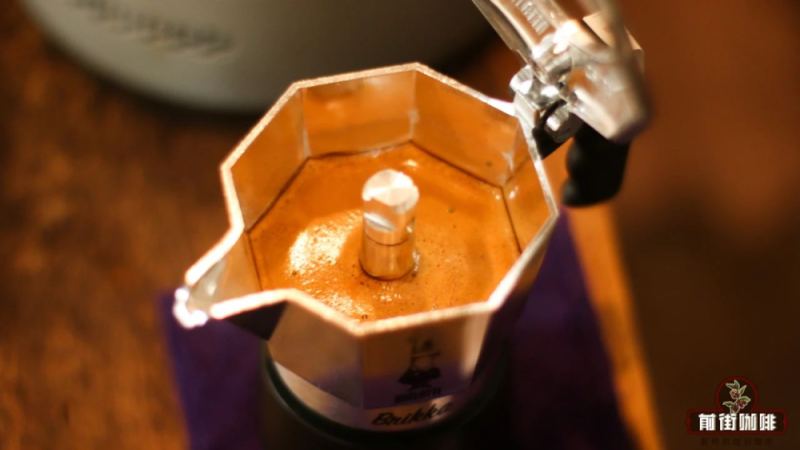
Does Coffee From a Moka Pot Really Count as Espresso?
Coffee from a moka pot is not true espresso in the modern sense. A moka pot brews at roughly 1 to 2 bar, while today's espresso machines run near 9 bar, which is why a moka pot cup is thinner and usually has little crema. The name once fit: early machines such as the 1905 Ideale also extracted at only 1.5 bar, close to the moka pot's range.
The bialetti moka pot arrived in 1933 and worked on the same pressure principle, effectively a scaled-down version of those early machines. The definition of espresso shifted when the Faema machine appeared in 1961, and modern espresso separated from the older meaning. To get a richer, crema-like result from a single-valve moka pot, grind finer, fill and level the basket without tamping hard, and keep the heat moderate.
Many friends who are just getting into espresso coffee consider using a moka pot instead of a semi-automatic espresso machine when their budget is limited. But can that thick black liquid brewed from a moka pot really be called espresso? This article, from Front Street's perspective, traces the evolution of the espresso machine, compares the differences between moka pots and espresso machines in core parameters such as pressure and coffee-to-water ratio, and explains in detail how to extract a rich crema with a single-valve moka pot—from bean selection and grinding to every key step of filling the coffee grounds—to help you truly understand the moka pot's position and how to use it.
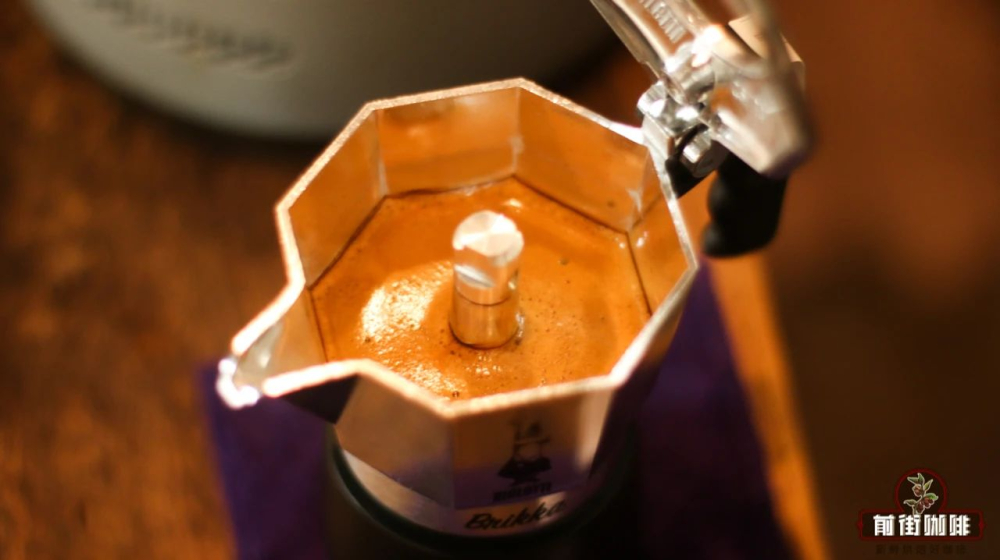
The topic Front Street wants to discuss this time is: Can coffee made with a moka pot actually be considered espresso?
Among the coffee enthusiasts Front Street encounters daily, many originally set out for espresso coffee. After learning about semi-automatic espresso machines and factoring in their budget, they ultimately turned their attention to the moka pot. From a historical perspective, there is indeed some connection between the two.
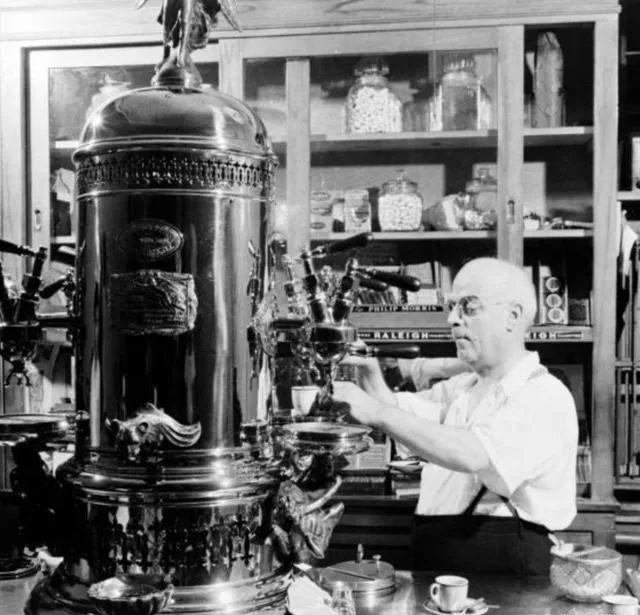
Let's briefly go through the history first. The first true espresso machine, the "Ideale," was born in 1905, and its appearance was completely different from today's espresso machines. The Ideale's extraction pressure was far lower than the 9 bar of modern machines—only 1.5 bar. It could complete the extraction of an espresso in 45 seconds, but its body and flavor performance could not match modern espresso machines. In essence, it was closer to a cup of black coffee without crema.

The moka pot was an invention launched by Bialetti in 1933. In terms of working principle, the moka pot also uses pressure to rapidly extract coffee substances, with pressure at around 1-2 bar. This characteristic is very close to the coffee machines of that era, so it can be said that the moka pot is a scaled-down version of an espresso machine.
Around 1920, the Italian dictionary compiled by Alfredo Panzini first gave the definition of "espresso"—"concentrated coffee made using a pressurized machine or filter." The way the moka pot makes coffee happened to fit people's understanding of espresso at that time.
But coming back to the present, the espresso we talk about today has clearly diverged from that old definition. The turning point came in 1961, when Faema launched the epoch-making E61 coffee machine. This machine could raise the pressure to 9 bar during extraction, instantly leaving previous coffee machines far behind. The coffee it extracted was more aromatic and richer, and the crema was also more abundant and delicate.
From then on, people's understanding of espresso gradually changed, and the line between coffee made by a coffee machine and coffee brewed by a moka pot became increasingly clear.
Judging from current mainstream brewing parameters, the coffee-to-water ratio of an espresso machine is about 1:2, with a pressure of 9 bar; the coffee-to-water ratio of a moka pot is about 1:5, with a pressure of 2 bar. Espresso made by an espresso machine is more intense, and the crema is thicker, more delicate, and longer-lasting.
Therefore, the moka pot cannot be regarded as a transitional option or a substitute for an espresso machine. According to today's understanding of espresso, coffee brewed from a moka pot cannot be classified within the espresso category as we know it. What the moka pot makes is a cup of strong coffee with a distinct style.
So how do you get a rich crema from a single-valve moka pot?
1. Bean selection
Freshly dark-roasted beans are undoubtedly the best option. Dark roasting makes the bean structure looser, allowing hot water to penetrate more easily and carry out the carbon dioxide still remaining in the beans along with the hot water. Therefore, for making moka pot coffee, Front Street PWN Golden Mandheling, Front Street Queen's Estate, and Front Street Black Cocoa Basic Blend are the top choices.
But note that "fresh" here does not mean beans that have just been roasted and just come out of the roaster. At that stage, the carbon dioxide content is too high, which instead hinders the extraction of aromatic substances, and the resulting coffee does not taste good.
So freshness here means beans that have already rested and are still within their flavor window. These beans contain the most abundant carbon dioxide, and together with the loose texture of dark roasting, they make it easier for us to obtain a large amount of crema.
2. Grind size
In addition to choosing relatively fresh beans, you also need to pay attention to controlling the extraction pressure of the moka pot. Although it does not have pressure as high as the 9 bar of an espresso machine, that does not mean there is no pressure at all—it is just relatively small.
There are two ways to control pressure, and they need to be used together. The first is grind size. The grind size for a moka pot is finer than pour-over coffee, but a little coarser than espresso grind.
(Left in the image is pour-over grind, center is moka pot grind, right is espresso grind)
If you use the coarse grind of pour-over, hot water will gush out directly because of the lack of resistance. If you use espresso grind, it will be too fine and the coffee liquid will not come up—the air pressure of the moka pot is not enough to break through the resistance of the coffee puck, and it can also easily lead to explosion risks caused by poor pressure release.
When you find that the coffee liquid is not coming up for a long time, be sure to turn off the heat source in time to ensure your safety. So whether you use a hand grinder or an electric grinder, when using a moka pot it is best to set the grind setting a little coarser than espresso grind, which is safer.
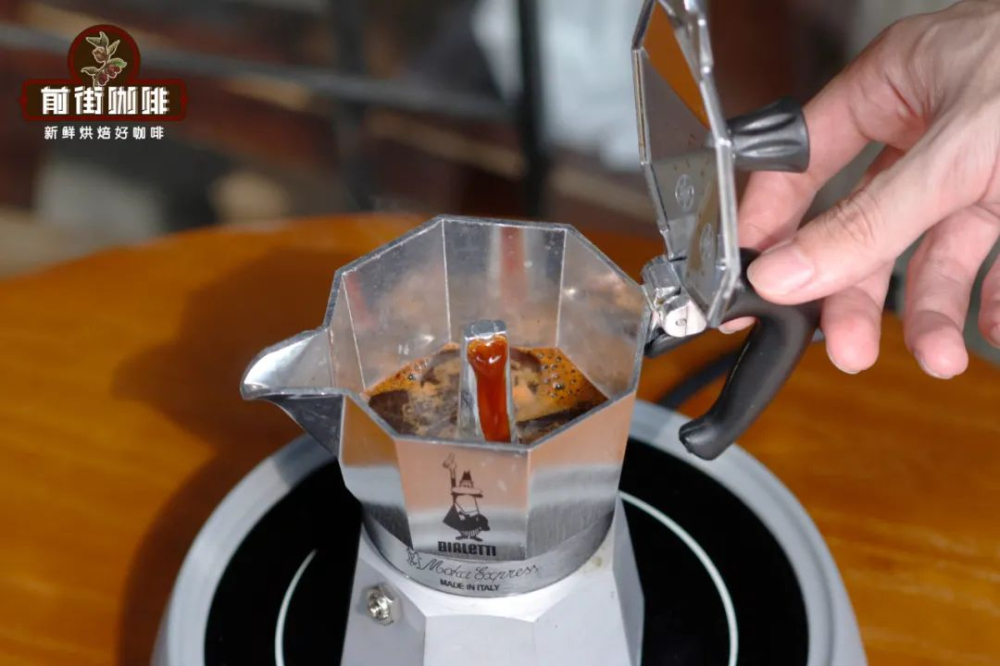
(Moka pot coffee made with pour-over grind size)
Once the beans are decided and ground, the next step is filling the coffee grounds, which is also another key step in pressure control.
3. Filling the coffee grounds
Generally speaking, we decide the amount of coffee based on the size of the moka pot. Front Street is using a three-cup moka pot here, which needs to be filled with about 19g of coffee grounds.
As you can see, the height of the coffee bed will be higher than the groove. At this point, many friends will want to press it with their hands, but don't rush. First level it out, then gently tap it and pat it left and right so that the coffee grounds at the bottom are evenly distributed. This makes the gaps smaller and can effectively reduce channeling.
After that, you can decide whether to press based on your grind size. If the grind is slightly coarser, you can use your fingers to press down lightly while leveling to increase resistance and allow the crema to form better. If the grind is slightly finer, there is no need to press, because the resistance itself is already sufficient; just prepare the upper pot and start brewing.
After pressing is complete, pour 110ml of hot water into the lower pot, then assemble the filter basket and upper pot in order, and you can start brewing coffee.
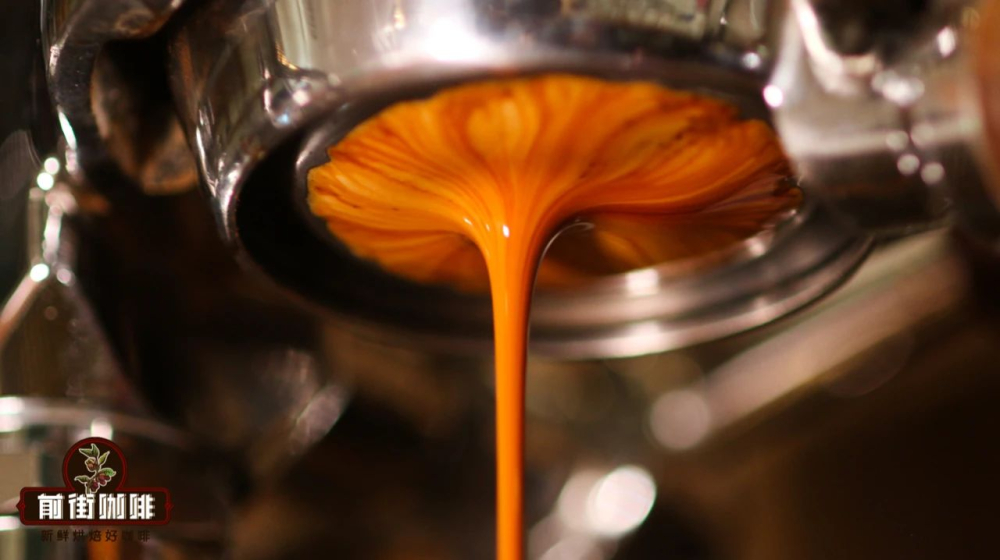
Wait until the crema covers the silver surface at the bottom of the moka pot, then you can remove it from the heat source.
The residual heat is enough to extract all the remaining liquid.
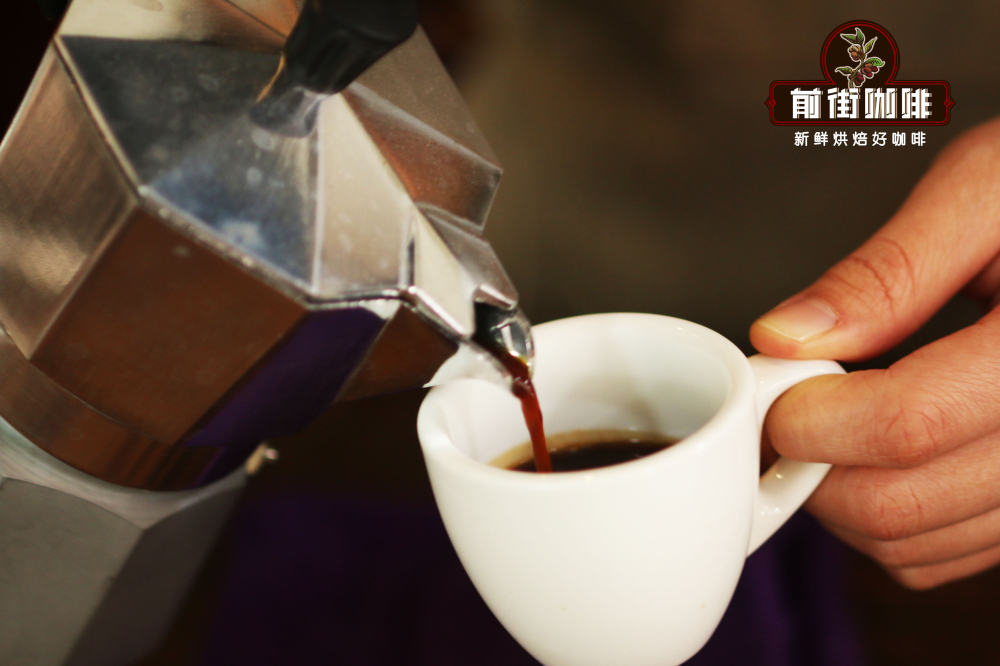
In this way, you get a cup of moka pot coffee with a thick crema. If your moka pot is a double-valve one, the crema will be even richer, and you can skip the waiting and directly make any coffee you like and enjoy it.
The above content is compiled by CoffeeHunters, a coffee news website.


