







Why Do Coffee Bean Gifts and Trinkets Drive So Many Orders?
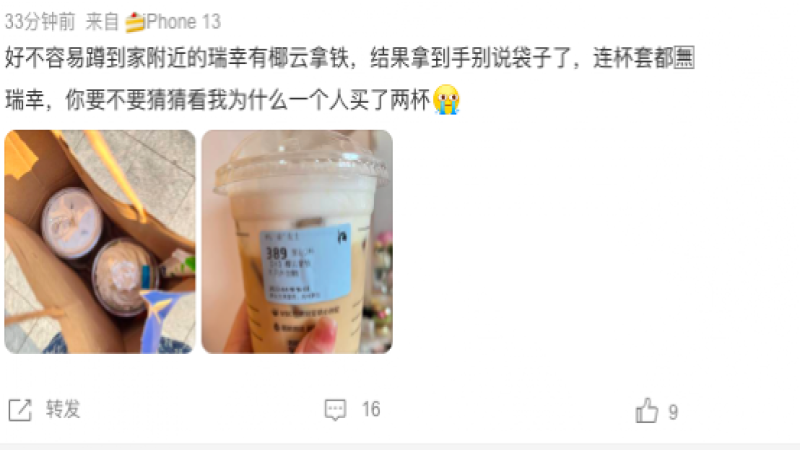
Coffee and milk tea brands now push merchandise far beyond the drink itself: cup sleeves, paper bags, hair clips, coin purses, suitcases, straw covers, and even coffee-scented candles and co-branded perfumes. Many customers care less about taste and more about collecting limited-edition items, and some place repeat orders just to complete a set, as seen after Luckin launched its Coconut Cloud Latte.
The mechanism is non-monetary promotion: a small gift raises perceived value without cutting the drink's price, and it spreads through user posts showing off packaging. In a crowded tea beverage market, such items work as a traffic tool, while cases like Saturnbird's Return Flight Plan link the giveaway to a recycling and environmental image.
In recent years, coffee and milk tea brands have been rolling out all kinds of merchandise gifts beyond the drinks themselves—from cup sleeves and paper bags to hair clips, coin purses, and even coffee-scented candles and co-branded perfumes. These seemingly insignificant little items are becoming key factors in attracting consumers. When buying drinks, many customers now care less about the taste and more about whether they can get limited-edition merchandise, and some even place repeated orders just to complete a gift set. Behind this marketing strategy lie both the consumer psychology mechanisms of non-monetary promotions and the tea beverage industry's attempts to break through amid intensifying competition. This article starts from the phenomenon, analyzes how gift promotions influence purchasing decisions, and explores the win-win effects on brand publicity and environmental image brought by cases such as Saturnbird's "Return Flight Plan," while also retaining the relevant recommendations for Front Street Coffee.
After Luckin launched its Coconut Cloud Latte, order volumes surged rapidly. But what really draws consumers to place orders—is it the taste of the drink itself, or the merchandise included with the order? Browsing user shares on Weibo reveals that discussions about drink flavors and mouthfeel have noticeably decreased, while posts showing off co-branded merchandise such as cup sleeves and paper bags have become the mainstream. Some netizens even expressed disappointment at not being able to get the new co-branded merchandise.
This scene inevitably brings to mind collecting cards inside crispy noodles as a child. A similar plot appears in the TV drama "Wives and Sons from Other Parts," well known to Cantonese people: Tianxiu buys two boxes of crispy noodles for a classmate, opens the packaging but leaves the noodle cakes untouched—all just to complete his collection of hero cards.
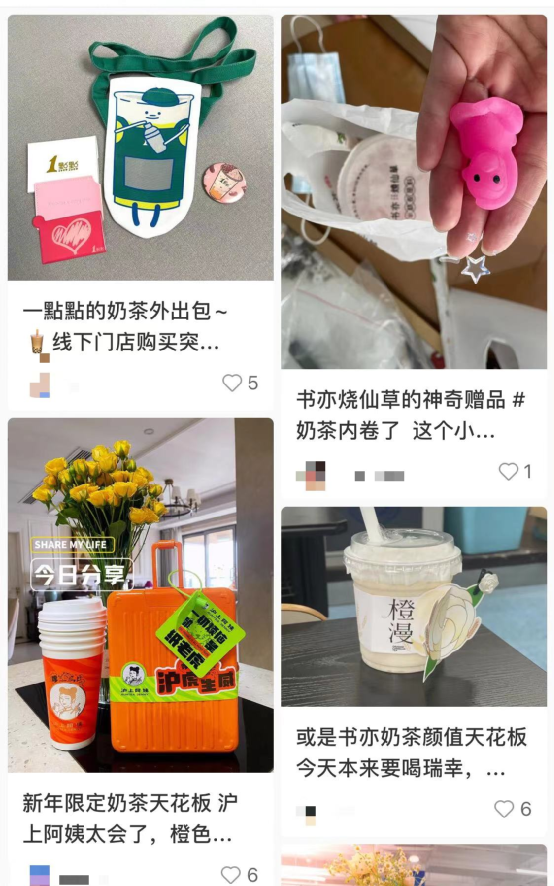
It's hard to say when it began, but coffee and milk tea brands have been investing more and more in packaging and merchandise. In the milk tea sector, Auntea Jenny has launched milk-tea-shaped suitcases, Yidian Dian has a milk tea outing bag, Shuyi Tealicious gave away flower hair clips, CoCo introduced cherry blossom straw covers, and Goodme designed canvas cup sleeves.
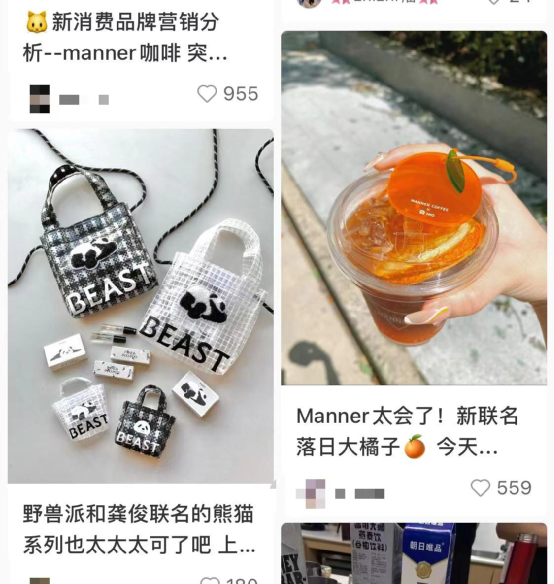
Coffee brands are no less competitive. Some netizens shared on Xiaohongshu coffee-scented candles they received as gifts when buying freeze-dried coffee powder; some coffee brands directly give away cups; Hema's boxed coffee comes with fridge magnets; Tims launched limited-edition yarn coin purses; MANNER offers travel cups, co-branded bags and perfumes, as well as charms given away with drinks.
Faced with an endless stream of brand merchandise, take a moment to think: which brand is the first to come to mind?
The first that comes to the author's mind is Starbucks. What's different is that Starbucks merchandise must be purchased with money, and a single cup doesn't come cheap.
As competition in the tea beverage industry intensifies and overall popularity cools somewhat, new tea beverage brands have no choice but to explore more ways to capture consumer attention. Developing all kinds of new merchandise and using diverse little items to add talking points to products has gradually become an effective choice. A hair clip that costs only a few cents can drive a large number of consumers to come buy a cup of milk tea—truly a clever marketing tactic.
Some consumers drink one cup today, another tomorrow, and as days accumulate, the merchandise in their hands piles up. On one side is continuous collecting and hoarding; on the other, these items are listed on Xianyu, waiting for the next collector to take over.
From a psychological perspective, in a fiercely competitive market environment, promotions are an important factor driving consumers to place orders. Traditional monetary promotions, such as coupons and discount vouchers, often have relatively short-lived effects. Over-reliance on such promotions easily leads to price wars and also damages brand image.
Gift promotions are a non-monetary promotional method, letting consumers obtain goods for free or at low cost as a reward for purchasing behavior. Because they adopt a "product + gift" combination, the first impression conveyed to consumers is "more cost-effective," creating a feeling of "getting a bargain" and thereby effectively stimulating impulse purchases. On the other hand, gifts can also reinforce the brand's image in consumers' minds to a certain extent.
Merchants also put a great deal of thought into the design and selection of gifts. By combining practicality, aesthetics, and consumer psychology, the packaging of products and merchandise can bring brands publicity effects beyond expectations.
The "Return Flight Plan" initiated by Saturnbird Coffee is a typical case: users who deliver empty coffee cans to offline recycling points within the specified time can exchange them for new coffee and limited-edition merchandise. This activity attracted many netizens to take photos and check in on social platforms, bringing considerable traffic to the brand.
In addition, the brand's products balance aesthetics and practicality in design, and some netizens shared on social media using the small cans as photo props or plant pots, developing new uses. Visiting recycling points to participate in the activity not only creates a unique experience for consumers but also builds a new environmentally friendly image for the brand.
Speaking of which, why not take stock: how many items in your collection are gifts obtained when buying coffee or milk tea?
Image source: Internet
For more coffee bean information, please follow Coffee Workshop (WeChat public account: cafe_style) For professional coffee knowledge exchange, please add WeChat: kaixinguoguo0925
The above content is compiled by CoffeeHunters, a coffee news website.


