







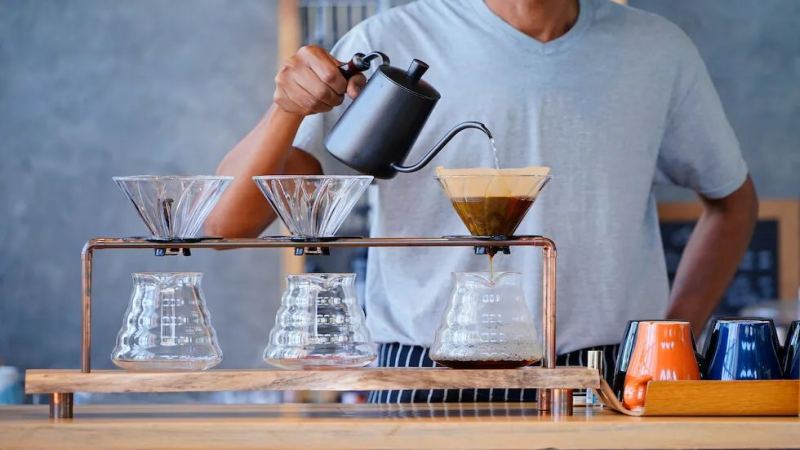
How does circular pouring work when you make coffee by coffee maker?
Circular pouring exists for two reasons: extraction efficiency and water flow stability. Agitation helps more coffee compounds release into the water, and pour-over uses the stream itself instead of a spoon. Pouring at one fixed point leaves grounds unevenly extracted, so the circle spreads water across the bed.
Why circles rather than other stirring paths? Siphon brewing allows cross, infinity or Z-shaped stirring, but a hand-held kettle is far less precise than a spoon, and other trajectories easily create turbulence. Two common turbulence sources are gas escaping after the bloom and rough stirring motions. Single-direction circular pouring rarely produces that disturbance when the technique is controlled.
Many friends who are just getting into pour-over coffee are curious: why must you pour in circles? Can't you just pour water straight into the center? Behind this seemingly simple action lies a dual consideration of extraction efficiency and water flow stability. This article will analyze it from two angles—first explaining the role of agitation in improving extraction yield, then explaining why, among the many agitation methods, circular pouring is best suited to the pour-over scenario. It will also share Front Street's recommended practical pouring techniques to help beginners effectively avoid turbulence, achieve even extraction, and reduce the chance of failure.
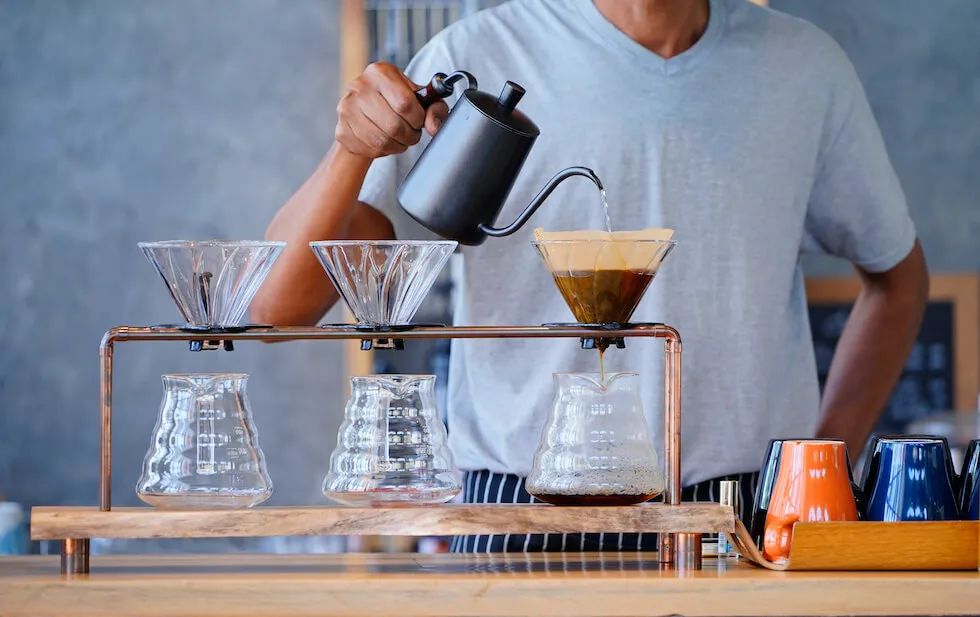
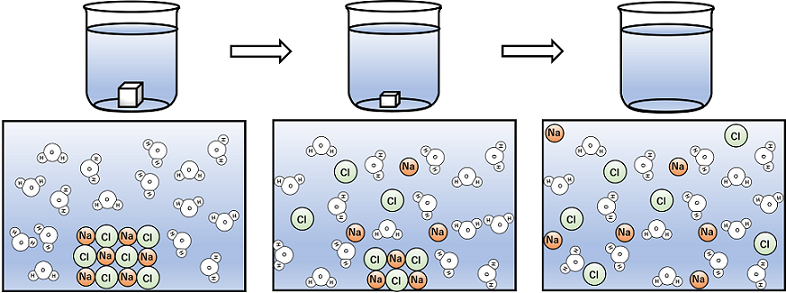
The primary reason is to improve extraction efficiency, which is probably the explanation most people think of first. In daily life, when making instant coffee or granular drinks, if you just pour in hot water without stirring with a spoon, the granules often won't fully dissolve. That's precisely why we use agitation to speed up the dissolving process.
The logic of pour-over coffee is similar—it also requires some form of "agitation" to encourage more coffee compounds to release into the water. The difference is that pour-over doesn't use a spoon; instead, it uses the water stream itself to accomplish the agitation. This reasoning explains why you can't always pour at a single fixed point. However, there are many ways to agitate, and circular pouring isn't the only one—for example, when making siphon coffee, you can use cross stirring, ∞-shaped stirring, or Z-shaped stirring.
So the second question follows: since it's all for agitation, why does pour-over specifically choose circular pouring? The key is that a person's precision in controlling a water stream falls far short of what can be achieved with a solid tool like a wooden stick or spoon. If you use other stirring trajectories to pour, it's very easy to create turbulence (i.e., disturbance). There are usually two situations in which turbulence occurs during pour-over: one is when gas hasn't fully escaped during the blooming stage, and the gas escaping during subsequent pouring creates disturbance; the other is turbulence caused by improper stirring motions. For now, single-direction circular pouring rarely produces such obvious disturbance.
Of course, circular pouring also needs to be done correctly. Going back to the analogy of "stirring granular drink mix," if you want the granules to dissolve faster, you'll naturally stir more vigorously. Pour-over coffee can likewise enhance the agitation effect by speeding up the circular pouring. But the difference is that we don't aim to dissolve out all the substances in the coffee grounds—we only need to extract the pleasant flavor compounds (that is, an extraction yield of 18% to 22%). Therefore, the intensity of agitation must be restrained, improving extraction yield while preventing over-extraction.
As for the specific operation of circular pouring, Front Street recommends the most basic approach, with the core principle being "no turbulence, even extraction." Pouring in circles at a slower speed allows you to control the water flow angle more calmly, with better stability. The circular path can imitate the shape of a mosquito coil, starting from the center and slowly expanding outward, then gradually circling back inward after reaching the outermost ring.
What makes this technique beginner-friendly is that it's easier to grasp the intensity and rhythm of agitation, thereby greatly reducing the probability of mistakes. There are all kinds of pouring methods, so you might as well start with the simplest and most effective one.
The above content is compiled by CoffeeHunters, a coffee news website.


