







How Do You Make Coffee From Coffee Powder in an Ice Drip Pot?
Ice drip coffee is made by letting ice water pass through coffee particles drop by drop, extracting a clean, refreshing cup with a natural fermented, wine-like aroma. Grind size and drip rate decide the outcome: too coarse and the flavor turns weak, too fine and the bed clogs, adding bitterness. Front Street Coffee suggests a No. 20 standard sieve with an 80-85% passing rate.
Control the drip rate at roughly 7 drops per 10 seconds; 60 grams of coffee takes about 6 hours to finish. After dripping, refrigerate the concentrate at low temperature for 12 hours so fermentation rounds out the flavor. Any bean suits the method, but the same coffee tastes more refreshing than a pour-over, with a fuller body and a fermented wine note.
Ice drip coffee extracts a rich yet refreshing flavor by slowly permeating coffee grounds with ice water, carrying a natural fermented wine aroma, and is deeply loved by coffee enthusiasts. Making ice drip coffee is actually not complicated; the key lies in choosing the right equipment, controlling the grind size and drip rate, and selecting the right coffee beans. If the grind is too coarse, the flavor will be weak; if too fine, it will easily clog and accumulate water, bringing out bitterness. Front Street Coffee recommends using a No. 20 standard sieve with 80-85% passing rate, controlling the drip rate at about 7 drops per 10 seconds, with 60 grams of coffee taking about 6 hours. After dripping, it still needs to be refrigerated at low temperature for 12 hours for fermentation to reach the best flavor. This article will explain in detail the brewing parameters and bean selection approach for ice drip coffee.
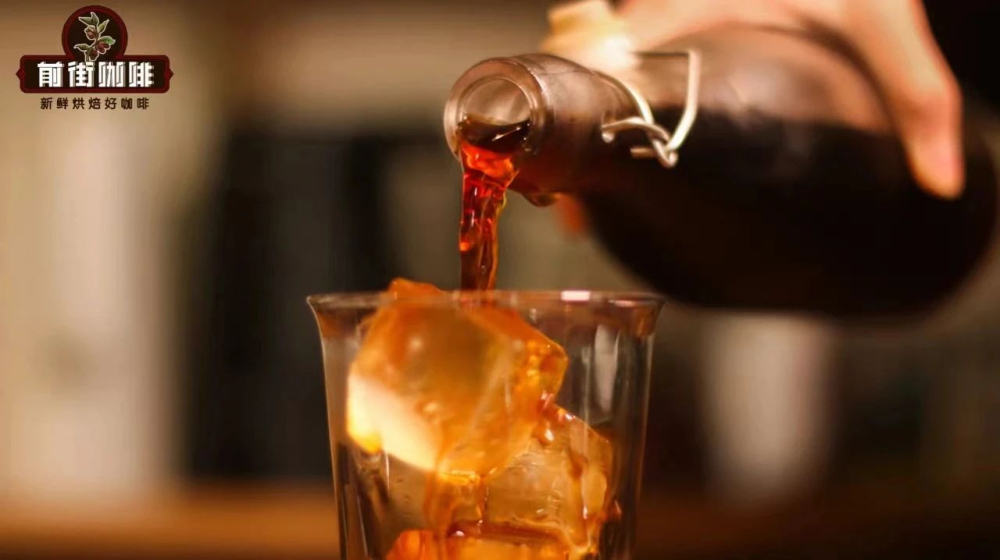
"Ice drip coffee requires ice water to pass through coffee particles drop by drop, slowly extracting the essence of the coffee, going through seven times seven, forty-nine..."
That's a bit far off. In reality, making ice drip coffee is not that complicated. If there really is a barrier to entry, it's having an ice drip pot. However, there are also many clever folks out there who, with ingenious ideas and nimble hands, have rigged up all kinds of interesting and workable ice drip methods (equipment).
But masters are ultimately too far removed from ordinary people. The greatest value of a reliable ice drip pot is convenience—as long as the preparation is done properly upfront, you can leave the rest to the pot to drip slowly on its own. If the pot is unreliable, you'll have to manually adjust the drip rate from time to time.
So, as long as you have a handy ice drip pot, making ice drip coffee is a piece of cake. Of course, if you want to avoid failure, you still can't skip the necessary parameters.
"Which coffee beans are suitable for ice drip" ultimately comes down to personal taste. Just like "I want to buy pour-over beans and like citrus acidity, so I'll pick washed beans from Ethiopia or Panama"—ice drip and pour-over are simply two brewing methods, and the flavor ultimately depends on the beans themselves. Of course, when comparing the same bean, ice drip will be more refreshing than pour-over, with a fuller mouthfeel and a natural fermented wine aroma.
However, Front Street Coffee would like to add one point: it's best to rest the coffee beans for a longer period (at least 1 week) to allow gases to escape more fully. This way, during extraction, channeling won't occur due to degassing and expansion.
There are two key points to note about the coarseness of the coffee grounds: if the grounds are too coarse, the resistance of the bed is low, and water passes through more easily into the lower pot. Cold water extraction efficiency is inherently low, so this will result in weak, flavorless coffee. If the grounds are too fine, resistance increases and clogging and water accumulation are likely, and after steeping too long, bitterness emerges.
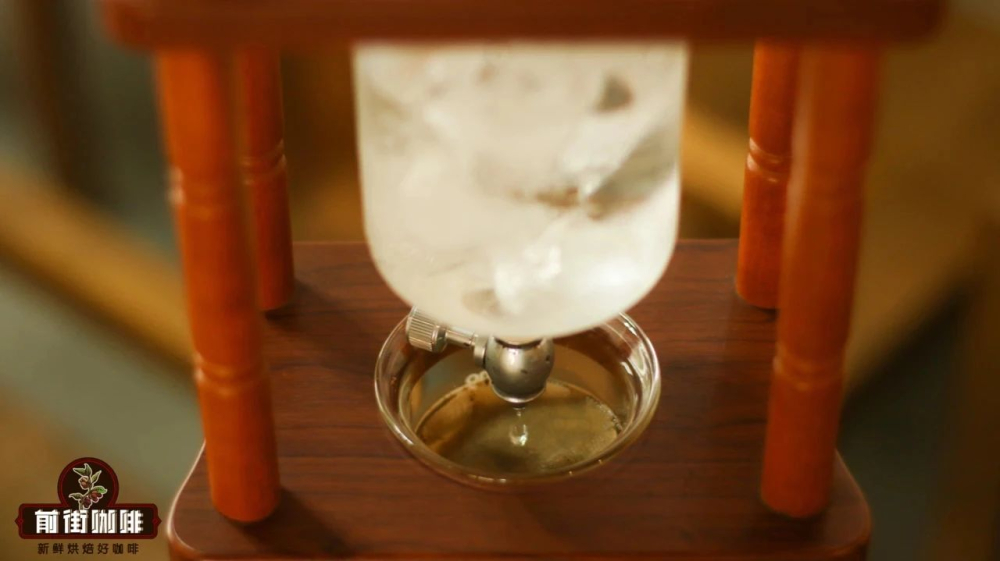
So Front Street Coffee recommends a grind size for ice drip coffee of 80-85% passing a No. 20 standard sieve. If you want it richer, choose 85% passing rate; if you want it more refreshing, choose 80% passing rate.
What's more difficult next is setting the drip speed. This is the same principle as the pouring flow rate in pour-over. In pour-over, a fast flow and a slow flow might differ by only 10 seconds, but in a long ice drip process, it could differ by 1 hour, and the resulting coffee flavor will naturally be different. Front Street Coffee's commonly used drip speed is 7 drops per 10 seconds. Taking 60 grams of coffee as an example, it takes about 6 hours. You can also use this as a reference.
Front Street Coffee also has a little trick: before adjusting the ice drip speed, you can first moisten the coffee grounds in the powder chamber. This effectively avoids channeling and also saves some time.
After dripping, the ice drip coffee is best refrigerated for 12 hours before drinking. Undergoing 12 hours of low-temperature fermentation in the refrigerator will give the ice drip coffee a charming fermented aroma, and the original flavors will become more intense. Fermentation is very common in daily life; uncontrolled fermentation will cause food to spoil and deteriorate.
In a low-temperature environment, this process can be effectively slowed down. Front Street Coffee has also verified that ice drip coffee made from most coffee beans has the best flavor after being chilled for 12 hours.
The above content is compiled by CoffeeHunters, a coffee news website.


