







What Is the Nutritional Value of Coffee and Why Is Interest Rising?
Global online searches about coffee health benefits rose 650% over the past year, and searches for the benefits of black coffee climbed 1,450%, according to an analysis by the Institute for Scientific Information on Coffee. A pan-European survey commissioned by the same group found 42% of coffee drinkers increased their caffeine intake during pandemic lockdowns and restrictions.
The European Food Safety Authority notes that about 400 milligrams of caffeine a day, roughly five cups, can fit within a healthy, balanced diet. Interest has spread across ten recurring topics: caffeine content, the nutritional value of coffee, and links to dehydration, high blood pressure and dementia. Trace nutrients in black coffee such as potassium, magnesium and niacin also draw discussion.
Over the past year, global online searches about the health benefits of coffee have surged by 650%, with searches for "benefits of black coffee" soaring by as much as 1,450%. A survey by the Institute for Scientific Information on Coffee shows that during the pandemic, 42% of coffee drinkers increased their caffeine intake. From caffeine content and nutrients to topics like dehydration, high blood pressure, and dementia, consumers' interest in the relationship between coffee and health has risen markedly. The European Food Safety Authority notes that around 400 milligrams of caffeine per day (about 5 cups) can be part of a healthy, balanced diet. At the same time, trace nutrients in black coffee such as potassium, magnesium, and niacin have also sparked discussion. Despite the steady stream of positive information, the "drink less coffee" warnings in family group chats remain hard to stop. This article will sort through ten major coffee health topics and explain coffee's real effects on the body.
The moment you pick up your phone, the family group chat is always the liveliest place, with relatives tirelessly forwarding all kinds of "in-depth good articles" and "health tips." In recent years, anxiety around health has become increasingly pronounced. Coffee, a beverage usually drunk like water, is now being scrutinized by more and more people to find out exactly what effects it can have on the body.
An analysis by The Institute for Scientific Information on Coffee points out that over the past 12 months, searches worldwide for "health benefits of drinking coffee" rose by 650%. Most coffee-related searches are tied to health, covering coffee's nutritional value, caffeine content, and the link between coffee and dementia.
Public interest in coffee's health benefits continues to heat up, with the search term "benefits of black coffee" growing by 1,450% over the same period. A pan-European survey commissioned by the Institute for Scientific Information on Coffee shows that consumer habits changed due to the pandemic, with 42% of surveyed coffee drinkers increasing their caffeine intake during lockdowns and restrictions.
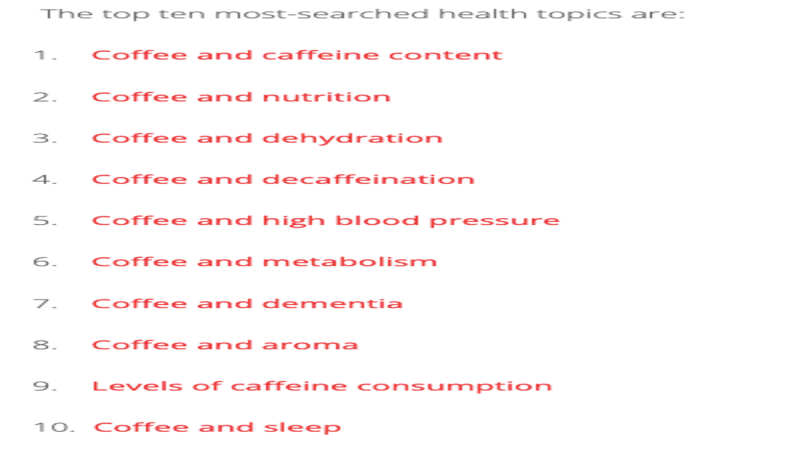
Over the past year, ten coffee-related health topics have drawn intense attention. Among them, "how much caffeine is in a cup of coffee" is what people care about most.
These ten coffee-and-health-related topics are:
Coffee and caffeine content
Coffee and nutrients
Coffee and dehydration
Coffee and decaffeination
Coffee and high blood pressure
Coffee and metabolism
Coffee and dementia
Coffee and smell
Caffeine intake
Coffee and sleep
A report by the European Food Safety Authority (EFSA) points out that moderate caffeine intake, about 400 milligrams per day, or up to 5 cups, can be part of a healthy, balanced diet and an active lifestyle.
Caffeine is one of the key components of coffee, and there is a "causal relationship" between moderate caffeine intake and improved attention and alertness.
In terms of nutritional composition, the largest component of coffee is water, and some people worry that drinking coffee causes dehydration. However, research shows that moderate coffee consumption actually helps with hydration and does not cause dehydration or significant fluid loss.
In addition, black coffee is also rich in trace nutrients such as potassium, magnesium, and niacin. It should be noted that once milk, cream, or sugar is added to coffee, its nutritional composition changes accordingly.
The link between coffee consumption and dementia has also attracted much attention. Some studies suggest that maintaining a regular coffee-drinking habit throughout life may have a protective effect against cognitive decline and neurodegenerative diseases. More in-depth research in the future will help us further understand information related to coffee and dementia.
During the pandemic, people's health awareness has continued to grow, and they are especially concerned about whether what they put in their mouths may have negative effects on their health. Working remotely from home became popular because of the pandemic, and coffee consumption surged along with it, even becoming a daily beverage for more people.
Even though positive news about coffee keeps coming, it still cannot stop the enthusiasm of family members in the "loving family" group chat urging you to drink less. And every time you forward an article about the benefits of drinking coffee to the group, you have to risk being kicked out of the chat.
Image source: Internet
For more coffee bean news, please follow Coffee Workshop (WeChat public account: cafe_style) For professional coffee knowledge exchange, please add WeChat ID: kaixinguoguo0925
The above content is compiled by CoffeeHunters, a coffee news website.


