







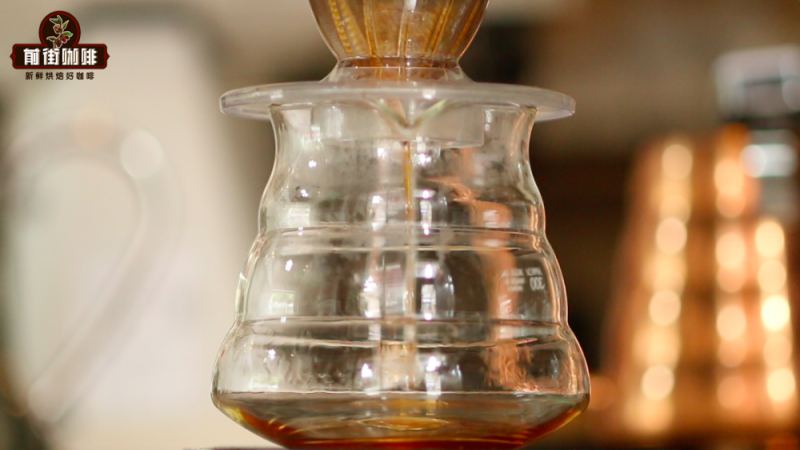
How much water does a Yirgacheffe bloom need under the dripper?
Pour roughly twice the coffee dose in water for the bloom, so 15 grams of grounds get about 30 milliliters. Some liquid dripping into the server during those 30 seconds is normal: pour-over grind is about the size of granulated sugar, and water only wets the surface of each particle, so surplus water passes through before the bed fully absorbs it.
How fast that liquid appears depends on grind size, roast level and pouring technique. Finer grounds hold water in the bed longer but can pool; coarser grounds expand more readily and drain sooner. Dark roasts and light roasts release gas at different rates, so the start and stop times of dripping are useful signals for judging the bloom, not a fault.
Blooming is an unavoidable key step in pour-over coffee, but most discussions stop at the expansion of the coffee bed above the dripper, overlooking the fact that the coffee liquid dripping below the dripper can also reveal problems. This article approaches the topic from the dripping situation below the dripper, analyzing why the recommended blooming water volume is twice the coffee dose, whether it is normal for excess coffee liquid to flow into the server, and how the three major factors—grind size, roast level, and pouring technique—affect drainage during blooming. The article also provides reference drip volumes for dark-roasted and light-roasted beans using 15 grams of coffee and 30 milliliters of water, and combines Front Street Coffee's brewing experience to share the actual timing of when dripping starts and stops during blooming, helping coffee enthusiasts more accurately judge the blooming state.
Front Street Coffee has discussed the topic of blooming many times before, covering pouring methods, how the coffee bed expands, and the effects of water volume and timing on flavor—all basically observed from above the dripper. This time, let's look at it from a different angle: from below the dripper.
Let me repeat a basic conclusion first: the core purpose of blooming is to let coffee grounds release gas, and coffee grounds absorb roughly twice their own weight in water. So for beginners, keeping the blooming water volume at about twice the coffee dose is a fairly safe approach.
However, if you pay attention, you'll notice that after pouring twice the water volume, quite a bit of coffee liquid has often already flowed into the server—meaning the coffee grounds haven't absorbed all the water.
This is actually normal. The grind size for pour-over coffee is roughly that of granulated sugar. It may seem like all the coffee grounds are wetted, but in reality only the surface of the particles has been contacted by water; some coffee grounds are not penetrated internally, so there is surplus water—that is, coffee liquid—that drips down.
How much coffee liquid flows into the server depends mainly on the following points:
1. The grind size of the coffee beans. When ground finer, water doesn't easily pass through, staying in the coffee bed longer, but too fine will cause water pooling. When ground coarser, the coffee grounds expand better, but the gaps between particles are also larger, making it easy for water to flow away; overly large gaps can also cause the coffee bed to collapse.
So you can also judge in reverse: when blooming with twice the water volume, if the water drips into the server very slowly, the grind is too fine; if it drips very quickly, there's a lot of water in the server, and there's collapse in the middle, then the grind is too coarse.
2. The roast level of the coffee beans. Under otherwise identical conditions, dark-roasted coffee absorbs water faster, so less water flows into the server; light-roasted coffee absorbs water more slowly, so relatively more water flows into the server. Taking 15 grams of coffee with 30 milliliters of blooming water as an example, dark roast drips about 3-6 milliliters of coffee liquid, while light roast drips about 5-10 milliliters of coffee liquid.
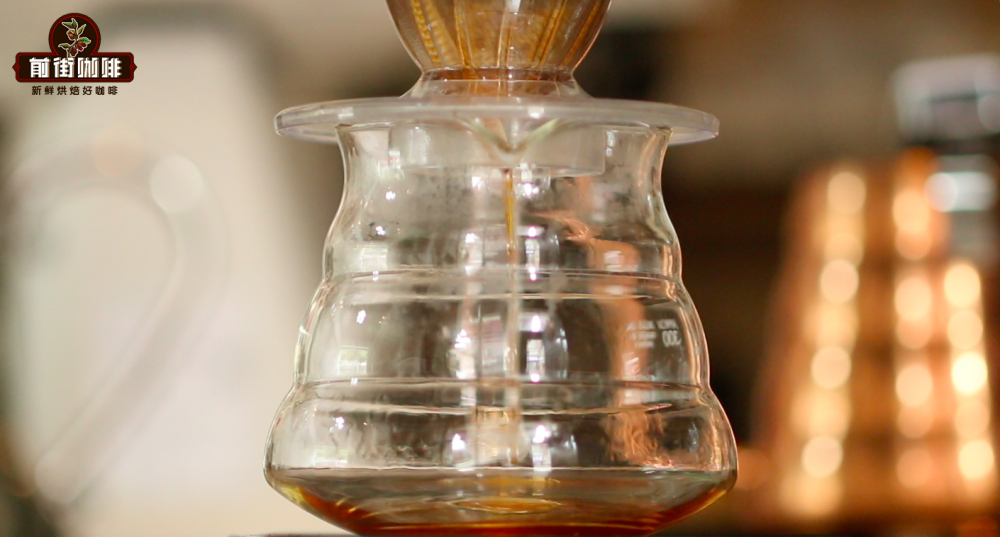
3. Pouring technique issues. Regarding blooming pours, you can refer to the article "How to Pour for Blooming Reliably." If you pour too much around the outer ring, some water will flow away from the edges; and for some light-roasted coffees with不明显 expansion, pouring only in a small circle at the center may also leave the surrounding coffee grounds unwetted. These situations will likewise cause more water to drip into the server.
If you accidentally pour too much water, it will also cause excessive drainage during blooming—for example, you planned to pour 30 milliliters but actually poured 35 milliliters.
Besides the points above to watch for, it's normal to drip a small amount of coffee liquid when blooming with twice the water volume, and it won't have much impact on subsequent extraction. Of course, some experienced people choose to bloom with less water, so that less coffee liquid drips into the server early on. But Front Street Coffee doesn't recommend this for beginners, because when you're not yet skilled enough, using less than twice the water volume makes it harder to fully wet the surface coffee grounds, so it's safer to just use twice the water volume for blooming.
Front Street Coffee's blooming behavior when brewing coffee is: dripping only starts near the end of the blooming pour (around the 7th second), the coffee liquid falls into the server in drops (sometimes the first second is a thin stream), and then dripping stops at the 15th-18th second. You can use this as a reference (no need to follow it exactly). If you feel too much coffee liquid drips into the server during blooming, you can look for the cause from the 3 points above.
The above content is compiled by CoffeeHunters, a coffee news website.


