







How Do Green Beans, the Roasting Process and Brewing Cause Astringency?
Astringency in pour-over coffee is a mouthfeel, not a taste, similar to the rough friction of grape skins. It comes mainly from chlorogenic acid in the beans, which becomes dicaffeoylquinic acid during roasting, and from tartaric acid. It shows up when these compounds are over-extracted or when the coffee lacks enough sweetness to mask them.
Three stages drive the problem: green bean quality, the roasting process and the brewing method. Beans with a high defect rate or many unripe beans carry more chlorogenic acid, and unripe cherries convert more dicaffeoylquinic acid during roasting. Understanding what is mellow in coffee helps drinkers separate smooth body from this sandy, drying sensation.
A good cup of coffee should be smooth and mellow, but sometimes we taste a rough, astringent sensation akin to chewing on grape skins. This discomfort is not a flavor but a mouthfeel, mainly stemming from chlorogenic acid in coffee beans, which transforms into dicaffeoylquinic acid after roasting, as well as substances like tartaric acid. When these components are over-extracted or the coffee lacks sufficient sweetness, astringency becomes prominent. From the perspective of Front Street, this article systematically analyzes the causes of astringency from three aspects: green bean quality, roasting process, and brewing method, and provides corresponding solutions to help coffee enthusiasts avoid unpleasant green and bitter tastes, while recommending reliable coffee bean choices.
Whether coffee is mellow is sometimes not immediately perceptible, but once a rough, sandy astringency appears, it is easily noticed. Therefore, we need to understand and try to avoid this from happening.
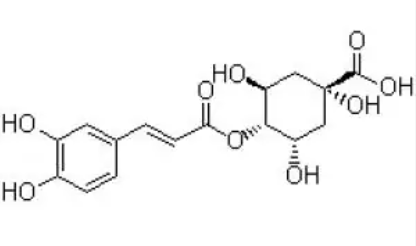
Front Street has also mentioned in previous articles that astringency is not a taste but a mouthfeel. Just like the astringent sensation from the skin when eating red grapes with skins, it is actually a tactile feeling. Typically, this type of astringency is due to polyphenolic compounds in food creating a rough friction in the mouth. The unpleasant astringency in coffee mainly comes from "chlorogenic acid" in coffee beans, which degrades into "dicaffeoylquinic acid" during roasting. Additionally, "tartaric acid" in coffee is also a source of astringency. (It's okay if you don't understand these terms; just know that these substances are at play.)

"Dicaffeoylquinic acid" is inevitably extracted into the coffee liquid during brewing. In most cases, we don't perceive astringency because the coffee's sweetness masks it. However, when dicaffeoylquinic acid dissolves excessively or the coffee itself lacks sufficient sweetness, that sandy, rough sensation emerges.
So, what stages might cause astringency in coffee? Front Street plans to explore this from three aspects: green beans, roasting, and brewing.
A high defect rate in coffee beans themselves, or a mixture with too many unripe beans, directly leads to a sandy, astringent mouthfeel. If coffee cherries are unripe, they contain higher levels of chlorogenic acid, and these beans convert more "dicaffeoylquinic acid" during roasting, making the coffee taste astringent. This is why many coffee-producing regions emphasize picking only fully red cherries.
However, as consumers, as long as we choose trustworthy brands, we basically won't encounter green bean quality issues. This is because green bean suppliers and roasters screen at multiple levels to ensure quality. Moreover, the difference between unripe and normal beans after roasting is very obvious; unripe beans are much lighter in color and easy to identify. (Except for certain special processing methods.)
Improper roasting can also lead to bitterness and astringency in coffee. A common situation is a drying phase that is too short, resulting in insufficient dehydration, causing the bean surface and core to have inconsistent colors—meaning the core is not fully developed—thus producing astringency. Generally, a steady roaster won't make such mistakes. Take Front Street's roasting as an example: the roasting curve used has been repeatedly verified and calibrated, production strictly follows the indicators, and every batch of coffee beans is sampled and cupped, basically avoiding improper roasting issues.
Finally, there is the brewing stage. Typically, astringency from brewing can be roughly attributed to partial under-extraction and over-extraction. Under-extraction often manifests as a green, astringent mouthfeel, because sweet substances have not been extracted. Specifically, check the extraction time; if it is less than 1 minute 40 seconds, it is likely this situation, and you can solve it by appropriately adjusting the grind finer.
Over-extraction usually manifests as bitterness, accompanied by a dry throat sensation. This is because too much dicaffeoylquinic acid has been extracted. Again, use time to judge: if the extraction time exceeds 2 minutes 30 seconds, the grind may be too fine; if the coffee bed clogs and water doesn't flow through, there are too many fines; if the time is within a reasonable range (around 2 minutes), the water temperature may be too high.
The above content is compiled by CoffeeHunters, a coffee news website.


