







Can a Higher Coffee Standard Fix Starbucks' China Problems?
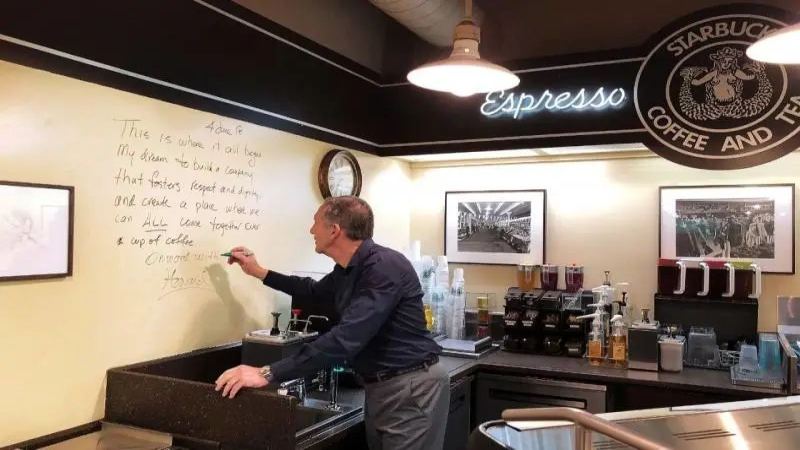
Howard Schultz has returned as Starbucks CEO after Kevin Johnson's retirement, taking over a company facing a US union drive, food safety incidents and a police-related controversy in China, plus cost and sales pressure from rapid store expansion. At the 2022 shareholders' meeting, Starbucks announced equipment upgrades, beverage innovation, pay raises and store growth.
Equipment is central to the plan. Starbucks released the Clover Vertica brewer, deployed in Minneapolis stores and Reserve locations from March 2022, with a goal of all US company-operated stores by 2025, and continues to push the Mastrena II espresso machine. Beverage innovation and raising the coffee standard, especially in cold espresso drinks, sit alongside these upgrades.
Starbucks founder Howard Schultz has returned as CEO following Kevin Johnson's retirement, facing multiple challenges including the US union movement, food safety controversies in the Chinese market, and damage to the brand's image. At the 2022 annual shareholders' meeting, Starbucks announced plans for equipment upgrades, beverage innovation, employee pay raises, and store expansion. This article will review Schultz's transformation strategy after his return, analyze whether he can lead Starbucks out of its predicament in just half a year, and discuss the competitive pressures in the Chinese market.
Starbucks was founded in 1971. After falling into financial difficulties in the late 1980s, Howard Schultz took over the company and served as CEO twice. After nearly three decades of painstaking operation, Starbucks successfully went public and expanded rapidly, ultimately rising to become the world's largest chain coffee brand.
Current CEO Kevin Johnson is about to retire, and a successor has not yet been finalized. Therefore, "Starbucks Dad" Howard Schultz confirmed before this year's annual shareholders' meeting that he would step back in and retake the CEO role.
With this return, Starbucks faces many difficult issues, such as the union movement in the United States and the closely watched Chinese market. Over the past six months, Starbucks China has seen a series of food safety incidents and a controversy over driving away police officers, and its long-accumulated brand image faces the risk of collapse. At the same time, rapid store expansion and supply chain strain have also brought Starbucks dual pressure on costs and sales.
Over the past year, Starbucks has been mired in controversy and pushed to the critical point of transformation. At the recently concluded 2022 annual shareholders' meeting, Starbucks laid out plans for its development over the next few years.
Equipment and Beverages
Starbucks released the new Clover Vertica brewer and continued to promote the Mastrena II espresso machine. Since March 2022, the Clover Vertica brewer began deployment in Minneapolis stores as well as US Starbucks Reserve roasting plants and stores, and the company plans for all US company-operated stores to use the equipment by 2025.
In addition, Starbucks emphasized beverage innovation. While continuing to raise coffee standards, it is especially focusing on cold espresso and plant-based products, the two fastest-growing categories for Starbucks. In the previous fiscal year, cold drinks accounted for nearly 70% of Starbucks' total beverage sales, an increase of 20 percentage points over the past three years.
Employees
Starbucks will invest an additional $1 billion in wages, training, and benefits. Hourly pay will rise by an average of 17% within 18 months, and by summer 2022 the starting wage range will reach $15 to $23 per hour. For partners who have worked at Starbucks for two and five years, tenure pay will increase by 5% and 10% respectively.
To ease labor shortages, Starbucks will hire more than 70 recruiters across various national markets and plans to recruit 5,000 new partners per week.
Stores
Starbucks plans to expand its global store count to 55,000 by 2030.
The premium image that Starbucks painstakingly built and cultivated over more than two decades is now at risk. As Starbucks' second-largest market globally, China has seen local coffee brands continually emerge, while new-style tea drink brands are also diverting Starbucks' consumer base. Calls to "get out of China" are growing louder, and the Chinese market that Howard Schultz once favored is facing more and more challenges.
Starbucks previously stated in an announcement that it would determine its next successor this autumn. This means Howard Schultz may have only half a year to drastically reshape Starbucks. So, before autumn arrives this year, can Howard Schultz help Starbucks complete its transformation on schedule?
Image source: Internet
For professional coffee knowledge exchange and more coffee bean information, please follow Coffee Workshop (WeChat public account: cafe_style)
For more specialty coffee beans, please add the private WeChat Front Street Coffee (FrontStreet Coffee), WeChat ID: kaixinguoguo0925
The above content is compiled by CoffeeHunters, a coffee news website.


