








How does the history of coffee maker drinkware explain the saucer
The saucer under a coffee cup once served a purpose few expect: Europeans poured coffee from the cup into the saucer and sipped it from there. Before the 17th century, cups, spoons, and plates were scarce in the West, so no vessel existed for drinking coffee. Influenced by Turkish customs, coffeehouses brewed large pots and ladled the coffee into bowls.
Pouring into the cup preserved decorum, while pouring into the saucer cooled the drink, since people feared burning themselves. Porcelain reaching the West after Zheng He's voyages changed drinkware, and the handled mug later spread widely. The pairing of cup and saucer reflects a long tug-of-war between elegance and practicality.
The coffee cup and saucer—a pairing we take for granted—actually conceals a fascinating history spanning several centuries. Different cultures have vastly different interpretations of what a coffee saucer is for: some use it to rest a spoon, some to hold bones, but Europeans once had a surprising answer: the saucer was meant for drinking coffee. From the predicament of 17th-century Europe having no dedicated coffee cups, to the revolution in drinkware after Zheng He's voyages brought porcelain to the West, to the widespread adoption of the handled mug, the evolution of the coffee cup and saucer reflects humanity's eternal tug-of-war between elegance and practicality. This article takes you back through this amusing history, complete with hilarious comments from netizens and a hands-on test by Front Street Coffee.
(Q stands for question, A for answer)
Q: What exactly is that saucer under the coffee cup for? Aristocratic take A: To keep hot coffee from damaging the tabletop—it's a coaster. Everyman take A: A place to rest the stirring spoon. Refined type A: When sipping, you lift the cup together with the saucer for a more elegant posture. Guangdong neighborhood take A: For spitting out bones.
Coffee, as a beverage, has a long history among humanity. Drinking methods, etiquette rules, and local customs vary enormously. If you asked a European, you might get this answer: The coffee saucer is for drinking coffee. That's right, you read it correctly—coffee wasn't drunk directly from the cup, but first poured from the cup into the saucer, then sipped into the mouth. Reading this, surely someone will ask: why not just drink the coffee straight from the cup? Or why not serve the coffee in the saucer from the start? Why pour it into the cup first, then into the saucer, before drinking? The reason is that Europeans back then wanted to maintain decorum yet were genuinely afraid of burning themselves! Pouring into the cup was for elegance, and pouring into the saucer was to cool it down.

-Image: "Woman Drinking Coffee" painted by Louis Marin Bonnet Before the 17th century, spoons, cups, and plates were all rare items in the West, so naturally there were no vessels specifically for drinking coffee. At the time, most European coffeehouses, influenced by Turkish coffee-drinking customs, would brew a large pot of coffee and then ladle it into bowls for guests.

- French film Blue Betty Imagine this scene transported to the present: a well-dressed elite professional walks into a specialty coffee shop, picks up a bowl, and drinks coffee—what a down-to-earth picture that would be! Another reason for not drinking coffee from cups was that even if cups existed, they were mostly heating vessels made mainly of tinplate, with excellent thermal conductivity—you can imagine how badly they'd burn your lips. It wasn't until Zheng He's voyages brought Chinese porcelain to Europe that Europeans suddenly realized: this material was simply perfect! Though its thermal conductivity was equally high, it had the advantage of being beautiful and rust-free! So they began imitating Chinese teapots, teacups, and tea bowls to fire cup-and-saucer sets that allowed elegant coffee drinking. However, despite having cups specifically for coffee, their high price and limited production meant only nobles could afford them, while common folk continued using bowls to drink coffee.
- Image: Jean Étienne Liotard However! Even as the vessels became more beautiful, the cup still burned your hand when held and burned your lips when raised—heat-fearing Europeans said: can't hold it long, can't drink it down, and it's not elegant enough! Better to pour it into the saucer to cool, then sip it slowly~ And so the practice of drinking coffee from the saucer was born. This method quickly spread among the common people, who followed the nobility's example and began drinking coffee from saucers. It wasn't until the mid-18th century that European porcelain makers gradually broke away from the mindset of "imitating the East" in vessel design. The coffee cup became independent from the tea bowl's shape, and teacups were influenced in turn, gradually transitioning from common shapes like the beaker to handled cup forms—what we now know as the mug. Materials were no longer limited to pure porcelain and glazed porcelain; prices and materials became increasingly accessible to ordinary people, and more and more coffee cups entered everyday households.
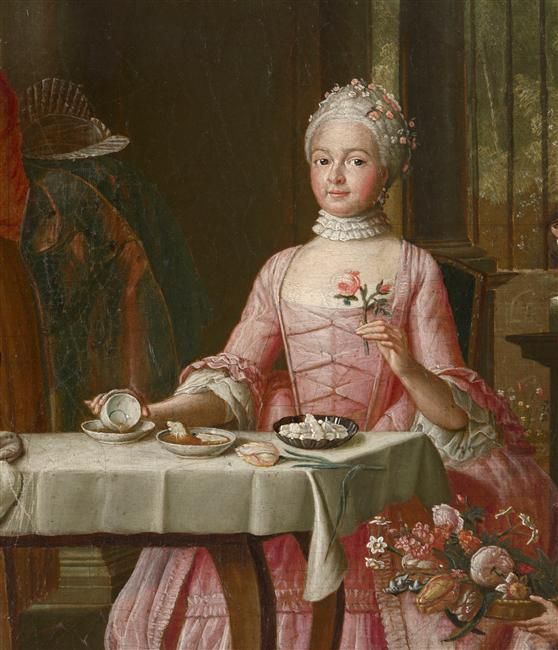
However! Even with handled cups, people seemed long accustomed to drinking coffee from the saucer. Thus, in many paintings and photographs, we can still see both nobles and commoners maintaining the coffee-drinking posture of holding the cup in the right hand and supporting the saucer with the left……
Image: "Woman Drinking Coffee" painted by LOUIS MARIN BONNET
Story's over—now let's look at netizens' comments! The writer nearly laughed to tears!!!!
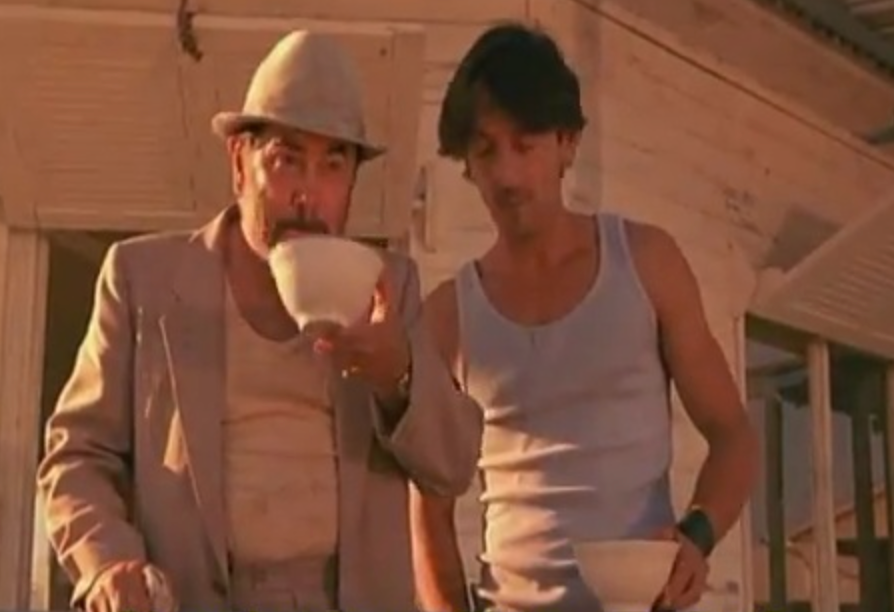
And so! The curiosity DNA kicked in, and the writer's colleague personally tried this drinking method. Elegant~ Aristocratic~ So hot!
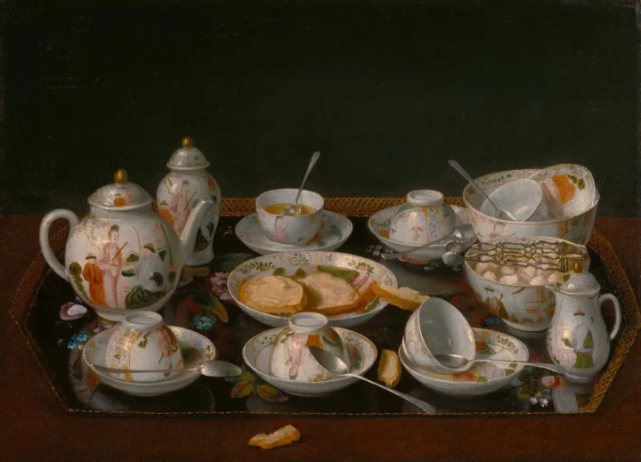
(Front Street Coffee warm reminder: friends who want to experience the retro saucer-drinking method might try Front Street Coffee's everyday beans series—clean in flavor, pleasant in temperature, just pour into the saucer and let it cool a moment to feel that old-time elegance.)
Image source: Internet
The above content is compiled by CoffeeHunters, a coffee news website.


