







Can coffee cultivation succeed outside the coffee belt?
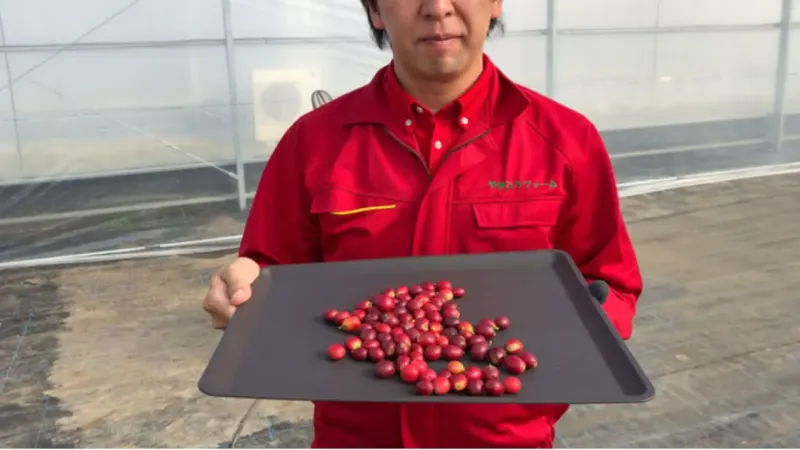
Coffee cultivation has long been limited to the coffee belt between the Tropic of Cancer and the Tropic of Capricorn, and cold-climate Japan had never managed it commercially. Yamako Farm in Okayama City has now brought Typica coffee trees to flower and fruit inside a greenhouse, with Japan's first domestically grown coffee beans expected to be harvested in February 2022.
Okayama sits in southern Japan and is known for warm weather and strong sunshine. The farm previously grew tropical crops such as pineapple, mango, papaya and banana in greenhouses before turning to coffee, which had failed repeatedly. Owner Kosuke Yamamoto also launched the Japan Organic Coffee Project, offering saplings and technical support to people who want to grow or research coffee.
Coffee cultivation has long been concentrated in the coffee belt between the Tropic of Cancer and the Tropic of Capricorn, and Japan, with its cold climate, had never achieved commercial cultivation domestically. However, after years of exploration, Yamako Farm in Okayama City has finally succeeded in getting Typica coffee trees to flower and bear fruit in a greenhouse, and is expected to harvest Japan's first domestically grown coffee beans in February 2022. Farm owner Kosuke Yamamoto has also launched the "Japan Organic Coffee Project," providing saplings and technical support to those interested in cultivation. Can this breakthrough open up a new path for Japan's coffee industry? This article will take you through Yamako Farm's cultivation journey, technical details, and future prospects.
Although the path to growing coffee domestically in Japan has been fraught with setbacks, people have not given up easily. They have continued to seek out warmer areas and have adopted various cold-protection measures to address the severe winter cold, striving to create a suitable growing environment for coffee trees.
Their perseverance paid off, and they finally succeeded in cultivating coffee trees and even getting them to bear fruit. Recently, Yamako Farm in Okayama City, Japan, announced that its coffee trees had successfully flowered and fruited, and the fruit is currently ripening. The first batch of domestically grown coffee beans in Japanese history is expected to be harvested in February this year.
Building on the success of this harvest, the person in charge of Yamako Farm planned the "Japan Organic Coffee Project." The project aims to provide coffee saplings and cultivation technical support to those who wish to grow or research coffee in Japan, while also recruiting more technical talent to join the farm's coffee cultivation work.
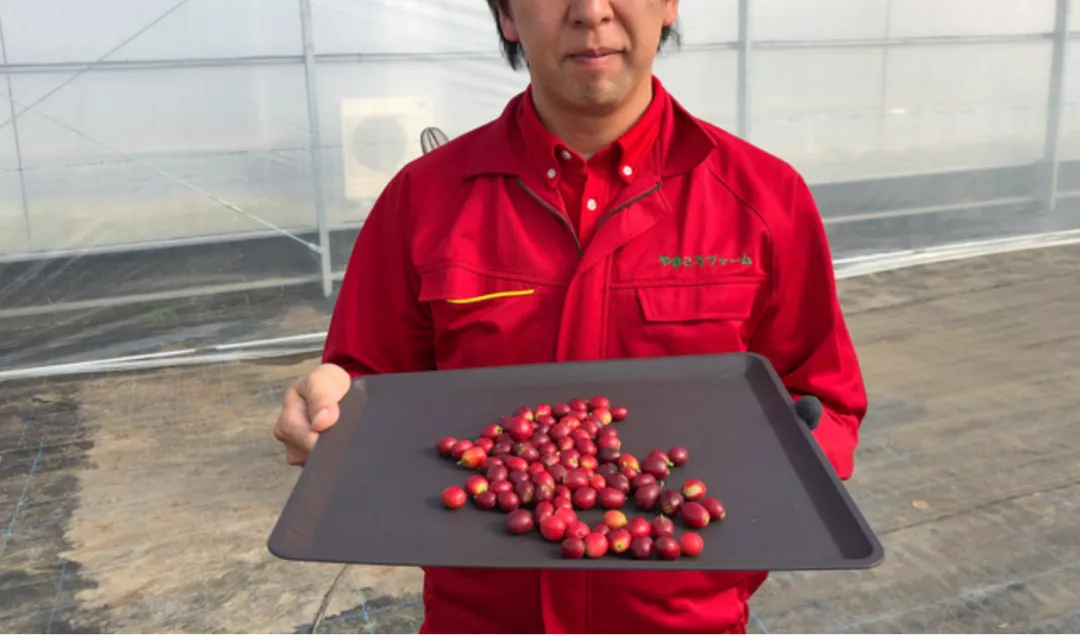
Okayama City is located in southern Japan, with a warm climate and abundant sunshine, and is known as the "Land of Sunshine." Yamako Farm initially did not research coffee cultivation, but instead tried to grow tropical crops such as pineapple, mango, papaya, and banana domestically in Japan. They introduced greenhouses and, after some research, successfully grew papayas and bananas. With these successes, the farm owner turned his attention to domestic coffee cultivation, which had failed many times before.
- Kosuke Yamamoto and his coffee trees
Farm owner Mr. Kosuke Yamamoto said that as the world's fourth-largest coffee-consuming country, Japan has deep expertise in coffee roasting and brewing, yet no one had succeeded in coffee cultivation. So, after successfully growing papayas and bananas, Kosuke Yamamoto introduced Typica coffee trees and planted them in the farm's greenhouse. Coffee trees dislike prolonged exposure to sunlight, and the Okayama region has long hours of sunshine, so multiple solar panels were installed on the greenhouse roof, which both supply electricity and provide shade for the coffee trees.

The greenhouse is only an auxiliary means for the successful cultivation of domestic Japanese coffee beans; the key lies in their years of in-depth research on coffee cultivation. In addition to exploring basic agronomic factors such as coffee varieties, climate, environment, water quality, and soil, they even studied earthworm species in detail. Different species of earthworms affect the soil to varying degrees, changing soil pH, and soil pH in turn affects the growth and flavor expression of coffee cherries.
Mr. Kosuke Yamamoto hopes that this success will help more businesspeople see the value of domestically produced Japanese coffee and extend cultivation techniques to rural areas of Honshu. If more people participate in the domestic coffee cultivation project, coffee farm management is expected to become a business that creates new industries and secures human resources.
This batch of coffee beans from the Okayama region will be exhibited at Kansai Agriculture Week in March 2022 and Tokyo Agriculture Week in October 2022. In the future, the farm will also open to the public so that more Japanese people can learn about the domestic coffee cultivation process.
Generally speaking, however, areas beyond the Tropics of Cancer and Capricorn (the coffee-growing belt) and places with frost are not suitable for growing coffee. Therefore, large-scale coffee cultivation in Japan remains quite difficult, since no farmer is willing to run a loss-making business.
But this is only the current speculation; perhaps one day in the future, we may still have the chance to taste Japanese-grown coffee beans.
Image source: Yamako Farm official website
For professional coffee knowledge exchange and more coffee bean information, please follow Coffee Workshop (WeChat public account: cafe_style)
For more specialty coffee beans, please add the private WeChat of Front Street Coffee (FrontStreet Coffee), WeChat ID: kaixinguoguo0925
The above content is compiled by CoffeeHunters, a coffee news website.


