







How did Mandheling and Kopi Luwak fare at Indonesia's first COE?
Indonesia hosted the Cup of Excellence for the first time in 2021, becoming the 14th country to hold the event. The competition selected 26 winning lots, with the champion scoring 89.82 and the runner-up 89.04, neither breaking 90 points, an honest reflection of the country's current specialty level. It marked Indonesia's entry into a conversation it had long sat out.
Indonesia is the world's fourth-largest coffee producer and is known for the herbal, spicy flavors of Mandheling and for Kopi Luwak, yet it held no seat at the specialty table because of variety, altitude, and cultivation limits. The winning flavor notes now include cranberry, orange, and cherry alongside clove and chocolate, a shift Front Street Coffee expects to take at least a decade.
In 2021, Indonesia hosted the Cup of Excellence (COE) for the first time, officially becoming the 14th country to hold the event. As the fourth-largest coffee producer in the world, Indonesia has long been known for the rich, herbal, and spicy flavors of Mandheling and Kopi Luwak, yet it has remained silent in the specialty coffee conversation. This year's competition selected 26 winning lots, with the champion scoring 89.82 and the runner-up 89.04, neither breaking the 90-point mark, honestly reflecting the current level of Indonesian coffee. Notably, the flavor descriptions of the winning lots included not only traditional spice, clove, and chocolate notes but also fruit tones such as cranberry, orange, and cherry, hinting that Indonesian coffee is quietly shifting. Front Street Coffee believes this transformation will take at least a decade, but the signal is already clear.
In 2021, Indonesia reached a milestone—hosting the Cup of Excellence for the first time.
The Cup of Excellence is the world's most prestigious coffee auction competition, with the aim of selecting the finest-quality coffee beans of the year from participating producing countries. Professional cuppers from around the world rigorously evaluate the submitted samples, and only coffees scoring above 87 in cupping are eligible for auction (usually 30 spots), after which these beans are publicly auctioned globally. This competition plays a significant role in driving up coffee quality in producing countries.
If that definition sounds a bit convoluted, here's a simpler way to understand it: being able to host a COE competition itself shows that the producing country is capable of producing "specialty coffee beans" that earn international recognition. However, note that you can't infer the reverse—some producing countries that don't host COE still produce internationally recognized specialty coffee, such as Panama, which has its own green bean competition, BOP.
Indonesia hosting its first COE competition in 2021 marked its official entry as the 14th COE host country. COE and specialty coffee are inextricably linked. In the past, when it came to specialty coffee, Indonesia often had no seat at the table, because whether in terms of coffee varieties, growing altitude, or cultivation management, Indonesia held no advantage. When Mandheling and Kopi Luwak became globally famous, the concept of specialty coffee had not yet spread widely. It's fair to say that Indonesian coffee is good coffee from an older era, but by today's specialty coffee standards, it doesn't quite measure up.
Flavor descriptions of Indonesian coffee often revolve around words like herbal, spice, wild, rich, earthy, and uniquely funky. It is a single-origin coffee bean with truly strong regional distinctiveness. At least among the coffees you'd drink in a café, Indonesian beans are the easiest to recognize—that unique spice and herbal character simply cannot be imitated by beans from other regions.
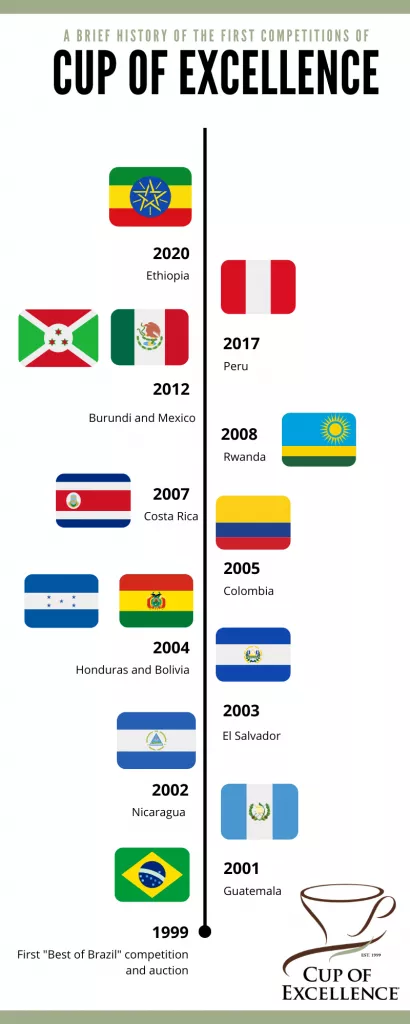
Why do we say that after Indonesia hosts COE, you may never again taste a single-origin coffee with pronounced bitterness? Let's first look at the flavor descriptions of this year's winning beans.
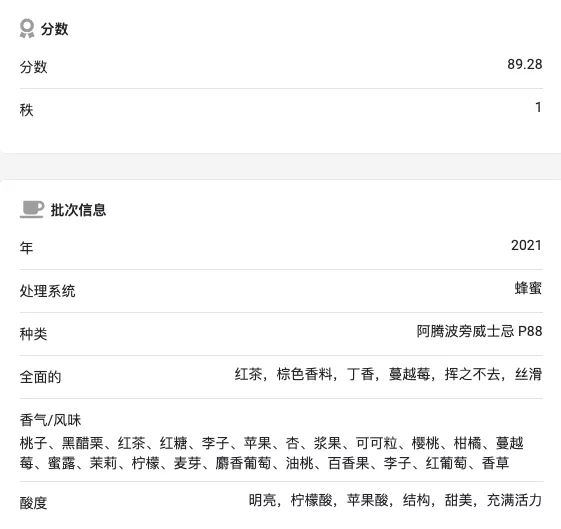
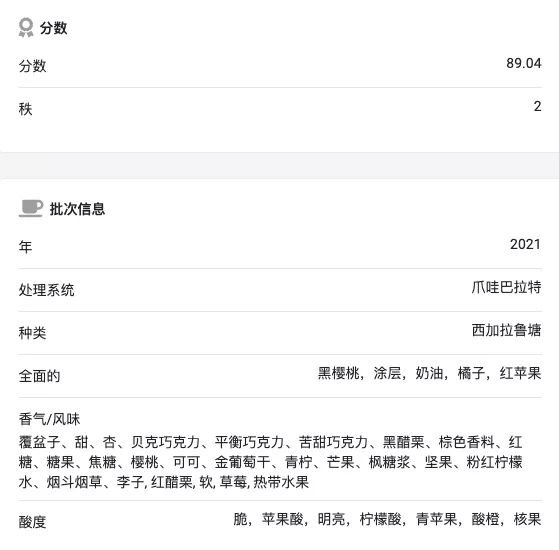
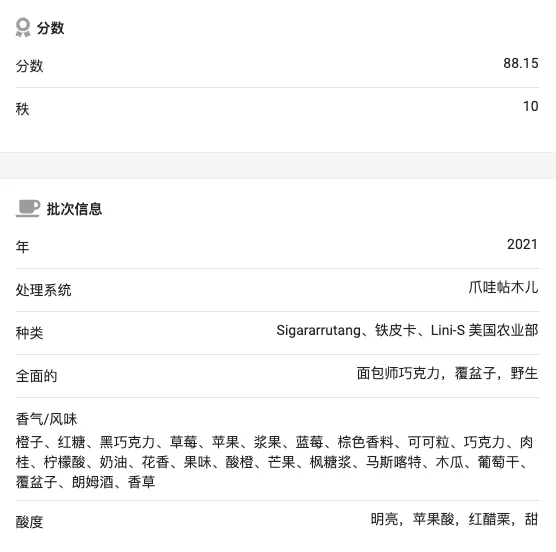
A total of 26 winning lots were selected this year—too many to list, so here we'll show just a few representative ones: 1st place, 2nd place, 10th place, and 26th place. From the first and second places, you can see the true standard of Indonesia's top coffee in 2021. COE enjoys relatively high credibility, and the champion scored 89.82 while the runner-up scored 89.04, neither exceeding 90, which faithfully reflects the current state of Indonesian coffee.
Second, looking at the flavor descriptions of these selected beans, you'll find both the signature flavors of Indonesian beans—"spice, clove, chocolate, wild"—and fruit tones like "cranberry, orange, cherry." This is indeed somewhat different from the Indonesian coffee we encounter day to day.
Third, comparing the flavor descriptions across different rankings, the higher-ranked beans lean more toward acidic fruit expressions, while the lower-ranked ones lean toward fruity sweetness and sugar-like flavors. Front Street Coffee speculates this is related to the weighting of the acidity category in the COE scoring system. From this, one can also see that in today's mainstream scoring systems, coffee lacking acidity is at a clear disadvantage.
Indonesia is the world's fourth-largest coffee producer and the most representative country for bitter coffee. Hosting COE shows Indonesia's intention to move into the specialty coffee realm, which can both motivate local farmers and help guide specialty coffee cultivation concepts. But at the same time, it exposes the trend of Indonesian coffee flavors shifting—a transformation process that will take at least a decade.
Some may think this is needless worry—"doesn't a certain internationally renowned coffee chain brand still insist on dark-roasted coffee?"
But think back: 40 years ago, the whole world drank dark-roasted coffee, and today we are simply in the midst of this subtle, gradual transformation.
The above content is compiled by CoffeeHunters, a coffee news website.


