







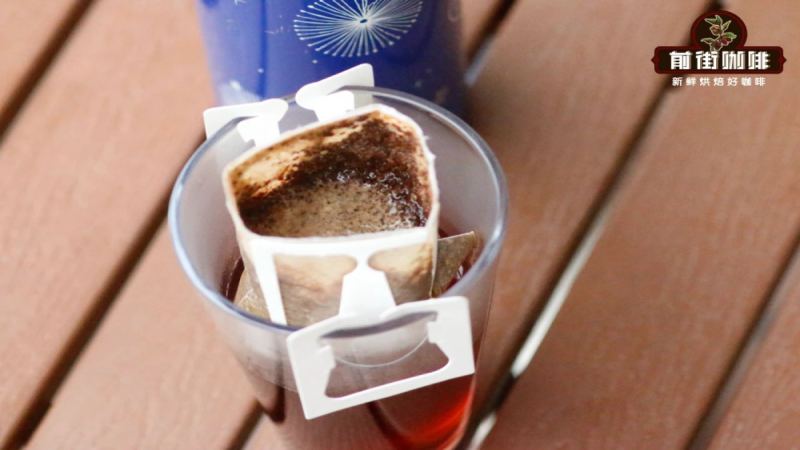
What are the drawbacks of coffee in drip bag form?
Drip bag coffee does count as black coffee: beans are pre-ground, sealed in a filter bag, and extracted with hot water, then drunk plain or with milk. Front Street drip bags are standardized at 10g and brew roughly 130 to 150ml, about one serving. The main drawbacks are lighter body than pour-over and a woody taste if the bags sit too long.
The format was first launched in 1990 by Yamanaka Sangyo of Japan, modeled on teabags with strings, and patented and brought to market on a large scale by 2002. It needs only hot water and a cup, and Front Street advises drinking the bags within a month of receiving them, choosing among fruity acidity, full-bodied, and winey aroma types.
Is drip bag coffee really considered pure black coffee? What are the benefits and drawbacks of drinking it long-term? This article will systematically walk you through the origins, brewing characteristics, pros and cons of drip bag coffee, as well as bean selection suggestions for different flavor types. Drip bag coffee is black coffee made by pre-grinding coffee beans, placing them in a filter bag, and extracting with hot water—it can be drunk straight or mixed with milk for flavor. Front Street drip bags are made at 10g per bag, yielding about 130–150ml of coffee liquid, exactly one serving. It was born in Japan in 1990, with its design inspired by teabags with strings; after 2002 it was patented and brought to market. All you need is hot water and a cup to enjoy it, and there is a rich variety to choose from, but the flavor is not as full as pour-over or freshly ground coffee, and if stored too long it may develop a woody taste. Front Street recommends drinking it within one month of receiving it, and choosing according to types such as fruity acidity, full-bodied, and winey aromas.
For more specialty coffee knowledge, please follow our WeChat public account: Front Street Coffee (FrontStreet Coffee)
Let's answer directly first: drip bag coffee does indeed fall under the category of black coffee. The method is to pre-grind coffee beans into powder, put them into a filter bag, and then extract the flavor components from the coffee with hot water—what you end up with is a cup of black coffee, which can be drunk pure or mixed with milk. Front Street's drip bag products are standardized at 10g per bag, brewing roughly 130–150ml of coffee liquid, just enough for one person to enjoy.
Who invented drip bag coffee?
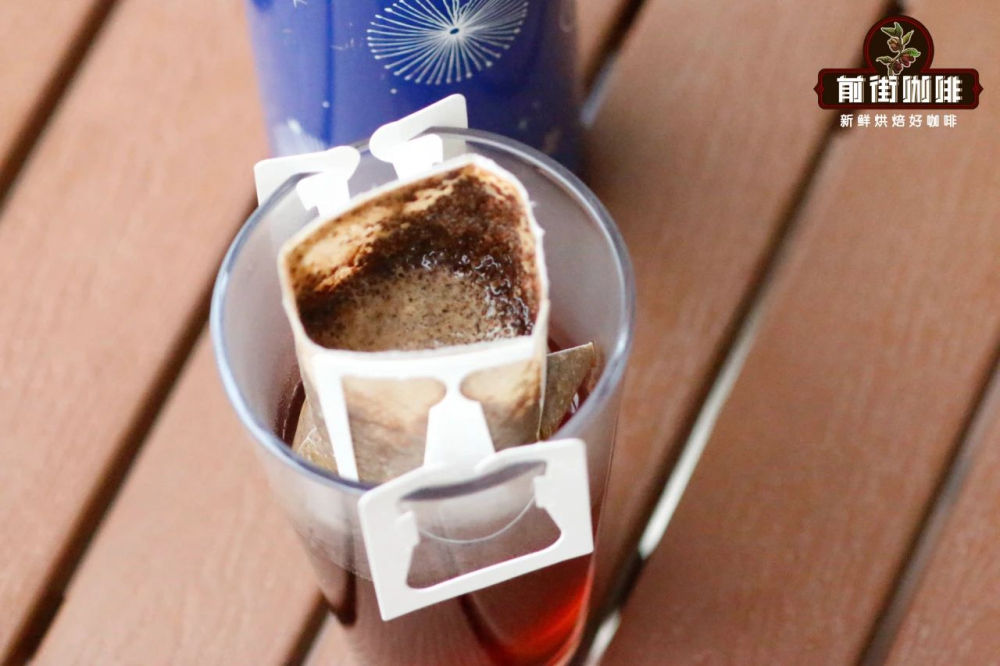
Drip bag coffee was first launched in 1990 by Yamanaka Sangyo Co., Ltd. of Japan, with its concept derived from teabags with strings. The inventor wanted to imitate the effect of pour-over drip filtration, so coffee powder was pre-placed into a non-woven filter bag, and the paper tabs on both sides of the filter bag could suspend the coffee packet right in the center of the cup. Because these two paper tabs hook onto the rim of the cup like little ears, people got into the habit of calling it "drip bag coffee."
By 2002, the Japanese applied for a patent on the drip bag coffee packet and brought it to market on a large scale. This lightweight and convenient design quickly became mainstream, and the same is true in the domestic market.
To brew a drip bag coffee packet, you only need to boil a kettle of hot water and prepare a cup, and you can easily get a cup of rich, aromatic coffee. After drinking, just discard the coffee grounds together with the filter bag, saving many troublesome steps. As the specialty coffee industry continues to mature, coffee bean varieties have become increasingly diverse, and all these beans can be made into drip bags, so the range of choices is very wide. For example, the dozens of single-origin coffees on Front Street's bean list can all be made into drip bags, enabling coffee freedom in various scenarios such as the office, the park, and at home.
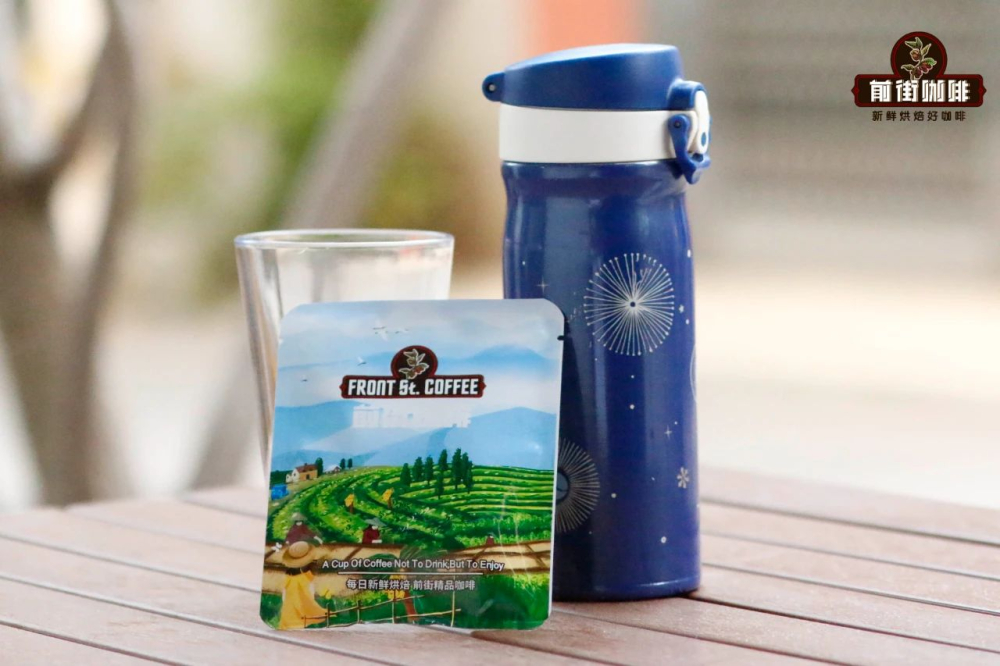
The advantages and shortcomings of drip bag coffee
Whether in the office, at home, or outdoors, as long as you have hot water and a cup on hand, you can easily get a cup of rich, aromatic coffee, and it saves quite a few cumbersome steps. With the development of the specialty coffee industry, coffee bean types are diverse, and all can be used to make drip bags, so the choices are highly varied.
Compared with pour-over extraction, drip bags don't require complex equipment, and the pouring technique, timing, and ratio don't need to be controlled as strictly as with pour-over—just make sure the hot water is hot enough and the ratio is appropriate. But precisely because the operation is so "casual," the flavor expression of the coffee is usually not as rich and varied as pour-over coffee; furthermore, since drip bags are pre-ground and bagged, the aroma is naturally not as full as freshly ground coffee. If stored too long, beyond a few months, you might even taste some woody notes. Therefore Front Street recommends drinking drip bags within one month of receiving them.
Many office workers ask Front Street to recommend some coffee beans suitable for making drip bags. The more than fifty single-origin coffee beans from different producing regions on Front Street's bean list can all be made into drip bag coffee packets, and everyone can choose according to their own preferences:
1. Refreshing fruity acidity type
For friends who prefer acidity, Front Street suggests you simply focus on descriptions of fruity acidity or floral aromas. For example, Front Street's Guodingding Drip Bag, Front Street's Washed Geisha Drip Bag, Front Street's Little Tomato Drip Bag, and Front Street's Butterfly Drip Bag, which have white floral and lemon-citrus notes; you can also choose those whose flavor descriptions include words like dried fruit, tropical fruit, and rose fragrance, such as Front Street's Baha Drip Bag, Front Street's Red Cherry Drip Bag, and Front Street's Huakui Drip Bag.
2. Full-bodied nutty type
However, Front Street has also noticed that most friends still prefer the type with a rich mouthfeel and full-bodied flavor. If you are also this type, Front Street would give priority to recommending medium-dark roast options, such as Front Street's Queen's Estate Drip Bag Coffee, Front Street's Bird of Paradise Drip Bag Coffee, Front Street's Golden Mandheling Drip Bag Coffee, Front Street's Blue Mountain Drip Bag Coffee, and Front Street's Huilan Drip Bag Coffee. Their flavor descriptions include nuts, chocolate, caramel, cream, and cocoa; the brewed drip bag coffee has low acidity, rich roast aromas, and a very full mouthfeel.
3. Rich winey aroma type
Of course, many people, like Front Street, are not satisfied with a single flavor and mouthfeel, but hope to taste richer layers in a drip bag. If you like winey coffee, we recommend Front Street's Sherry Drip Bag, Front Street's Mozart Drip Bag, Front Street's Strawberry Candy Drip Bag, and Front Street's Xizhua Drip Bag; if you prefer fruity aromas, you might try Front Street's Dorothy Drip Bag and Front Street's Baha Drip Bag.
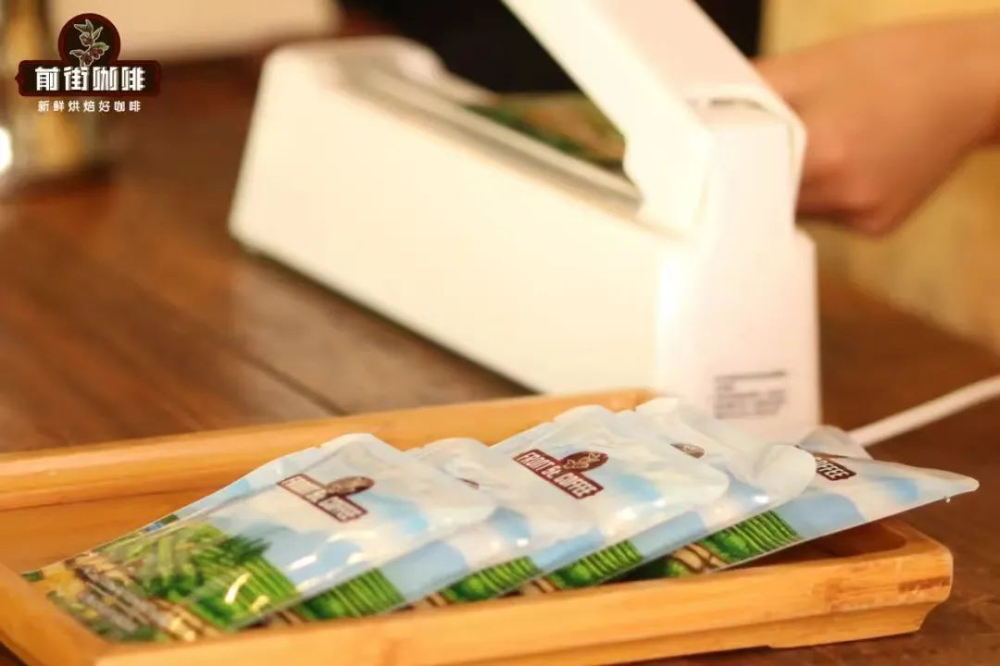
In order to preserve the coffee's original flavor as much as possible, the coffee powder used in drip bag coffee is usually ground from freshly roasted coffee beans. The coffee beans shipped by Front Street are all freshly roasted within 5 days; if made into drip bag coffee, they are generally at 4–5 days after roasting when received, just the right time to start brewing and drinking. Front Street recommends drinking them as soon as possible after receiving them, otherwise storing too long can easily cause the coffee aroma to dissipate. If you want to taste coffee with the fullest flavor, Front Street recommends buying whole beans and grinding and brewing fresh, for better flavor layers.
Excessive coffee intake may cause physical discomfort
Our most common reason for drinking coffee is to refresh the mind and wake up. A cup of drip bag coffee in the morning can help the brain get into gear. Moreover, drip bag coffee is pure black coffee, different from milk-added latte coffee—it contains no calories, so drinking it carries no burden and is unlikely to make you gain weight.
Black coffee can also promote the body's metabolism, with quite a few benefits. For example, it can relieve facial puffiness—if you ate too much high-oil, high-salt, high-sugar food the day before and your face is swollen, you can have a cup of coffee to reduce the swelling. Drinking it before exercise can also improve fat-burning efficiency and speed up the weight-loss process. But drip bag coffee should not be drunk in excess, because consuming too much caffeine may cause palpitations, dizziness, and other conditions, so coffee should be drunk in moderation.
The above content is compiled by CoffeeHunters, a coffee news website.


