







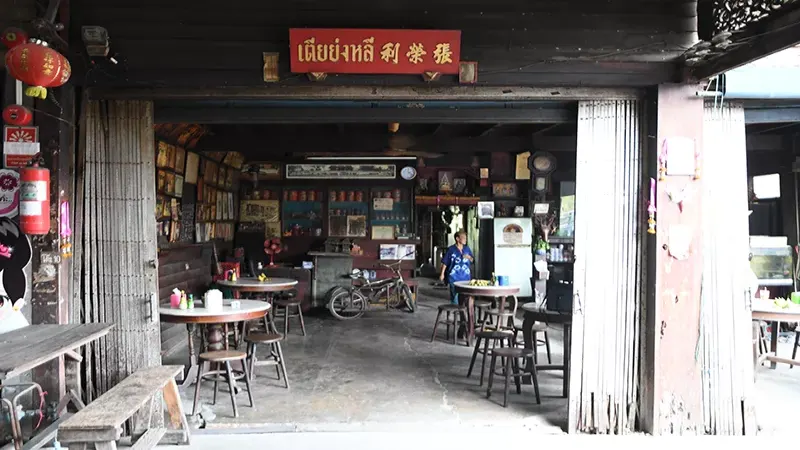
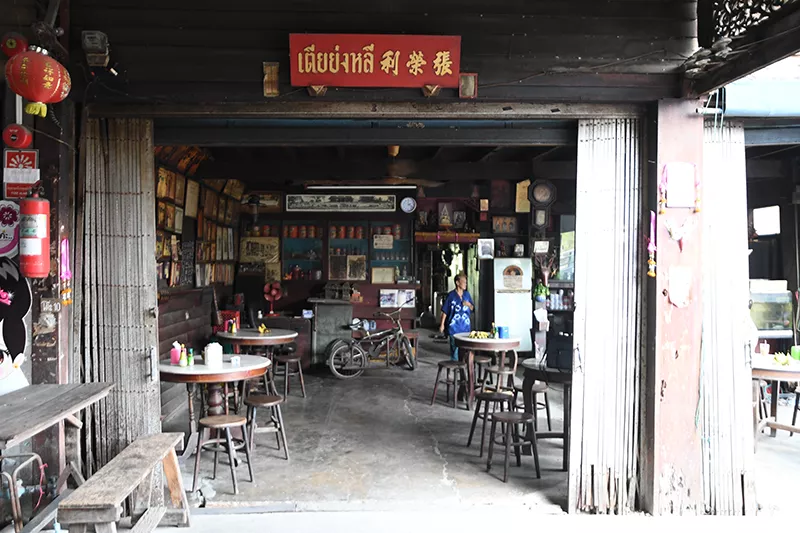
How does traditional coffee survive in a specialty coffee era?
In Pathum Thani Province, Thailand, a café named Zhang Lirong has served traditional coffee for 117 years, now run by third-generation owner Anancha. It uses charcoal-roasted Robusta, a stainless steel pot, and a cheap drip filter spoon, with no specialty beans, pour-over, or espresso machine. A cup sells for around ten baht, and the menu is written in Teochew dialect.
Anancha's grandfather arrived from Teochew around 1900, sold coffee beans at a canal market, and opened the shop in 1905 after buying riverside property. Regulars still stop by on floating market visits. The article places this alongside other enduring methods such as Hong Kong charcoal-roasted coffee, where brewing craft rather than modern extraction carries the heritage.
As the specialty coffee wave sweeps the globe, with pour-over, espresso, and golden cup extraction becoming the center of conversation, is there still anyone willing to pause for a cup of the most traditional coffee? In Pathum Thani Province, Thailand, a century-old café named Zhang Lirong quietly tells another kind of coffee story with a stainless steel coffee pot, a cheap drip filter spoon, and three generations of perseverance. There are no specialty beans here, no complex techniques—only charcoal-roasted Robusta, a humble menu written in Teochew dialect, and the warmth of a ten-baht cup. This article takes you into this century-old Siamese establishment, to feel the cultural heritage that transcends flavor behind traditional brewing methods, and to glimpse similar steadfastness such as Hong Kong charcoal-roasted coffee.
Whenever coffee comes up, many people immediately launch into heated discussions about brewing methods and flavors, while for those non-modern mainstream brewing methods, they often adopt an attitude of "one look and you know it'll over-extract" or "nothing worth talking about"... In today's world where specialty coffee reigns supreme, who is still willing to savor a cup of the most traditional coffee?
A simple stainless steel coffee pot, a seemingly cheap drip filter spoon, an elderly man past his sixtieth year, guarding this traditional Thai café with a 117-year history. There are no specialty coffee beans here, no pour-over, no espresso machine, and no ornate decor, but every item in the shop silently tells the story of a century of time.
This century-old Siamese café located in Pathum Thani Province in northwestern Thailand is named "Zhang Lirong." "Lirong" in Guangdong Teochew dialect means "a house full of good stories," and the founder was a Teochew man who came to Siam to do business a hundred years ago.
According to current owner Anancha's recollection, his grandfather came to northwestern Thailand around 1900, initially selling coffee beans at a canal market. After saving up, he purchased a property on the riverbank and formally opened this café in 1905. By the time it reached Anancha, it was already the third generation.
Because this place carries the memories of several generations of local residents, many people make a point of stopping by for a cup when they visit the floating market. Anancha says the coffee beans used in the shop all come from Robusta varieties grown in southern Thailand. Every morning, he rises early to prepare the charcoal fire, then begins roasting the coffee beans. The entire roasting process usually takes 30 to 50 minutes, during which he must stay by the fire without leaving for even a moment, adjusting the heat at any time to ensure the beans achieve a deep roast without developing a burnt, bitter taste.
After roasting is complete, the coffee beans are ground to the appropriate coarseness, stored in metal tins, and then the shop can open for business. The shop doesn't offer many coffee varieties, all labeled in Teochew dialect. For example, "suang kao 双口" refers to a mix of hot and cold coffee; "gao baht 九铢" (baht is pronounced "baht" locally) is a coffee with red syrup added; "O liang 乌凉" is black coffee with ice added...
- kopi suang kao -
The prices are even lower! All coffees sell for just 10 baht (about 1.9 RMB), and takeaway is 15 baht (about 2.8 RMB). Whether before or after the pandemic, this shop has stuck to these prices. Anancha says he doesn't plan to raise prices, because this income is already enough to sustain life, and the neighbors around have long grown accustomed to these prices. For him, running the café is more about continuing the legacy of the older generation and serving customers the most traditional local Thai coffee.
As for the future of this century-old café, Anancha admits he has no concrete plans. If the next generation is willing to take over, whether direct or indirect relatives, he would be happy to pass it on. But if his descendants feel it's a burden, he won't force them—though he himself will keep running it until he can no longer work.
Every item in the shop has its own story, and the photos on the wall record the experiences of several generations. Century-old tables and chairs, a century-old coffee stove, century-old roasting techniques, century-old brewing skills—all of this vividly embodies the most traditional Chinese concept of "inheriting the father's trade." Every cup of seemingly ordinary coffee tells the story of the word "inheritance."
The owner candidly admits that running a century-old café is not easy. Before the internet age, the café mainly served neighborhood customers, and the enthusiastic support of the neighbors helped it survive the financial crisis, as well as natural disasters big and small. Then in 2005, the owner helped a group of hungry young people...
To thank the owner for his kindness, these young people promoted this century-old shop through social media, and soon attracted more young people to come and "check in." The originally low-key café quickly became famous nationwide from northwestern Thailand in a short time, and many foreign tourists also made special trips—for a cup of the most traditional local Thai coffee, and to experience this cultural heritage.
Besides Thailand, many shops in Hong Kong, China still preserve traditional coffee brewing methods and roasting techniques. Charcoal-roasted coffee, adding white liquor during roasting, stir-frying coffee in an iron wok, and so on—every shop that insists on selling traditional coffee has its own unique understanding and skill in coffee bean roasting. No complex brewing methods—just a filter, a pot, and that's how they've supplied generations with their own signature coffee. They all look like a cup of black coffee, and even with sugar and milk added, you can taste a different charm.
Perhaps a cup of traditional coffee in many people's eyes is "bitter beyond belief" or "just over-extracted," but few have truly tasted it, or are willing to try.
Don't let appearances limit your exploration of coffee. What's truly interesting is often hidden in those traditional coffees that don't conform to modern specialty coffee's "golden cup extraction theory" and "roasting curves."
Image source: Internet, Today Thailand
For professional coffee knowledge exchange and more coffee bean information, please follow Coffee Workshop (WeChat public account: cafe_style)
For more specialty coffee beans, please add the private WeChat of Front Street Coffee (FrontStreet Coffee), WeChat ID: kaixinguoguo0925
The above content is compiled by CoffeeHunters, a coffee news website.


