







How Does an Edible Coconut Jelly Straw Compare for Coffee Drinkers?
A team led by Academician Yu Shuhong at the University of Science and Technology of China developed an edible straw made from bacterial cellulose and sodium alginate, the materials behind nata de coco. Its strength, modulus, and toughness are more than twice those of paper straws, it is thinner, and it can be produced in different colors.
Buried in soil, the straw nearly disappears in 45 days and fully degrades in 60 days, according to the research team. The work answers a common problem: paper straws soften in drinks and PLA straws cannot handle high temperatures. The same questions about raw materials and processing come up when people ask what is raw coffee and how it is handled before roasting.
In recent years, with the advancement of plastic bans, plastic straws have gradually exited the food and beverage scene, replaced by paper straws and PLA straws. However, paper straws easily become soggy, and PLA straws cannot withstand high temperatures, greatly diminishing the consumer experience. Academician Yu Shuhong's team at the University of Science and Technology of China took a different approach, using bacterial cellulose combined with sodium alginate to develop an edible nata de coco straw. Its strength, modulus, and toughness are more than twice those of paper straws, it is thinner, and it can be made in different colors. Buried in soil, it nearly disappears in 45 days and completely degrades in 60 days. Can this new material save the afternoon tea happiness of office workers? This article provides a detailed interpretation.
Have you noticed that when buying drinks out nowadays, the once-common plastic straw is nowhere to be seen, and paper straws and PLA straws have become the mainstream alternatives? But paper straws soften easily in water, and PLA straws can't handle high temperatures, so people have been racking their brains to find a more satisfying straw solution.
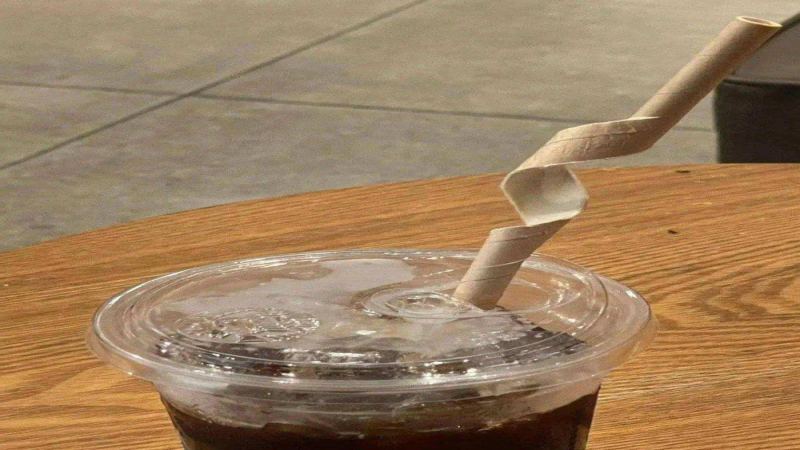
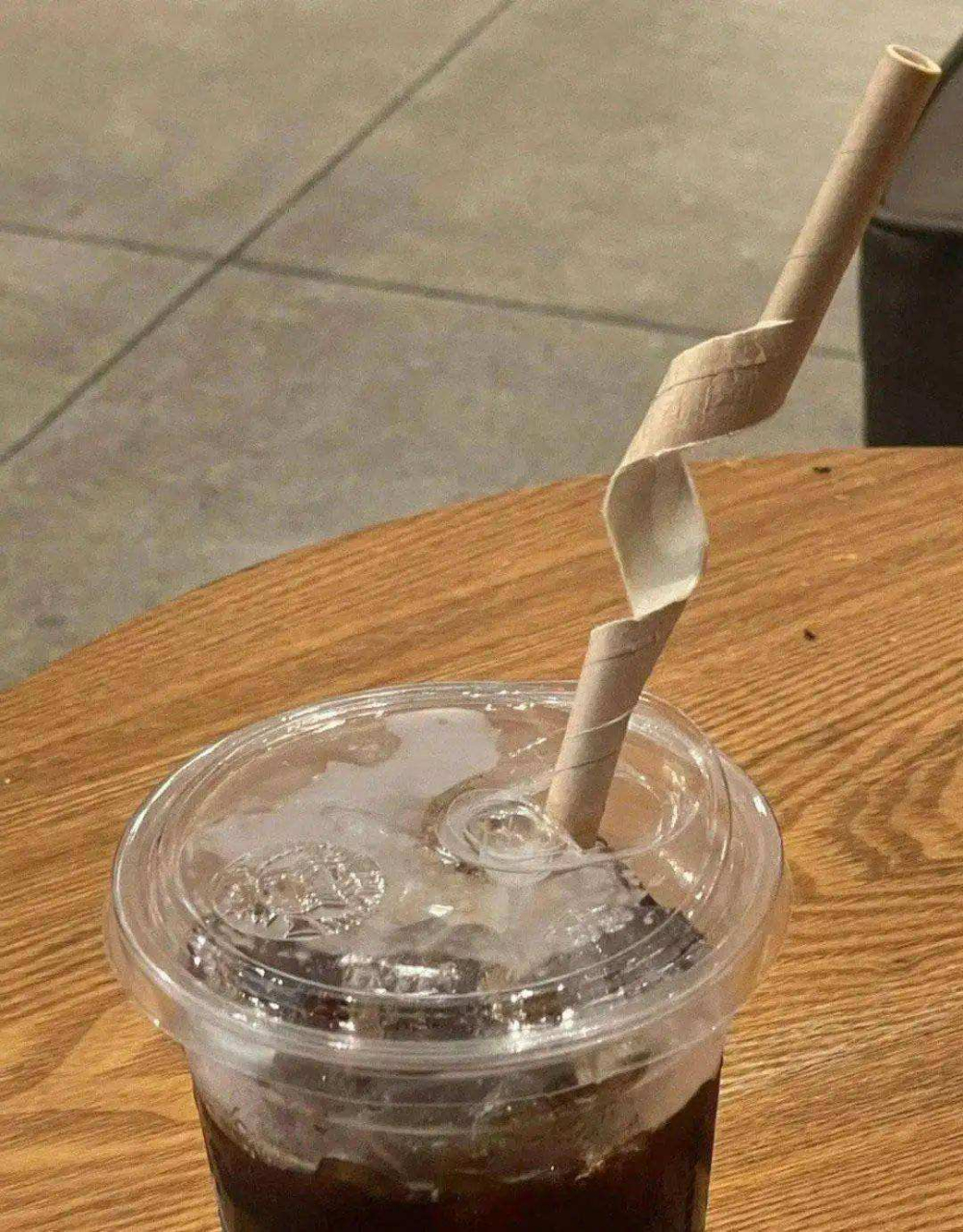
(Sometimes while you're drinking, the straw just gives up...)
Thinking back to drinking milk tea as a kid, nata de coco was everyone's favorite topping. Have you ever thought that nata de coco could actually become the raw material for straws? Recently, the team led by Academician Yu Shuhong at the University of Science and Technology of China successfully developed a nata de coco straw.
These days most shops have switched to paper straws. For hardworking office workers, being able to hold a cup of sweet milk tea or rich coffee during afternoon tea is one of the few comforts. The first couple of sips go smoothly, but after letting it sit for a bit and then sucking hard, what should be a pure liquid drink takes on a solid mouthfeel—a firm, hefty mouthful of paper. The happiness of office workers is completely ruined by this anti-human invention of the paper straw.
The arrival of the nata de coco straw happens to save the happiness of office workers. Academician Yu Shuhong's team adopted a strategy of biosynthesizing bacterial cellulose and compositing it with the seaweed extract sodium alginate to prepare a high-performance "edible" bacterial cellulose-based straw. The specific method is: first press bacterial cellulose into a thin film, then coat the film surface with a thin layer of sodium alginate; next, roll the sodium alginate-coated film into a tube shape and immerse it in a calcium lactate solution for crosslinking; finally, after washing and drying, the "nata de coco straw" is complete.
When people hear the words "nata de coco," they often default to that sweet-and-sour taste. But this "nata de coco straw" will probably disappoint. The researchers said that although the material is edible, that doesn't mean it's delicious—it can only be considered a safe, edible straw. This straw's strength, modulus, and toughness are all more than twice those of paper straws, meaning that under the same performance requirements, the "nata de coco straw" is thinner than paper straws. In addition, it can be made in different colors. Moreover, this bacterial cellulose-based straw nearly disappears after 45 days buried in soil and can fully integrate into the soil after 60 days.
In the comments section, many netizens are eagerly anticipating this "nata de coco straw," hoping for mass production soon to replace the paper straws that spike your blood pressure the moment you use them. Some even shared that they once accidentally inhaled paper fragments into their windpipe, which was very dangerous.
Many netizens deeply detest paper straws, with some even calling for paper straws to be banished from the food industry forever. This shows that although paper straws are environmentally friendly, they are extremely anti-human. It seems that in some respects, human joys and sorrows are indeed connected.
The ultimate tool for milk tea was originally that straw, but the arrival of paper straws turned a sharp tool into a blunt one. Now, with the birth of a new material, straws are expected to once again become the ultimate tool for milk tea.
Image source: Science Net, Weibo
For more coffee bean information, please follow Coffee Workshop (WeChat public account: cafe_style) For professional coffee knowledge exchange, please add WeChat ID: kaixinguoguo0925
The above content is compiled by CoffeeHunters, a coffee news website.


