







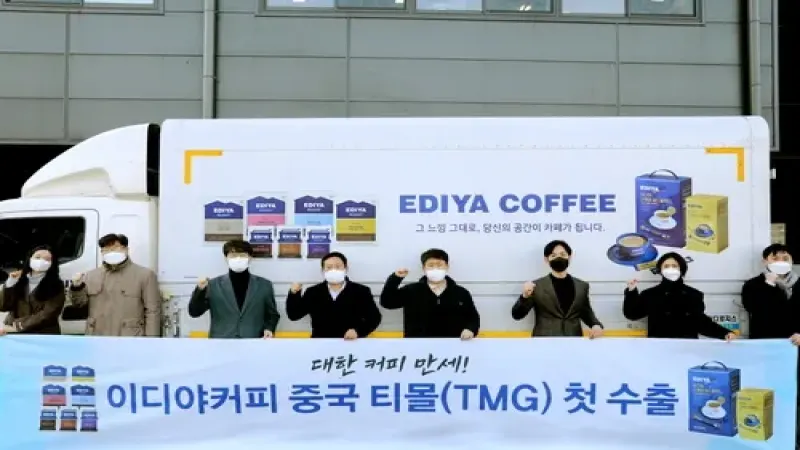
Can an online coffee store entry rebuild EDIYA in China?
EDIYA COFFEE, South Korea's largest chain by store count, announced it will open a Tmall flagship store within a month, listing instant coffee, capsule coffee, and blended tea. It is a third attempt at the Chinese market, after a Beijing branch in 2005 that closed three years later and a 2018 return plan shelved amid competition from Luckin and Manner.
The company has already exported instant coffee to Mongolia, Australia, and the United States, and views Chinese e-commerce as a way to reach more overseas buyers. Instant coffee still held 52.4 percent of China's coffee market as of 2020, though analysts project freshly ground coffee will pass 51 percent by 2023 while instant shrinks below 40 percent.
EDIYA COFFEE, the chain coffee brand with the largest number of stores in South Korea, recently announced that it will officially launch on Tmall within a month, focusing on products such as instant coffee, capsule coffee, and blended tea. This is not the brand's first foray into the Chinese market—as early as 2005, it established a branch in Beijing, but withdrew three years later due to lukewarm market response; in 2018, it once again announced plans to return to Beijing to open stores, but shelved the plan due to the rise of local brands such as Luckin and Manner. This time, entering through cross-border e-commerce in a roundabout way, whether EDIYA COFFEE can grab a share in China's coffee market, where instant and freshly ground coffee are waxing and waning, is worth watching.
According to Yonhap News Agency, South Korea's well-known chain coffee company EDIYA COFFEE plans to officially launch on China's Tmall within this month. In fact, the brand has previously exported instant coffee products to Mongolia, Australia, and the United States. Its entry into Chinese e-commerce channels this time is seen by the company as an important opportunity to connect with more overseas consumers.
It is understood that the EDIYA COFFEE Tmall flagship store will focus on listing three categories of goods: instant coffee, capsule coffee, and blended tea. The brand said that these categories are widely favored by consumers in South Korea, and it believes Chinese customers will also accept such products.
Behind this Tmall entry, there should be consideration of China's coffee consumption structure. As of 2020, instant coffee still accounted for 52.4% of China's coffee market. However, as coffee culture continues to spread, although the instant category remains dominant, more and more consumers have shifted to freshly ground coffee, and local chain cafes have become the main places where people buy freshly ground coffee. Some analysts predict that by 2023, the share of freshly ground coffee in the Chinese market will climb to more than 51%, while instant coffee may shrink to within 40%.
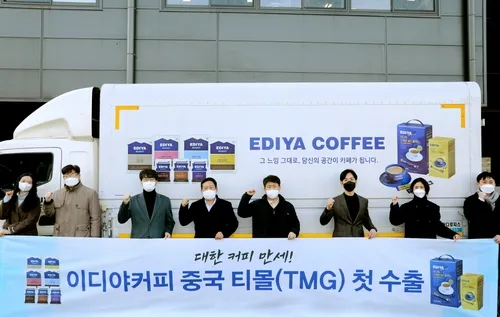
For EDIYA COFFEE, this is undoubtedly a competitive window worth seizing—first entering through e-commerce channels, selling instant and capsule products, and after accumulating a certain customer base and brand awareness, then considering opening physical stores in China. Reading this, some may ask: why not directly open stores in China? In fact, EDIYA COFFEE not only thought about it, but also put it into practice long ago, only the results were not ideal, so this time it is naturally more cautious.
As early as September 2005, EDIYA COFFEE established a branch in Beijing and officially entered the Chinese market. But market response was extremely cold, and it withdrew after only three years. By 2018, the brand noticed that China's coffee market would usher in rapid growth in the coming years, so on October 17 of that year it announced plans to open its first chain specialty coffee store in Beijing within 2019. However, the rapid rise of Luckin and Manner in 2019 caused it to shelve this plan, and to this day, there are still no physical EDIYA COFFEE stores in the Chinese market.
At present, China's pandemic situation is more stable than that of other countries, domestic consumption power is gradually recovering, and e-commerce platforms are the main channel. Precisely because of this, EDIYA COFFEE intends to start by entering Tmall to sell its products, using large-scale promotional activities to attract the attention of Chinese consumers, and after brand awareness has accumulated to a certain extent, then re-plan the opening of offline stores.
EDIYA COFFEE was founded in 2001 and opened its first offline store in the same year. In August 2003, the number of stores reached 100, and in October 2006 it surpassed 200. As of September 2016, the brand had more than 2,000 branches, making it the coffee chain brand with the largest number of stores in South Korea and one of South Korea's most representative coffee companies. With approachable pricing and stable product quality, EDIYA COFFEE holds a fairly solid position in the minds of South Korean consumers.
However, unlike when it first entered the Chinese market, the lineup of brands EDIYA COFFEE must now face is much larger: online there are emerging forces such as Saturnbird, Yongpu, and Sumidagawa, while offline there are local small chain brands such as Luckin and Manner. For EDIYA COFFEE to come now and try to grab a share, the difficulty is恐怕不小.
Image source: Internet
For professional coffee knowledge exchange and more coffee bean information, please follow Coffee Workshop (WeChat public account: cafe_style)
For more specialty coffee beans, please add the private WeChat Front Street Coffee (FrontStreet Coffee), WeChat ID: kaixinguoguo0925
The above content is compiled by CoffeeHunters, a coffee news website.


