







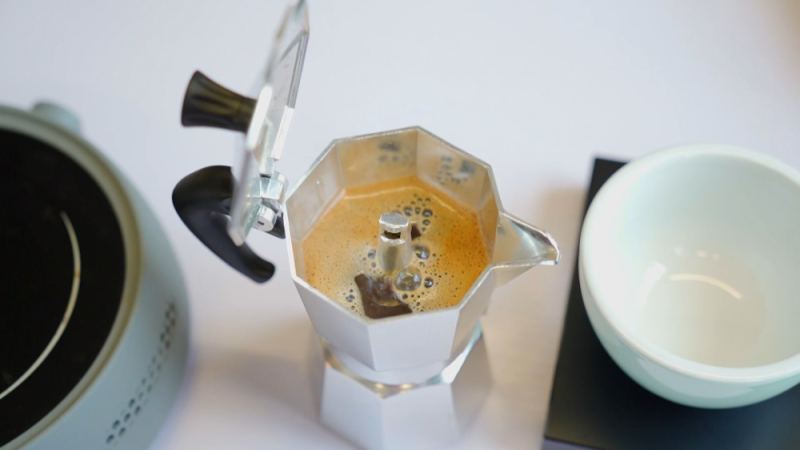
What changes when you brew with a dual-valve moka pot?
A dual-valve moka pot adds a pressure valve at the outlet, lifting extraction pressure to 2-3 Bar against roughly 1 Bar in a single-valve model. The result is a thicker coffee liquid and a richer, finer crema, closer in feel to espresso, at the cost of a water temperature high enough to risk burnt bitterness.
Getting a balanced cup means controlling dose and grind coarseness, choosing beans that suit the method, and managing the heat through the full process from filling the base with water to loading grounds and pulling it off the stove. A Bialetti moka pot used this way stays portable, low-cost, and simple to operate.
As a convenient and affordable coffee brewing device, the moka pot comes in two structural types: single-valve and dual-valve. The dual-valve version can raise the extraction pressure to 2-3 Bar, producing a richer coffee liquid and a more abundant layer of crema. However, the moka pot also has limitations, such as excessively high water temperature that easily causes burnt bitterness, and pressure far lower than that of an espresso machine. This article will systematically analyze the pros and cons of the dual-valve moka pot, explain in detail the amount of coffee grounds, grinding coarseness requirements, suitable coffee bean types, and the full process from pouring water and filling grounds to heating and extraction, while also recommending Front Street Espresso Blend series beans as an ideal choice for the moka pot.
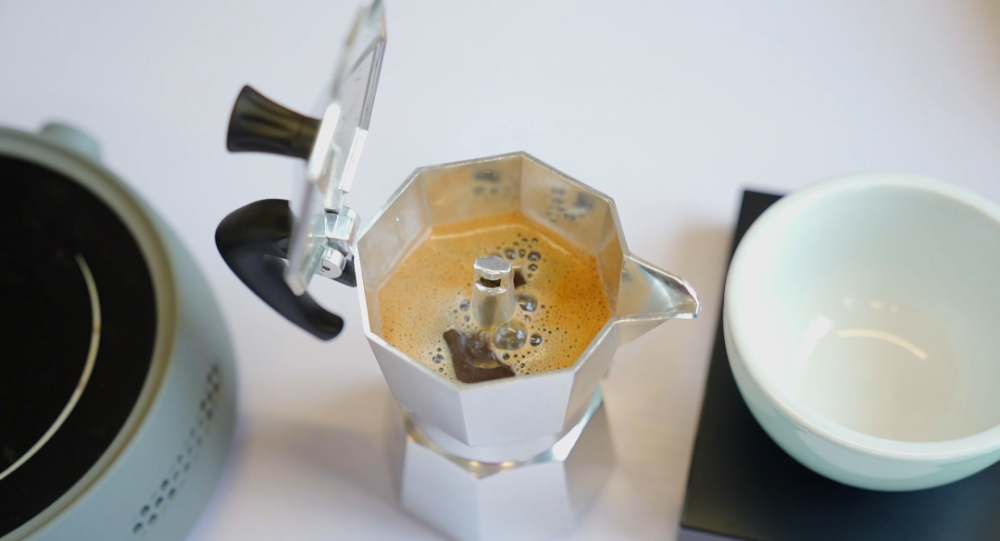
For friends who are new to the moka pot, the terms single-valve and dual-valve may still be unfamiliar. However, if you want to make a satisfying cup of coffee with a moka pot, it is still very necessary to understand this basic knowledge in advance.
Is a single-valve or dual-valve moka pot more suitable?
If you search for moka pots on e-commerce platforms, you will find an overwhelming variety of options. But if you distinguish them by internal structure, they can basically be divided into two major categories: single-valve moka pots and dual-valve moka pots.
In terms of design details, the upper chamber outlet of a single-valve moka pot is hollow, and the pressure generated during heated extraction is about 1 Bar. The coffee liquid that flows out is usually dark black and viscous in texture, but the crema layer on the surface is relatively thin. The dual-valve moka pot improves on this by installing a pressure-enhancing valve at the outlet, allowing extraction pressure to reach 2-3 Bar. Once the pressure increases, the coffee liquid becomes noticeably thicker, and the crema is richer and finer. If you are looking for a bold, mellow mouthfeel closer to espresso, Front Street recommends giving priority to a dual-valve moka pot.
The advantages and disadvantages of brewing coffee with a moka pot
The most prominent advantage of the moka pot is that it is easy to carry and has a low barrier to operation. It does not require the cumbersome process of espresso, and its price is also very affordable. But it also has shortcomings that cannot be ignored: when an espresso machine extracts, the water temperature is usually maintained at 90-94°C, while a moka pot pushes the water temperature up to the boiling point of 100°C. Excessive temperature brings out bitter large-molecule compounds, making the coffee taste burnt, bitter, heavy, and hard to drink.
One point requires special attention: although the coffee liquid made with a moka pot is not low in concentration, it is still fundamentally different from common espresso. What we call espresso is extracted using pressure of more than 9 atmospheres, and the finished product is rich, dense, and full of high-quality crema. The maximum pressure a moka pot can provide is only 2 atmospheres, far less than a commercial espresso machine. The resulting coffee liquid is relatively thin, and its layering of flavor and mouthfeel is also inferior to espresso. However, if you just want to quickly drink a cup of rich, mellow coffee at home, Front Street thinks the moka pot is still a choice well worth considering.
Can finely ground coffee be used in a moka pot?
As Front Street mentioned earlier, the moka pot is a pressure-based extraction method, so the grind size is usually much finer than pour-over, but a bit coarser than espresso powder. If it is ground too coarse, the water and coffee grounds will not come into sufficient contact, the extraction will be poor, and the taste will naturally be unsatisfactory. At the same time, because there is not enough resistance, the liquid may violently spray out, creating a risk of splashing and scalding. Conversely, if the grind is too fine, it will increase resistance to the liquid flowing upward, making it difficult for the coffee liquid to flow out. The pressure in the lower chamber will continue to rise, and if it cannot be released in time, there is even a risk of explosion.
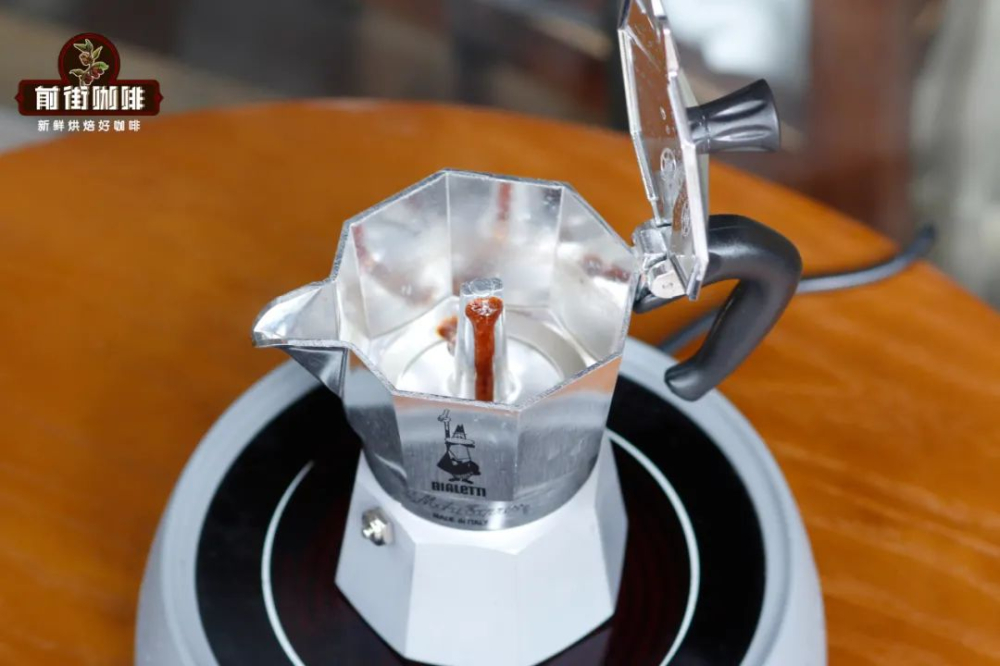
The grind setting recommended by Front Street is EK-43s #3-3.5. If it is difficult to judge whether the grind size is appropriate, you can observe the size of the gap in the moka pot's filter basket. As long as the coffee particles do not slip through the gap, it is fine. You can also refer to the coarseness used here at Front Street.
What coffee beans are more suitable for pairing with a moka pot?
Considering the moka pot's high water-to-coffee ratio and relatively short brewing time, medium-dark roasted coffee beans are more suitable than light-roasted beans. Because the moka pot uses pressure extraction, if light-roasted coffee beans are used, the beans are relatively hard and often need to be ground finer to increase the extraction yield. However, fine grinding in a high-temperature, high-pressure environment can easily make the coffee sour, astringent, and pungent, and the aromatic oils are also difficult to fully release.
To get crema from a moka pot, two conditions need to be met: first, fresh medium-dark roasted coffee beans; second, pressure must be applied during the extraction process. Coffee beans accumulate a large amount of carbon dioxide when heated during roasting, and this is released when they encounter water during extraction. Therefore, the darker the roast, the higher the gas content. At this time, avoid choosing light-roasted beans, because they cannot release enough crema. For friends who are just starting out, if you want to balance cost-effectiveness, you can give priority to the Front Street Espresso Bean series, including Front Street Black Cocoa Blend, Front Street Classic Blend, Front Street Commercial Blend, and Front Street Specialty Blend. These are all medium-dark roasted and naturally carry caramelized aromas, producing a rich espresso with abundant crema.
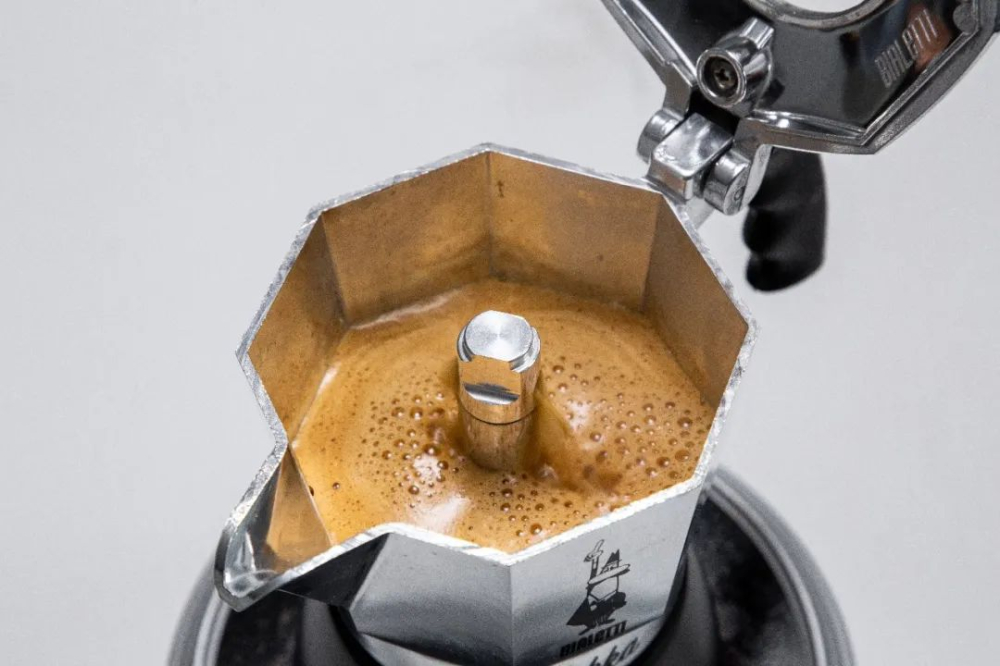
Therefore, Front Street recommends using darker-roasted Front Street Espresso Blend coffee beans as the raw material. This makes it easier to obtain coffee that is rich in aroma and crema, and also makes the extracted flavor more stable. On the Front Street bean list, there are four Front Street Espresso Blend coffees suitable for brewing with a moka pot. You can choose one according to your own taste preferences to make moka pot coffee. Front Street hopes that every customer who places an order can taste the coffee's aroma within its best flavor period, so it only ships beans freshly roasted within 5 days.
Detailed moka pot operation steps
Before brewing coffee, you need to prepare fresh coffee beans, water, a grinder, a gas stove (or induction cooker) for heating, and the main character—the moka pot. As for the coffee beans, Front Street uses its own roasted "Front Street Sunflower Warm Sun Blend Coffee Beans," made from a 7:3 blend of Front Street Honduras Sherry and Front Street Natural Yirgacheffe Red Cherry.
First, remove the base of the moka pot and pour pure warm water into the lower chamber. This can shorten the brewing time and also prevent the coffee grounds from heating too quickly and causing a burnt, bitter flavor. Control the water level to about 0.5 cm below the pressure relief valve line. The safety valve's role is to prevent an explosion caused by the extraction channel being blocked due to coffee grounds being ground too fine. If the safety valve is submerged in water and the extraction channel happens to be blocked, the consequences of the coffee pot exploding under high temperature would be very serious.
To extract a rich black coffee, the grind size needs to be much finer than regular pour-over. The Front Street store uses an EK-43s grinder, with the setting at EK-43s #3-3.5. The amount of grounds depends on the size of the moka pot. Here at Front Street, we use a 3-cup Bialetti classic pot, with 18 g of grounds. Pour the ground coffee into the filter basket, fill it to nine-tenths full, smooth the surface with your finger, and then place it into the base. There is no need to press it down hard. If the coffee bed is too compact, it will easily obstruct the upward flow of water, thereby affecting the extraction effect.
Next, screw the upper chamber and lower chamber tightly together, wipe the body dry with a towel, and place it on a gas stove or induction cooker to heat. When using an open flame, be careful that the flame does not extend beyond the range of the moka pot base as much as possible.
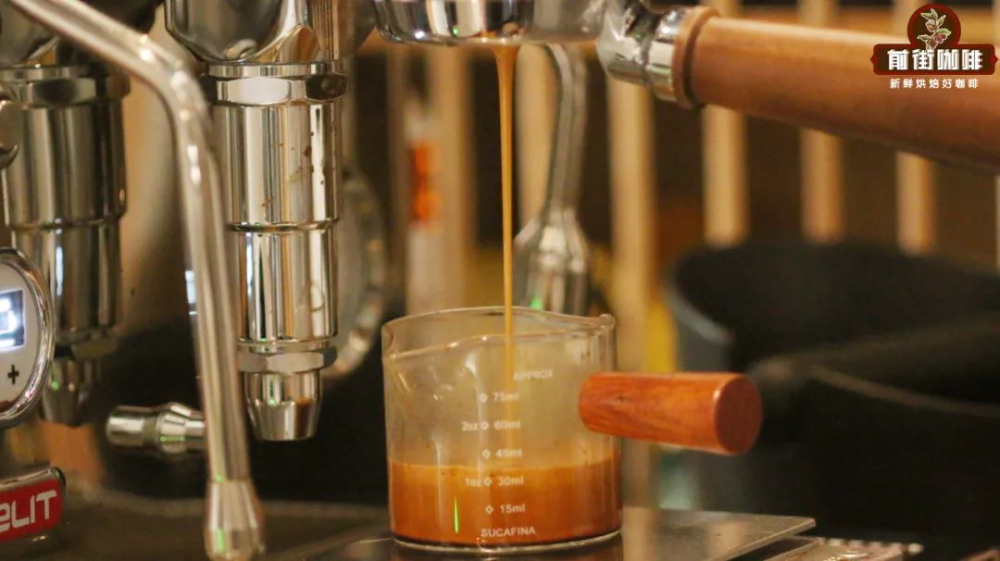
Wait for the moka pot to heat up. When you hear a hissing sound, turn the heat down, and the coffee liquid and crema will slowly flow out. When you see the coffee liquid in the upper chamber reach half full, you can turn off the heat source, move the pot to the table, and use the residual heat and remaining pressure inside the pot to continue extracting the rest of the coffee liquid.
Pour the extracted coffee liquid into a cup and drink it directly. On the palate, you can feel a rich whisky aroma, vanilla, cream, and the sweet-tartness of berries, along with the aroma of roasted nuts. After adding an appropriate amount of hot water, it presents a fresh fruity sweet-tartness, and when paired with milk, it gives off a sweet chocolate aroma.
Finally, let's talk about storing and maintaining the equipment. Front Street cleans the moka pot promptly after each use to avoid residual coffee grounds causing mixed flavors or burnt bitterness. If old coffee stains remain on the filter plate, gasket, or extraction channel, they may cause blockages and affect normal extraction.
The above content is compiled by CoffeeHunters, a coffee news website.


