Even with the same few ingredients, as long as the ratios differ, we can create infinite possibilities—and coffee is a perfect example.Take the "Milky Trio" that Front Street Coffee often shares—latte, flat white, and cappuccino. They are made with only milk and coffee, yet they taste and feel completely different.And these differences come not only from the different ratios of milk and coffeebut also from the different thicknesses of milk foam. So friends often ask Front Street Coffee how thick the milk foam should be for each of these milk coffees.So today, Front Street Coffee will share how thick the milk foam is for these three popular milk coffees—latte, cappuccino, and flat white—and what effect that has on the coffee~(For the milk-to-coffee ratios of these three, Front Street Coffee explained in detail in"Portal"this article, so we won't repeat it here~)What is milk foam? What does milk foam affect?"Milk foam" is simply the foam of milk. Its principle is very simple: just inject air into the milk and it forms. But if it is to be used for making coffee, it then needs to be textured so that large bubbles are cut into countless tiny bubbles, making it fine and creamy.
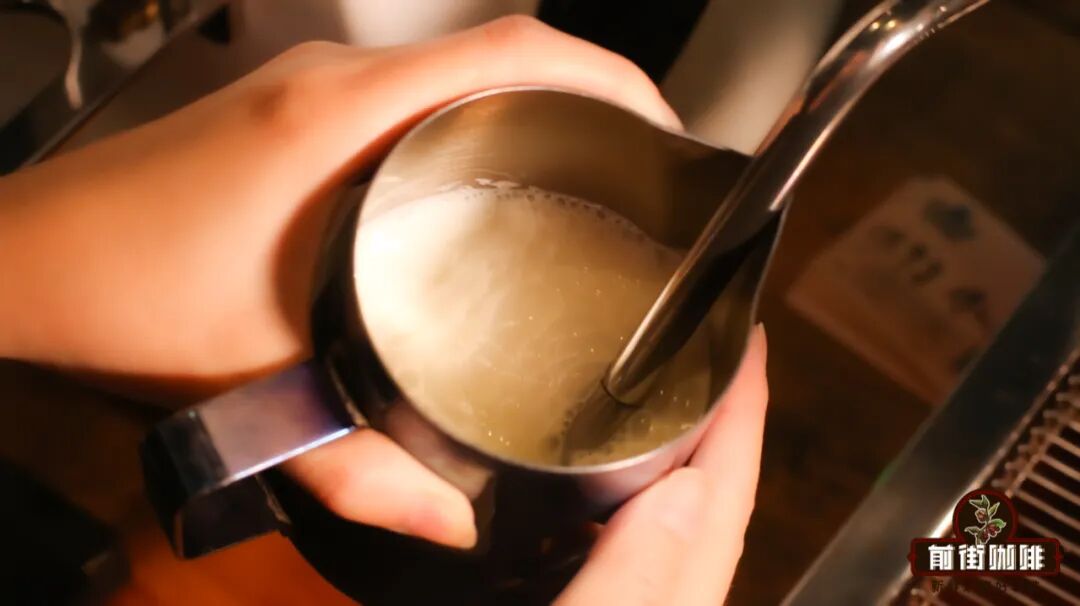
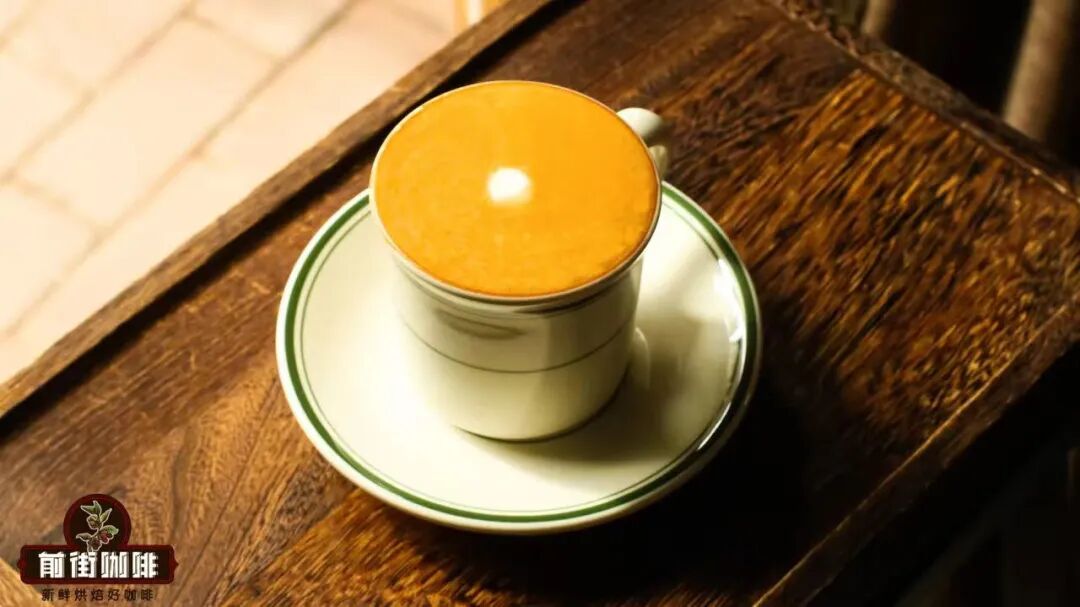
Although the milk foam used for coffee is usually made with the steam wand of an espresso machine, it is not limited to that. Tools such as electric mixers and French presses can also make milk foam—it's just relatively harder to control the thickness of the foam they produce.The thickness of the milk foam affects many things, such as the difficulty of latte art, the mouthfeel of the coffee, and the proportion of milk in the cup. That is why foam thickness can become a major characteristic that distinguishes latte, cappuccino, and flat white.The milk foam thickness of a cappuccinoA cappuccino's milk foam is the thickest of the three. Usually the foam rises above the rim of the cup—the so-called "11 out of 10 full." Because of this, a cappuccino is very distinctive and easy to recognize.As long as we see a milk coffee with a tall, domed foam like a "hamburger," it is most likely a cappuccino.Generally speaking, a cappuccino's milk foam is about 2 cm thick, depending on the cup used and the barista's interpretation of a cappuccino(the dry and wet versions of cappuccino). To make such thick foam, when starting to steam we need to ensure there is enough time for the steam to introduce air into the milk—that is, sufficient aeration and a long enough foaming time.Taking Front Street Coffee as an example, the machine we use has medium steam power, so when steaming milk foam for a cappuccino, the foaming time is controlled at about 3 seconds. This time both gives the coffee a rich layer of foam and leaves enough time to texture that foam.But because the foam is too thick and has poor flow, we cannot create a delicate latte art pattern on a cappuccino, so a simple large white heart is generally the standard for a cappuccino. Such thick foam gives the coffee a creamier texture—one sip is like eating marshmallow.The milk foam thickness of a latteCompared with a cappuccino, a latte's milk foam is much thinner, about half that of a cappuccino,around 1 cm thick. The reason a latte's foam is relatively thin is that originally it was meant to let milk account for a higher proportion in the cup.In the early days, the only Italian milk coffee was cappuccino, but many people could not accept cappuccino's overly intense coffee flavor, so more milk was needed to dilute the bitterness of the coffee. By reducing the thickness of the foam, the cup could hold more milk, and the bitterness of the coffee could thus be balanced(or the other way around: to increase the milk, the foam thickness was reduced).Later, people accidentally discovered that milk foam could be used to draw patterns on the surface of coffee—what is called latte art. Latte art has strict requirements for the milk foam, needing just the right thickness to draw patterns well; too thick or too thin will affect the drawing because the flow is too low or too high. So gradually, latte foam evolved into its current thickness. It has just the right flow and can easily create all kinds of patterns we want.Unlike cappuccino foam, latte foam is relatively consistent. No matter which café it is, the foam thickness of a latte is basically around 1 cm, so the foaming time when making it is much the same. Taking Front Street Coffee as an example, when steaming milk foam for a latte, the aeration time is about 1 second, and then we begin the texturing step.And besides more delicate latte art, suchmoderatemilk foam can bring just the right improvement in mouthfeel to the coffee, giving it a soft and creamy touch and a relatively smooth texture.The milk foam thickness of a flat whiteFinally, the flat white! The flat white's milk foam is the thinnest of the three. How thin? When foaming, we only need to give it a gentle burst of steam and introduce a little air, and the finished foam will be about 0.3 mm.The reason a flat white's foam is so thin is simple: to give the coffee a smoother mouthfeel and make it easier to drink.If cappuccino and latte pursue the "creaminess" brought by milk foam, then the flat white pursues a silky "smoothness"! As Front Street Coffee mentioned earlier, milk foam of different thicknesses has different textures. Thicker foam gives coffee a creamy touch, while thinner foam makes the coffee drink smoother.And a flat white's foam at this thickness(about 0.3 mm)makes the coffee drink very silky! Combined with a ristretto for extraction, the coffee is strong but not bitter while also having a smooth mouthfeel, very easy to drink. This is also why the flat white is so popular.But if the milk foam is too thin, there is one drawback: it flows too easily. Foam with too much flow is not suitable for latte art because it is hard to control and not stable enough. So many coffee shops do not do latte art when serving a flat white; they simply mix it directly with the coffee.
So the above are the milk foam differences among the three common coffees. Cappuccino has the thickest foam, latte has moderate foam, and flat white has the thinnest. It is worth mentioning that besides these three, there are many other Italian milk coffees on the market, such asmocha, macchiato, piccolo and other milk coffees that can be used for latte art. Without exception, all of these coffees use the same milk foam thickness as a latte~ The above content is compiled by CoffeeHunters, a coffee news website.