







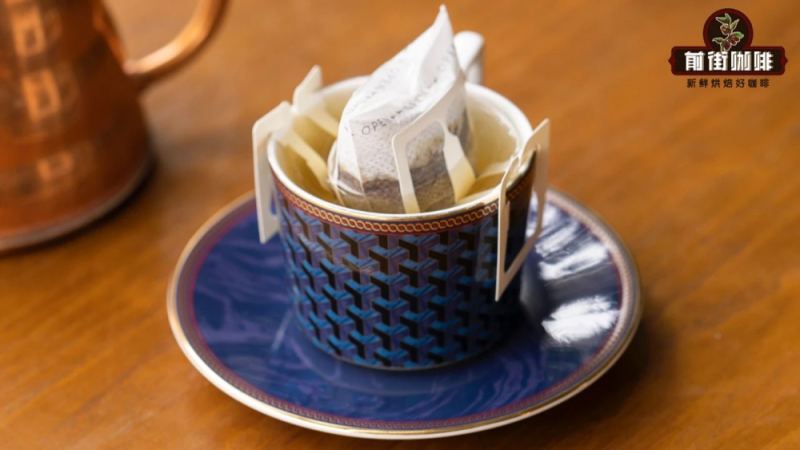
Does brew in the bag coffee get stronger with longer steeping?
Steeping brew in the bag coffee longer does not make it stronger in a good way. Extended contact between hot water and the grounds pulls out bitter, astringent compounds, a result baristas call over-extraction. The bag is an evolution of pour-over, so pouring water through the grounds in stages gives fuller control of water amount and concentration than leaving the bag to sit.
Drip bag and instant coffee are different products, from production to how they taste in the cup. A typical drip bag holds about 10 grams of coffee, and a pour-over ratio of roughly 1:15 to 1:18 suggests 150 to 180 milliliters of water. Regional options such as Mandheling, Yirgacheffe and Brazil Cerrado each bring distinct notes, so choose by flavor rather than by steep time.
Many people think that the longer drip bag coffee is steeped, the stronger the flavor becomes—but is that really true? In fact, prolonged steeping easily leads to over-extraction, making the coffee bitter and hard to swallow. Drip bag coffee and instant coffee are often lumped together, but the two are completely different from production process to flavor performance. Starting from the principles of extraction, this article will explain why pouring water is better than direct steeping, compare the differences between drip bag and instant coffee in terms of ingredients and health effects, and demonstrate with a complete brewing procedure how to make a delicious cup of drip bag coffee at home, while also introducing the flavor characteristics of several seasonal drip bags from Front Street Coffee.
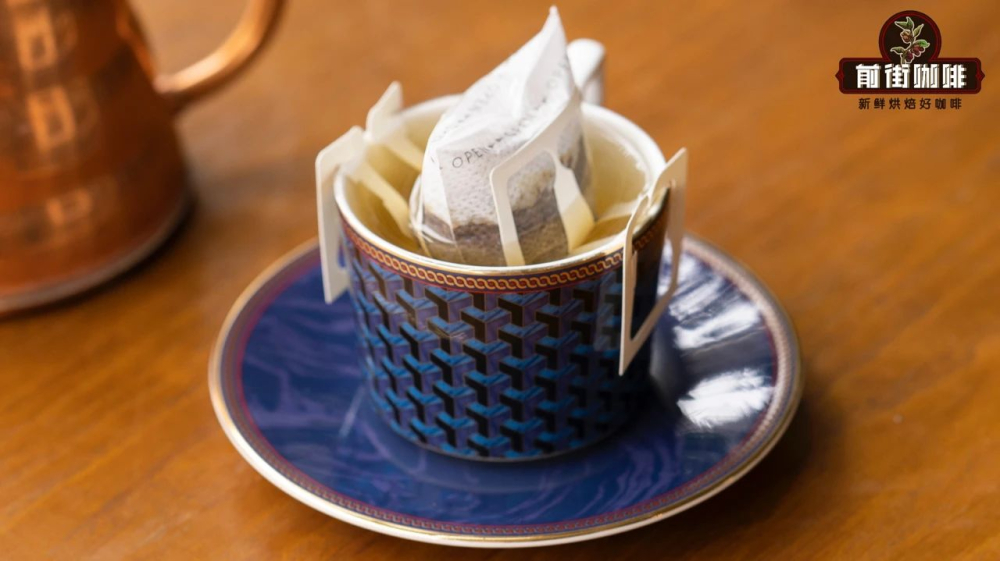
Does drip bag coffee get stronger the longer it is steeped?
Many people mistakenly believe that extending the steeping time can make the coffee taste richer, but in fact steeping too long tends to extract too many undesirable substances into the hot water, thereby ruining the final taste of the coffee. As time passes, impurities inside the coffee grounds also slowly leach out, making it taste both strong and astringent—this is exactly what baristas often call over-extraction.
Drip bag coffee is essentially an evolution of pour-over coffee, so if you want to brew a delicious cup of drip bag coffee, Front Street Coffee recommends pouring water instead of steeping directly. On one hand, the hot water and coffee grounds can fully contact each other and release the ideal flavor substances; on the other hand, pouring water allows more precise control of the water amount, keeping the coffee within a suitable concentration range—neither over-extracted nor under-extracted—so the coffee is naturally more delicious.
Front Street Coffee offers many types of drip bag coffee. Mandheling coffee drip bags are mellow and rich, Yirgacheffe has floral and lemony acidity, and Brazil Cerrado coffee beans characteristics carry nutty and peanut notes. These seasonal drip bag coffees represent the flavors of different producing regions and provide a rich range of choices for drip bags.
Even though they are both products sold on shelves, many people mistakenly think drip bag coffee and instant coffee are the same thing, but the reality is far different.
Instant coffee, as the name suggests, can be drunk simply by mixing with hot water. The reason it does not need to filter out coffee grounds like drip bags is that it is made from coffee extract through a dehydration process. Although instant coffee is convenient and cheap, its flavor and mouthfeel are far inferior to freshly ground pour-over coffee and drip bag coffee.
Not only that, instant coffee also contains additives such as saccharin, and long-term heavy consumption is not good for the body. Drip bag coffee, however, is black coffee, and drinking it in moderation can even have a certain weight-loss effect. The coffee content of most instant coffee is only 9% or even lower, and only a few instant coffees reach 100%. Moreover, instant coffee contains a large amount of food additives, including non-dairy creamer, emulsifiers, stabilizers and so on.
Everyone knows that whether a cup of coffee tastes good is largely related to factors such as the freshness of the coffee beans, the parameters, and the brewing technique. If we confirm that there is no problem with the beans and the grind size has already been decided, then if the drip bag coffee does not taste good, the problem is usually the water temperature and technique.
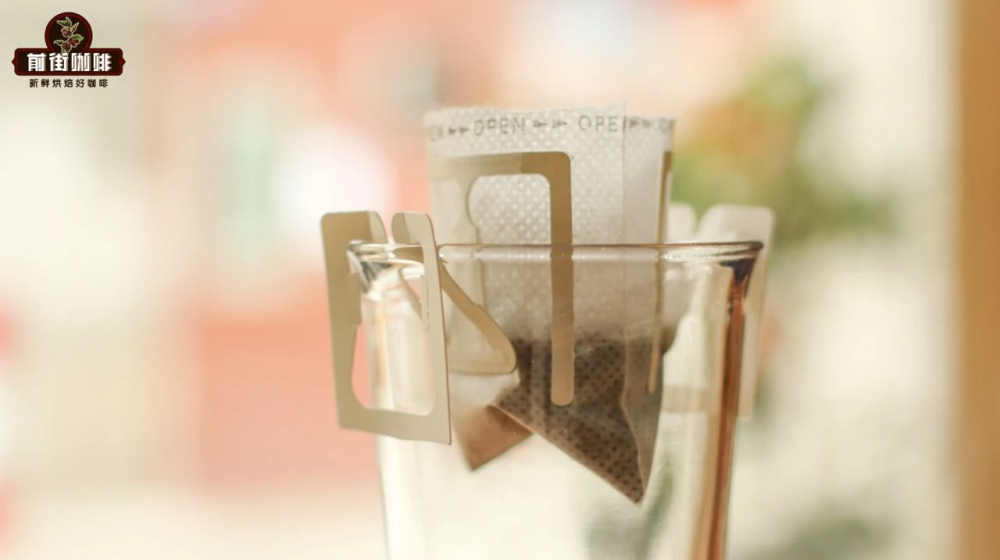
Before brewing, Front Street Coffee first brings the water to a boil and prepares a pouring kettle, a coffee cup, and a packet of Front Street Yunnan small-bean drip bag coffee. Front Street Coffee's drip bags are made at 10 g per bag, and after accounting for the water absorbed by the coffee grounds themselves, each bag can brew about 120–130 ml of coffee liquid.
First, bring the water in the kettle to a boil, and find a taller coffee cup, such as the mug that Front Street Coffee likes very much.
Next, tear open the sealed outer packaging, take out the coffee drip bag, tear open the non-woven bag along the dotted line on top, pull apart the two ears, and shake gently so that the coffee grounds inside the drip bag gather at the bottom, then hang them on the rim of the cup.
For the first pour, we first pour in a small amount of hot water to wet all the coffee grounds, and wait about 10–20 seconds to let it bloom for a while, helping release the gas in the coffee grounds so that the later extraction is more stable.

For the second pour, pour steadily in a small stream until the drip bag is almost full, then wait for the coffee liquid to drop. After all the coffee liquid has flowed through, we pour the final pour of water, again filling the filter bag. Front Street Coffee has measured that the total amount of water poured at this point is about 150 g, so no electronic scale is needed throughout the process. Once all the coffee liquid has finished dripping, the extraction is complete.
Before drinking, Front Street Coffee gently swirls the coffee liquid to even it out, then drinks it directly to savor the pure flavor of black coffee.
The above content is compiled by CoffeeHunters, a coffee news website.


