







What makes geisha coffee taste authentic in the cup?
There is no single authentic brand of black coffee, because taste is personal and the coffee that suits you is the one worth buying. Geisha stands out among single-origin beans for its citrus aroma, jasmine fragrance and bright fruity acidity. The same variety grown in Panama, Ethiopia, Costa Rica or Colombia can taste noticeably different, so origin matters as much as the name.
Black coffee is brewed without sugar or milk, using a drip machine, pour-over kettle or French press. Because nothing masks the bean, the cup reflects its terroir, much as tea or wine does. Panama geisha coffee is often the reference point for the variety, but comparing lots from several regions side by side is the practical way to find the profile you prefer.
Faced with a dazzling array of black coffees, how can you pick the authentic and delicious one? Ultimately, taste is a highly personal matter, and the best choice is the one that suits your own preferences. Nowadays, more and more coffee lovers are pursuing single-origin specialty black coffee, because only pure extraction without sugar or milk allows you to fully appreciate the terroir carried by the coffee beans. Among the many specialty beans, Geisha stands out with its intense citrus aroma, jasmine fragrance, and bright, varied fruity acidity, making it a star variety that major producing countries are eager to cultivate. However, the same variety can present completely different flavor profiles in different regions, and the Geisha from Panama, Ethiopia, Costa Rica, and Colombia each has its own merits. This article will use Front Street Coffee's bean selection and brewing experience as a thread to guide you through the characteristics and tasting methods of Geisha black coffee from each region.
Which brand of black coffee is the most authentic to drink? In response to this question, Front Street believes that the so-called best-tasting coffee mainly depends on the individual, because everyone likes different flavors, so it cannot really be said to be the best-tasting; it can only be said that the one that suits your preferences is the best. When it comes to black coffee, many people's first impression may be that it is bitter and not pleasant to drink. However, as people's love for coffee has grown, more coffee friends are seeking single-origin specialty black coffee. This is because black coffee allows you to better taste the terroir of the coffee and feel the local coffee culture. Each unique bean is like a gorgeous journey; what you taste is not just the richness on your tongue, but more like a postcard sent from a foreign land, telling you what kind of terroir and climate allowed such a uniquely flavored coffee bean to grow!
Black coffee refers to pure coffee made directly from coffee beans without sugar or milk. Methods include American drip machines, pour-over kettles, French presses, and more. Good black coffee, like Pu'er tea and red wine, can reveal the flavor of its origin, so when choosing black coffee, you can choose according to your own taste. Specialty coffee is usually brewed by pour-over, as this better showcases the flavor of the coffee beans, such as Blue Mountain coffee, Geisha coffee, and so on.
To choose one that suits your taste, you still have to try it yourself to know. In the past, people's love for coffee may have leaned more toward rich nutty notes, but now more people have come to prefer fruity, juice-like coffee. Geisha coffee happens to meet everyone's needs. Geisha coffee has intense citrus aroma, jasmine fragrance, almond and mango notes, and honey-like sweetness, with bright and varied fruity acidity, which is why major coffee-producing countries are competing to cultivate it.
But even for the same coffee variety, the flavor can be very different under different coffee-growing environments! The unique climate, growing altitude, humidity, sunlight duration, soil, and grower of each region, and even the entire post-harvest processing of the coffee fruit, can seriously affect coffee flavor! For example, Geisha from Panama coffee, Colombia coffee, Ethiopia coffee, and other places all have noticeably different coffee flavors.
Front Street Coffee (FrontStreet Coffee) is a coffee roasting brand in Guangzhou that has been open for many years, and it regularly stocks coffee beans from more than 50 countries and regions. Generally speaking, coffee flavors are distinguished by origin: African coffees have lemon-like fruity acidity, American coffees have rich aromas, while Blue Mountain and Mandheling are relatively full-bodied. The flavor patterns by origin are as follows:
Ethiopian coffee: Yirgacheffe: the bean most chosen by beginners, with some lemon-like fruity acidity; Huakui: based on Yirgacheffe, with added berry aroma; Yunnan small-bean coffee: with some plum acidity; Mandheling: full-bodied woody texture, with some herbal aroma; Flower Butterfly: Panama region; contains some Geisha varietal, tastes like floral fruit tea; Brazil: not sour, like plain chocolate.
Geisha Coffee
In 1931, Geisha was quietly exported from the Geisha Mountain in southwestern Ethiopia (Geisha Mountain, coincidentally homophonous with the Japanese word for geisha) to Kenya, wandered through Tanzania and Costa Rica, and was transplanted to Panama in the 1960s. After surviving nearly half a century, it finally made a stunning debut, defeating consistently winning varieties such as Bourbon, Caturra, Catuai, and Typica, and sweeping the top prize at the Panama National Treasure Bean Cup Tasting Competition in 2005, 2006, and 2007 all at once.
In 2007, at the international famous-bean cup tasting competition hosted by the Specialty Coffee Association of America (SCAA), Geisha took first place again, and its bidding price reached 130 US dollars per pound, setting a record for the highest price ever for competition beans. It is said that the later Panama National Treasure Bean competition was divided into Geisha and non-Geisha groups, lest Geisha steal the spotlight from other varieties again.
[Panama Boquete Coffee Producing Region]
Boquete is planted at altitudes as high as 1,400-1,900 m, located near the border of Panama and Costa Rica, close to the famous Baru volcano, with beautiful scenery, fertile and rich soil, and a climate and soil very suitable for producing high-quality coffee. Within the Boquete producing region, there are also many excellent estates. Besides Hacienda La Esmeralda, there are also Elida Estate, Kotowa Duncan Estate, and others producing high-quality specialty coffee. This benefits not only from the mild climatic conditions of Panama's Boquete region and the fertile volcanic ash soil of the Baru volcanic area. Another important factor is the variable microclimate found in the highlands of Boquete, Panama.
One of Front Street's everyday beans, the washed Boquete Geisha coffee, comes from this region.
Ethiopian Geisha Coffee
Although Ethiopia is the genetic homeland of coffee, the reason Geisha varietal coffee beans have a refined and elegant flavor comes from its specific growing environment. The Geisha variety is very "picky" about its growing environment, requiring cultivation in areas with higher altitude, cloud shade or abundant shade trees, and fertile soil, in order to have rich and captivating floral aroma, refined and elegant fruity acidity, and a tea-like sweet aftertaste.
Ethiopian Geisha coffee is divided into three branches: Gori Gesha (GG): this variety replicates the genetic diversity found in the Gori Gesha coffee forest. Illubabor Forest 1974 (IF): discovered in 1974 during an expedition to the Illubabor Forest, after which the Ethiopian research center developed a disease-resistant variety. Gesha 1931 (G31): possesses a combination of varieties from various different forests and is very similar to Panama Geisha, selected by observing plant morphology, bean appearance, screen size, and cup profile.
The first two Geisha coffee beans are completely different genetically from Panama Geisha coffee, while according to official descriptions, Gesha 1931 is the closest to Panama Geisha in both plant shape and cup performance, but in fact the degree of genetic consistency is very low, so the flavors of Ethiopian Geisha coffee and Panama Geisha coffee can be said to be completely different.
Costa Rican Geisha Coffee
Costa Rica has been growing coffee for nearly two hundred years. As an important cash crop for the country, the coffee industry is very mature, and today there are also many newly established estates. These estates mostly have the resources and willingness to grow Geisha varietal coffee, among which the most famous is the Geisha coffee beans from El Velo Estate. For example, Front Street's Costa Rica Mirazu Geisha blend coffee.
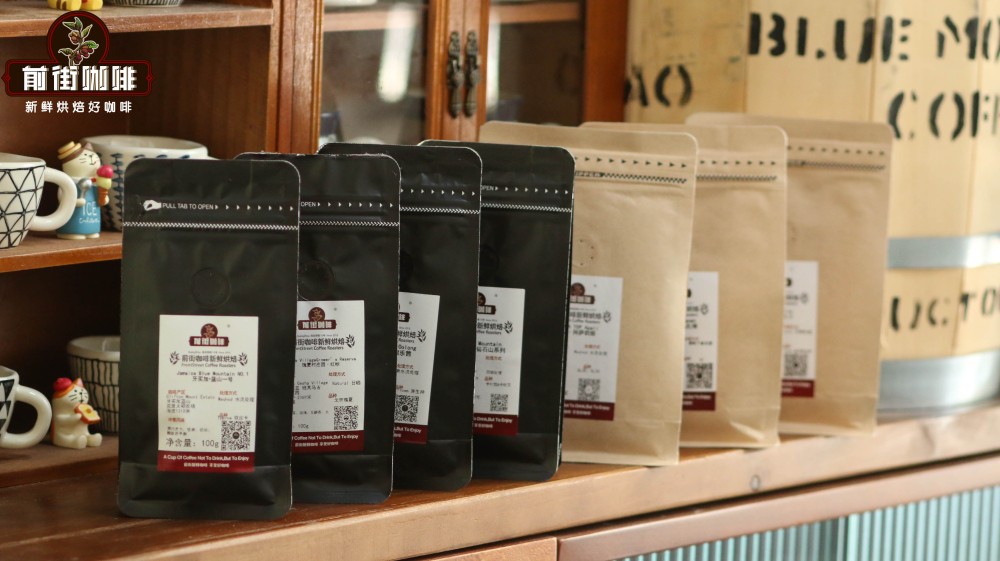
Front Street's Mirazu coffee beans use raisin honey processing, which involves sun-drying ripe coffee cherries until shriveled, removing the skin and pulp while retaining all the mucilage layer, and then drying them. Front Street found that coffee processed with raisin honey has a richer and more viscous mouthfeel than ordinary honey-processed coffee, a more lasting aroma, and a stronger sweetness.
Colombia Hanami Geisha Coffee
The Huila Department of Colombia is located where the Central and Eastern ranges of the Andes meet, in southern Colombia. Huila's coffee-growing area is centered on the city of Pitalito, with coffee grown at altitudes of 1,750-1,950 m, mainly under a smallholder farming model. Over the past decade, coffee smallholders have worked together, and the coffee fruit is manually harvested and carefully processed, ultimately becoming specialty coffee beans that can showcase the flavor of the Huila producing region.
Hanami Geisha coffee comes from Colombia's most famous Huila producing region. Everyone is probably familiar with Colombian coffee. Colombia is very famous in the specialty coffee world, and the Huila producing region is the representative of Colombia's classic flavor, with nutty caramel flavors plus the sweet-and-sour sensation of berries. This Hanami coffee bean is a combination of Geisha, Caturra, and Catuai, and the washed processing method is also a classic traditional processing method. At high temperature, there is a very strong chamomile and pink pepper flavor; at medium temperature, the Geisha flavor is especially obvious, with tangerine and honey notes; at low temperature, there is a slight sour-bitterness with almond notes.
Front Street's recommendations for roasting Geisha coffee beans:
In order to highlight the characteristics and aroma of Geisha beans, Front Street uses a light roast, as this roast level can better bring out the beans' own characteristics; too dark will diminish the floral aroma and fruity acidity. Of course, this also needs to be adjusted according to the characteristics of the coffee beans and the roaster's understanding of the beans themselves. Through cupping, Front Street learned that Geisha coffee beans have a very rich layering, so it is recommended to slightly lower the coffee concentration when brewing, so that the flavors of Geisha coffee at each layer are clearer. The recommended brewing ratio is 1:15, brewed at 90-91°C, and the recommended grind size is medium-fine (80% passing through a Chinese standard No. 20 sieve).
How to brew Panama Geisha coffee beans?
Front Street recommends drip brewing, that is, pour-over coffee. If you want to drink rich layering, you can brew with a V60 dripper, while if you want a fuller coffee flavor, you can brew with a cake dripper~ Front Street's daily production mostly uses the V60 dripper, because the 60-degree angle design and the spiral rib design allow you to fully extract the essence of Geisha coffee by controlling the water flow and the number of pours, while the large outlet design avoids over-extraction of the coffee.
The V60 dripper body has guide ribs connecting the top and bottom and a large central round hole, which speeds up the flow rate of water falling, while the spiral-shaped exhaust groove design lengthens the water flow path, increasing the contact time between coffee grounds and hot water. Each stream of water converges along the grooves toward the center point of the dripper, concentrating the pressure on the coffee grounds and making the extracted coffee richer in layering.
Dripper: Hario V60, water temperature: 91°C, coffee dose: 15 g, coffee-to-water ratio: 1:15, grind size: 80% passing through a Chinese standard No. 20 sieve
[Flavor characteristics of Panama washed Boquete Geisha coffee]: It has a clear acidity of orange, lemon, and bergamot, a creamy smooth mouthfeel when swallowed, and a finish of green tea and honey sweetness.
Front Street's coffee brewing recommendations:
Regarding coffee brewing, Front Street has always believed that the freshness of coffee beans has a great relationship with coffee flavor, so the coffee beans shipped by Front Street Coffee (FrontStreet Coffee) are all within 5 days of the roasting date. Front Street's roasting philosophy is "freshly roasted good coffee," so that every customer who places an order receives the freshest coffee when it arrives. The resting period for coffee is about 4-7 days, so when customers receive it, it is exactly at its best flavor.
For friends who need ground coffee, Front Street warmly reminds you: once coffee beans are ground in advance, there is no need for further resting, because during transportation, the pressure generated by carbon dioxide inside the package can also make the coffee flavor rounder, so you can brew a cup immediately after receiving the coffee grounds. However, the coffee grounds need to be brewed promptly, because after contact with air, coffee grounds oxidize relatively quickly, meaning the coffee flavor will dissipate faster and the coffee will not taste as good. Therefore, Front Street recommends buying whole beans and grinding fresh before brewing, so you can better taste the coffee's flavor.
Professional coffee knowledge exchange. For more coffee bean information, please follow Coffee Workshop (WeChat public account: cafe_style)
For more specialty coffee beans, please add the private WeChat of Front Street Coffee (FrontStreet Coffee), WeChat ID: qjcoffeex
The above content is compiled by CoffeeHunters, a coffee news website.


