








What Coffee Milk Ratio Does a Flat White Use?
A Flat White uses a higher coffee-to-milk ratio than a latte, which is why the coffee flavor comes through more. A typical build in a 200 ml ceramic cup starts with 20 g of ground coffee, extracts 28 to 30 g of Ristretto, and adds about 170 g of hot milk. The foam stays thin and level with the cup rim.
The drink is also called Australian White or Fu Rui Bai, and it originated in Melbourne in the 1980s after Italian espresso culture arrived. Bitterness depends on the Ristretto extraction and the bean blend rather than on milk volume, so adjusting grind and yield matters more than adding more milk.
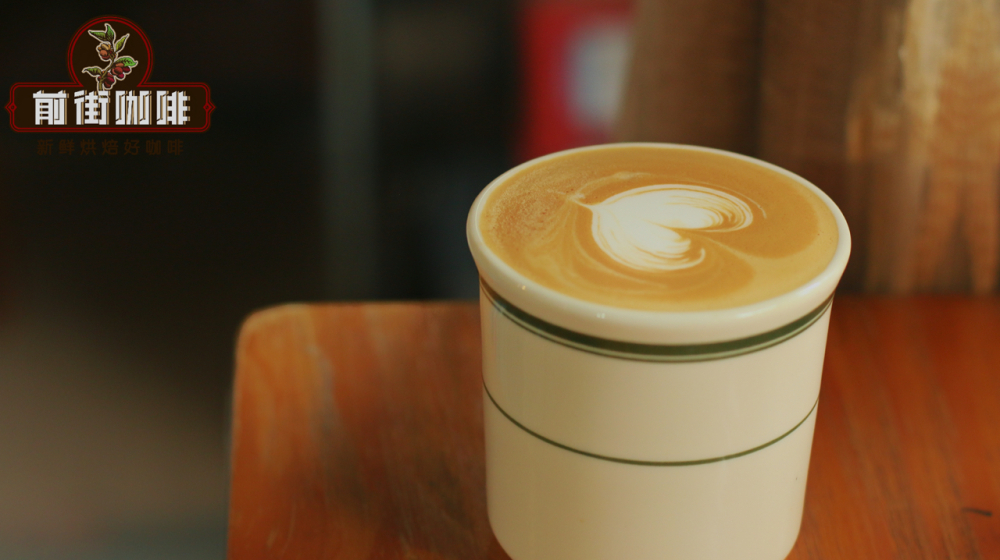
Flat White, also known as Australian White or Fu Rui Bai, originated in Melbourne, Australia, and is famous for its light, thin milk foam and rich coffee flavor. Like a latte or cappuccino, it is made from espresso and fresh milk, but it highlights the aroma of the coffee itself even more, with milk foam only about 0.5 cm thick and level with the cup rim. This article explains in detail the controversy over the origin of the Flat White, the thickness of the milk foam, the extraction parameters of the Ristretto base, and the milk ratio. Using a 200 ml ceramic cup as an example, it also shows the complete process at Front Street stores, from grinding 20 g of coffee, extracting 28–30 g of Ristretto, to adding 170 g of hot milk, helping coffee lovers master the core points of this drink.

Before starting to make a Flat White, Front Street will first briefly explain the definition and characteristics of this drink.
Flat White
It also has other names such as Australian White coffee, Little White coffee, and Fu Rui Bai coffee, and it originated in Melbourne, Australia. In the 1980s, Italians brought espresso to Australia and adjusted the way milk coffee was made to suit local taste preferences. Because the milk foam was thin and level with the cup rim, it was named Flat White.
Like latte and cappuccino, Flat White is also made only from espresso and fresh milk, and it has become a very popular espresso drink in recent years. Compared with the balanced taste of a latte, a Flat White emphasizes the rich aroma of the coffee itself and highlights the coffee flavor more during preparation; compared with a cappuccino with abundant milk foam, a Flat White has a thin, delicate foam layer and a smooth mouthfeel, making it easier to taste the coffee liquid.
Where did the Flat White originate?
Regarding who invented the Flat White, Australians and New Zealanders each hold their own view, both insisting that this drink came from their own country, and baristas in the two countries also have different recipes for making a Flat White. Although it is impossible to verify exactly which country the Flat White came from, what is certain is that this drink was born from people's pursuit of higher-quality coffee.
Before the 1970s, coffee shops in Australia mainly used French presses, manual pour-over, and other methods to make black coffee. In the early 1970s, Italians introduced espresso machines to Australia, officially setting off a new wave of coffee enthusiasm. Compared with traditional latte and cappuccino, Australians preferred milk drinks with thinner foam and a stronger coffee flavor. As a result, milk coffee was continuously improved in places such as Australia and New Zealand. When the foam on the surface of the milk coffee became flatter and flatter, until it became a very thin layer completely level with the cup rim, it was named Flat White. Flat means "level," while White refers to the white coffee with milk added.
From the 1980s onward, Australians put the Flat White on fixed menus, and it soon spread to cafes in Europe, the United States, and other countries. The Flat White became a popular product in China after Starbucks introduced it in 2015 and named it "Fu Rui Bai" as one of its signature drinks, which also meant that this milk coffee had entered the mainstream.
Returning to the drink itself, a Flat White highlights the flavor of coffee by adding milk. Coffee is the main character, and milk is only a supporting element, so in terms of taste, the coffee flavor is fuller and richer. In addition, the thin upper layer of milk foam gives every sip of the strong coffee liquid a velvety, dense foam layer. The moderate temperature and relatively small cup size allow it to be finished quickly before the milk foam separates. In addition to differences in cup size and milk foam thickness, some baristas replace the base with a double Ristretto to express the aroma of the coffee beans more perfectly, incorporating milk foam of a thickness comparable to that of a latte into a 150 ml cup.
The ratio parameters of Flat White
To present a richer coffee flavor, Flat White needs to be approached from three aspects: milk foam, milk ratio, and espresso base.
1. Milk foam
The word "Flat" in Flat White means flat, which is to say that a well-made Flat White must be thin enough to be level with the cup rim, and the milk foam layer must not bulge upward. Normally, the milk foam of a latte forms a dome of about 1 cm, while the milk foam of a Flat White can only be about 0.5 cm; otherwise, it is difficult to achieve a "flat" liquid surface. As for the specific thickness of the milk foam, every coffee shop is somewhat different. Some baristas, in order to let customers taste the upper layer of coffee oils to the greatest extent, do not froth the milk at all, but directly heat the milk and pour it into the espresso.

2. Espresso base
The espresso base used in a Flat White is not the common Espresso, but the richer-tasting Ristretto. Australians believe that the latter stage of Espresso "dilutes" the coffee flavor, so they take only its middle and early stages and "limit" extraction of the latter stage, which is why it is called Ristretto. The early and middle stages of Espresso reduce the extraction of macromolecular carbohydrates and highlight the acidity and roasting aroma of the coffee even more.
For example, the Espresso produced by Front Street uses 20 g of coffee powder to extract 40 g of coffee liquid as the base, while a Ristretto uses the same 20 g dose to extract 28–30 g of coffee liquid, "discarding" extraction of the latter stage.
3. Milk ratio
A Flat White that pursues a rich mouthfeel adds a smaller proportion of milk to the espresso, with the specific amount of milk depending on the cup size served by the store. Imagine if the same milk ratio as a latte were used; the overall taste would be more like coffee-flavored milk. For example, the ceramic cup used by Front Street stores to serve a Flat White is 200 ml. With two Ristrettos totaling 30 g as the base, 170 g of hot milk needs to be added to present a richer and fuller coffee flavor.
Making a cup of Flat White
Now that we understand several major characteristics of Flat White, Front Street will next make a cup of Flat White according to the store's serving process.
First, wipe the portafilter basket dry with a clean towel, turn on the grinder to grind 20 g of coffee powder into the basket, and tap it lightly to level it.
Use a distribution tool to level the coffee bed, then use a tamper to press it evenly into a firm puck.
Turn on the extraction switch to release water, wetting the group head while also washing away the coffee grounds stuck to it, then gently lock the portafilter onto the group head and start the extraction. Pay attention to the weight of the extracted coffee liquid and the time. When the scale shows that 28–30 g of coffee liquid has been extracted, at about 27–28 seconds, the extraction switch can be turned off. Pour the two Ristrettos into the preheated Flat White cup.
Pour 170 ml of fresh milk into the milk pitcher. After frothing, the dense milk foam will be about 5 mm thick. Gently swirl the Ristretto base in the cup, and fully and evenly integrate the frothed hot milk.
The flavor performance of a Flat White is based on the coffee beans used by each store. The espresso served by Front Street stores uses "Front Street Sunflower Warm Sun Blend Coffee Beans" roasted in-house by Front Street. The extracted Espresso presents whiskey aroma, vanilla, cream, and berry-like acidity. After blending with milk, the Flat White presents the mouthfeel of chocolate milk and whiskey liqueur chocolate, with a smooth, fragrant, and mellow entry and a very lasting finish.
For professional coffee knowledge exchange and more coffee bean information, please follow Coffee Workshop (WeChat public account: cafe_style)
For more specialty coffee beans, please add the private WeChat of Front Street Coffee (FrontStreet Coffee), WeChat ID: qjcoffeex
The above content is compiled by CoffeeHunters, a coffee news website.


